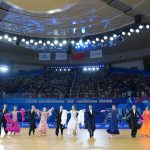
The Annual General Meeting of DanceSport Europe -DSE- closed the first block of the World DanceSport Federation -WDSF- institutional weekend in Rome, with an agenda focused on young athletes, education, financial stability and continental solidarity. The meeting, held in the Great Hall of the Caesars at the Hilton Rome Airport Hotel, opened an international governance calendar that continued with the global forum and the WDSF Annual General Meeting.
The meeting brought together continental delegates, federation officials and guests to review the progress of European DanceSport, approve statutory matters and set priorities for the coming years. DSE president Robert Wota said the Assembly combined the usual administrative obligations with an active climate of participation among federations. “The energy was exceptionally high, and the meeting was both concise and focused,” he said.
DanceSport Connect, the bet until 2032
The main project presented in Rome was DanceSport Connect: United Through Movement, a platform designed to run until 2032 and connect competition, community, education, institutions, governments, sponsors and local organisers. The programme was presented by Kris Spaho, DSE commissioner and project leader, and stands as Europe’s major bet to create a more structured environment around young athletes.
Wota explained that the goal is to build a more stable foundation for the future of the sport in Europe. “The purpose and scope of DSC is to create a better environment and a structure for the future of DanceSport in Europe,” he said. The platform aims to organise the different elements of the ecosystem, from competitions to educational programmes, institutional partners, public administrations, official sponsors and local organisers.
DanceSport enters the classroom
One of the most concrete new features of DanceSport Connect will be its connection with the education system. The DSC Cup will begin with events in Albania and North Macedonia, and will allow participants to register the details of their academic institutions. From there, DSE will be able to issue official recognition certificates addressed to schools or universities, with the aim of raising the institutional prestige of DanceSport and attracting new participants to national federations.
The project also includes the DSC DanceSport College, a free training structure for young athletes. “All group lessons will be free of charge for all participants in the competitions,” Wota explained. The proposal aligns with the message delivered by WDSF president Shawn Tay, who urged continental bodies to dedicate core resources to raising the competitive level of new generations. For DSE, that priority does not represent a change of direction, but the confirmation of a path already focused on the Juvenile and Junior categories.
Youth circuits and new formats
The Assembly also reviewed the evolution of the DSE European Grand Prix, a ranking circuit for Juvenile and Junior categories that is approaching its tenth anniversary. The data presented showed a stable trajectory between 2025 and 2026, with almost 700 couples from 33 countries. The circuit remains open to all WDSF-registered athletes in order to support local organisers, although official ranking points and prize vouchers remain reserved for athletes from DSE member countries.
Another highlighted project was the DanceSport Europe Team Challenge Cup, a national team format featuring Standard, Latin and a team show performance. DSE directly subsidises organisers to provide free accommodation for national team members, a measure designed to increase participation and facilitate the presence of more countries. “The primary objective of this initiative is to facilitate the inclusion of more exceptional couples and diverse countries in the event,” Wota said, while also pointing to the possibility of adding another discipline next year.
Financial stability and support for Ukraine
The financial review presented by the treasurer and financial controllers confirmed a stable, transparent and sustainable position for DanceSport Europe. Continental reserves allow structural investment in grassroots development, youth circuits and direct athlete support systems. At the same time, the Assembly unanimously approved freezing all annual membership fees for 2027, with the aim of protecting national federations from inflationary pressures.
The meeting also reaffirmed support for the All-Ukrainian DanceSport Federation. The Assembly voted unanimously to maintain the exemption from its annual membership fee for 2026, while preserving all its rights, including the vote during the legislative weekend. Wota recalled that the European community has supported the Ukrainian federation for three years since the start of the war. “Our community unanimously approved this request, and we have been providing support for three years,” he said.
The DSE Assembly also served as the starting point for the WDSF institutional weekend in Rome. Tay linked the European roadmap with the WDSF’s global objectives. “The innovative roadmap presented by DSE in Rome mirrors our global objectives. By targeting the grassroots and bridging the gap with academic institutions, Europe is building a sustainable ecosystem that ensures our sport grows responsibly from its very foundations,” he said. The final message from Rome left a shared idea: the future of European DanceSport depends on connecting federations, young athletes, education and local structures within the same growth project.
 Last related articles