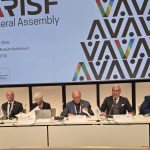
Volleyball World will remain the exclusive commercial partner of the Asian Volleyball Confederation -AVC- until 2052 after the two organisations announced one of the longest-term collaborations in international volleyball. The agreement was unveiled on 8 August during the confederation’s Congress in Bangkok and will allow the commercial arm of the International Volleyball Federation -FIVB- to continue overseeing the commercial development of Asian competitions.
The relationship was formalised in 2022 through an initial nine-year agreement covering the period from 2024 to 2032. Volleyball World committed to investing directly in the AVC in exchange for its commercial rights, while the FIVB increased the support provided to Asian national federations through its development programmes. The extension adds another twenty years to the original timeframe and establishes, more than a quarter of a century in advance, who will manage areas including sponsorship, media rights and the commercial aspects of event hosting.
Stability across generations
The length of the agreement is intended to provide continuity for negotiating contracts, investing in competitions and developing new formats without depending on frequent renewals. It also gives the AVC’s 65 national federations a stable framework within which to align their projects with the continental strategy. However, the organisations have not disclosed the financial value of the extension, minimum investment commitments, review mechanisms or possible exit provisions. Their public explanation therefore focuses on the stability required to plan and professionalise Asian volleyball over several decades.
Volleyball World CEO Ugo Valensi described the extension as “a powerful vote of confidence” in what has already been achieved and what lies ahead. “We are creating the long-term stability needed to make bold decisions, invest in the future and continue raising the standard of volleyball across Asia,” he explained. Valensi said volleyball is growing faster in Asia than anywhere else and that the continuity will allow the development of AVC and FIVB competitions to be shaped together.
What has changed since the first agreement
Since the partnership began, the two organisations have modernised the AVC brand, expanded the international distribution of its tournaments and changed how continental competitions are presented and promoted. They have also introduced clearer qualification pathways and guaranteed prize money for the AVC Champions League and the AVC Beach Volleyball Continental Championships. The former men’s and women’s Asian club championships were relaunched under the AVC Champions League name in 2025, with prize money and places at the respective Club World Championships available to their best-performing teams.
Commercial exclusivity does not mean that Volleyball World assumes institutional control of Asian volleyball. The AVC retains its authority as the continental governing body, while its partner leads the commercial development of events in areas such as sponsorship, media rights and the commercial aspects of event delivery. Volleyball World was established in 2021 through a partnership between the FIVB and CVC Capital Partners to drive investment, content distribution and engagement between international volleyball, fans and commercial partners.
Asia at the centre of global growth
The scale of the Asian market helps explain such a long-term commitment. Asia accounts for around 52% of volleyball’s global fanbase and will be central to the FIVB’s strategy to double the number of people connected to the sport from 800 million to 1.6 billion by 2032. During the General Assembly, FIVB President Fabio Azevedo described the continent as “the land of volleyball” and highlighted its capacity to contribute to the sport’s worldwide growth. Separately from the commercial agreement, the Volleyball Empowerment programme has invested approximately USD 15 million in 454 projects across Asia and has supported 94% of the AVC’s national federations.
AVC President Ramon Suzara believes that continuity until 2052 will allow its members to “plan, invest and grow with confidence”. According to Suzara, the first phase has already expanded the reach of AVC events and created new opportunities for athletes, national teams and clubs. The extension consolidates that model for the coming decades: Volleyball World provides a shared commercial structure, while the AVC gains the certainty required to develop its competitions and federations in a region both organisations regard as essential to volleyball’s future.
 Last related articles