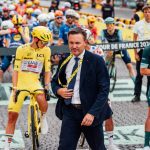
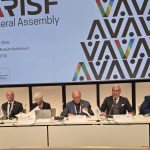
The Fédération Internationale de l’Automobile -FIA- has removed the specific restrictions imposed on drivers, national teams, competitors and officials from Russia and Belarus since 2022. They will be able to compete without signing the neutrality commitment previously required and may once again use their national flags, colours, symbols and anthems at international and zonal competitions. The decision, adopted on 3 August by the World Motor Sport Council -WMSC-, restores national representation to two countries that remain subject to restrictions in other areas of motor sport.
The reinstatement is not complete. The FIA continues to prohibit international or zonal competitions from taking place in Russian or Belarusian territory and has therefore not opened the door to an immediate return of the Russian Grand Prix, whose contract was cancelled in 2022. Participation in other countries will also remain subject to the applicable legislation and sanctions regimes. “The FIA continues to carefully monitor the events in Ukraine and reserves the right to take any further actions or implement further measures in the future,” states the circular dated 13 August.
The end of neutrality
Following Russia’s invasion of Ukraine, the federation excluded both countries’ national teams and made individual participation conditional upon signing a neutrality declaration. Drivers could compete under the FIA flag or with a licence issued by another national sporting authority when they were eligible to obtain one. Robert Shwartzman went on to represent Israel, while Daniil Kvyat and Nikita Bedrin used Italian licences. Russian-born competitors also appeared under Kazakhstan and Kyrgyzstan in different development categories.
The FIA linked its change to the direction adopted on 7 July by the International Olympic Committee -IOC-, which provisionally lifted the suspension of the Russian Olympic Committee -ROC- and declared that its previous recommendations concerning Russian participation were no longer applicable. The reinstatement followed the ROC’s removal from its structure of sports organisations based in territories under the jurisdiction of the Ukrainian Olympic committee. The IOC has yet to determine the protocol it will apply to flags, anthems and national representation at Los Angeles 2028, but has allowed international federations to decide how to manage their own competitions.
A different approach in every sport
The broadest interpretation can be found in organisations such as the International Handball Federation -IHF-, which has approved the full return of Russian and Belarusian teams, officials and experts. The World DanceSport Federation -WDSF- abolished its neutral categories and the associated eligibility checks, although it retains specific anti-doping measures for Russian representatives. World Boxing has also restored Russia’s flag, anthem and national uniforms, but continues to apply disciplinary oversight, while the Russian Boxing Federation will remain an endorsed member until Congress decides on its full admission.
Other federations have reached the opposite conclusion. World Curling allows Russian and Belarusian junior athletes to compete but will keep Russian senior competitors out for the remainder of 2026, arguing that their return would create difficulties for competition integrity and safety. The International Ice Hockey Federation -IIHF- assesses each tournament according to safety, operational viability and sporting integrity, and retains broad exclusions for 2027. World Athletics continues to exclude athletes, officials and support personnel from both countries, even under neutral status, because it considers progress towards peace insufficient and points to the continuing effect of the war on Ukrainian athletes’ facilities and preparation.
Flexibility or fragmentation
The Ukrainian Government has asked the FIA to reconsider its decision. Youth and Sports Minister Matvii Bidnyi said on Tuesday that the reasons behind the original measures had not disappeared and warned against using sport as a means of normalising aggression. “We call for this decision to be reversed,” he said, while the Automobile Federation of Ukraine stated that it had been taken by surprise. The FIA responded that its revision followed the IOC’s recent position and similar action by other sports organisations, although the territorial ban and the obligation to comply with international sanctions remain in place.
The model allows each federation to assess the specific circumstances of its competitions and decide how much weight to give to safety, integrity, anti-doping, national legislation and the course of the war. It also means that the same athlete may represent Russia fully in motor sport, boxing or handball, gain access only to junior competition in curling and remain excluded from athletics. With the arrangements for Olympic competition in Los Angeles still to be defined, one question remains: does this flexibility, based on federation autonomy, help the IOC manage the situation, or could the absence of a common standard bring a different policy for every sport onto the Olympic stage?
 Last related articles