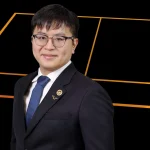
Gregory Vallarino will remain president of the Pan American Ju-Jitsu Union for another four-year term, following the union’s Electoral Assembly. According to the result communicated by the UPJJ, Vallarino will lead the continental body through 2030.
Vallarino has previously served as president of the UPJJ, with publicly available records from recent years identifying him in the role. Previous UPJJ communications also show Nicolás Urbandt serving as Secretary General alongside him.
The current leadership team will continue in office. Sarah Stanton remains Vice President, Nicolás Urbandt continues as Secretary General, and José Domínguez retains his position as Sports Director.
The most significant part of the Assembly was the vote on Vallarino’s continuation as president. According to the official result communicated by the UPJJ, he received five votes in favour and two against. Argentina, Uruguay, Canada, Panama and the United States supported his continuation, while Colombia and Mexico voted against it.
The vote on the continuation of Nicolás Urbandt as Secretary General produced the same result, with five member federations supporting his continuation and two voting against. Urbandt has also held the position in previous continental competitions and official documentation associated with the UPJJ and JJIF structures.
The UPJJ said the decision reflected the confidence expressed by its member federations in the work carried out during the previous term. Several federations also recognised the union’s efforts to respond to their requests, improve communication and provide greater institutional support across the continent.
Communication and visibility were among the other areas highlighted during the Assembly. The UPJJ said its efforts to promote Ju-Jitsu through social media, showcase the activities of national federations and increase the visibility of Pan American Championships had received particular recognition.
The continental championships remain an important part of the UPJJ’s sporting programme. Recent editions have been organised within the wider UPJJ and JJIF framework, providing national federations with opportunities to compete at continental level while strengthening the regional structure of the sport.
The relationship between the UPJJ and the International Ju-Jitsu Federation will also remain a key priority during the new term. In its communication to the JJIF, the Pan American body reaffirmed its commitment to strengthening institutional cooperation with the international federation and working jointly to develop and promote Ju-Jitsu.
The new four-year mandate gives Vallarino and his executive team the opportunity to build on the work of the previous term. At the same time, the seven votes recorded in the presidential election, including two against his continuation, indicate that the new leadership will need to maintain dialogue with all member federations.
The UPJJ said it intends to continue working towards a more integrated, transparent and participatory continental organisation, with the development of Ju-Jitsu across the Americas remaining its central objective through 2030.
 Last related articles