At least twelve national teams will play outside their own country in a fixture assigned to them as the home side during the opening two rounds of qualifying for the 2027 Africa Cup of Nations -AFCON-. Mauritania, Sierra Leone, Namibia, Niger, Sudan, Senegal, Lesotho, Central African Republic, Eritrea, Benin, Madagascar and Somalia will have to host their opponents elsewhere between 24 and 30 September. The situation is particularly significant in a six-match qualifying campaign in which every team has only three opportunities to play in front of its own supporters and narrow margins could determine who reaches the tournament in Kenya, Tanzania and Uganda.
The twelve cases do not all stem from the same problem. Ten involve unapproved stadiums, venues undergoing construction or facilities that have yet to complete the improvements required by the Confederation of African Football -CAF-. Sudan is playing abroad because of the impact of the war on its sporting activity, while Senegal has reversed the order of its fixtures against Mozambique because its main stadiums are temporarily unavailable. CAF regulations require any association without an approved venue for a specific competition to nominate another authorised stadium outside its territory. The rule protects standards relating to the playing surface, safety, floodlighting, dressing rooms, medical services and television production, but leaves national associations facing the sporting and operational costs of competing away from home.
Morocco takes in four relocated matches
Morocco will become the main destination for these displaced fixtures. Mauritania will play Central African Republic at Larbi Zaouli Stadium in Casablanca after none of its three possible venues could complete the approval process in time. The Olympic Stadium must still finish installing its natural grass pitch and seats before undergoing an inspection; the expansion of Cheikha Boïdiya Stadium from 8,000 to 16,000 seats has been delayed by financing difficulties; and the stadium in Nouadhibou needs to meet new technical requirements before renewing an approval it previously held. The Mauritanian federation considers the move temporary, but its explanation shows how construction work, administrative deadlines and updated regulations can simultaneously remove several domestic options.
Sierra Leone will host Zimbabwe in El Jadida while the renovation of Siaka Stevens Stadium in Freetown continues, with work covering the pitch, floodlighting, dressing rooms, stands and drainage. Central African Republic will play Burkina Faso in Casablanca because it also lacks an approved venue, although its federation has not published a recent assessment identifying the current deficiencies of a specific stadium. Madagascar is expected to face Tanzania in Morocco while Barea Stadium in Mahamasina awaits further work and approval. Changes to the playing surface form part of CAF’s requirements and will not be completed in time for this international window. Meknes appears as the venue in schedules published for the fixture, although the confederation’s general announcement does not yet specify the city.
Outstanding work from Windhoek to Cotonou
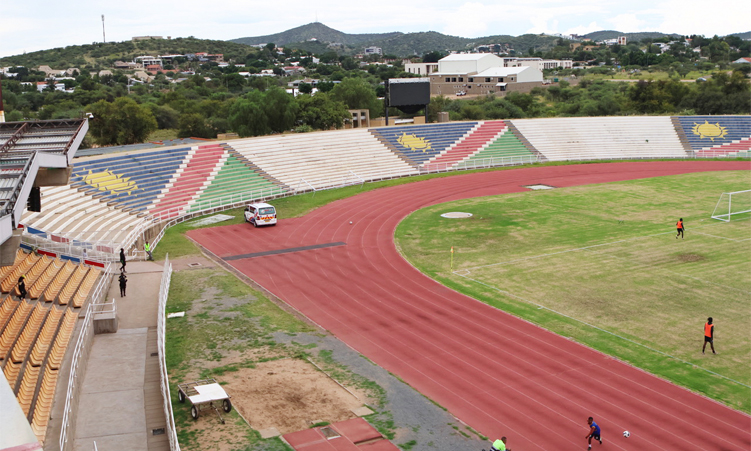
Namibia will host Congo in Francistown, Botswana, because it still does not have a suitable stadium for international fixtures at this level. Independence Stadium in Windhoek is awaiting redevelopment, while Sam Nujoma Stadium is also undergoing construction work whose pace has prompted the government to call for faster progress. Niger will play Lesotho at Accra Sports Stadium in Ghana after General Seyni Kountché Stadium in Niamey lost its approval for senior internationals. No updated report detailing all the outstanding deficiencies has been made public, but the Nigerien federation has already received permission to use Accra as its temporary home.
Four days after visiting Niger, Lesotho will also have to play a home match outside its territory. It will face Morocco at Toyota Stadium in Bloemfontein, South Africa, because its stadiums do not currently meet CAF requirements. Setsoto Stadium in Maseru has resumed hosting domestic league matches following the installation of an artificial pitch, but it has not yet received the approval required for this fixture. Benin will face Mauritania in Abidjan while the renovation of General Mathieu Kérékou Friendship Stadium in Cotonou continues. A visit by the Beninese federation found that substantial progress had been made but also produced further technical observations that must be addressed before the venue meets CAF and FIFA standards.
Extreme circumstances and lost home advantage
Eritrea will host South Africa in Cairo because the stadiums in Asmara still fail to meet international requirements, although there is no recent public report detailing every outstanding deficiency. Somalia is listed as the home side against Côte d’Ivoire in Abidjan after reports initially indicated that it had requested permission to use Accra. CAF has confirmed that the Ivorian team will play the fixture in its own country, although it has not named the stadium. The relocation creates a greater anomaly than using a genuinely neutral venue: Somalia will officially be the host but will compete in front of its opponent’s supporters and within its rival’s organisational structure.
Sudan and Senegal complete the list under different circumstances. Sudan will host Ethiopia at the National Stadium in Juba, South Sudan, against a backdrop in which the war has interrupted competitions, displaced teams and forced many matches to be prepared from abroad. Senegal, meanwhile, will begin against Mozambique at Zimpeto National Stadium in Maputo, even though the fixture was originally assigned to the Senegalese as the home team. Its federation agreed to reverse the order of the matches because Abdoulaye Wade Stadium is affected by preparations for the Dakar 2026 Youth Olympic Games, while the pitch at Léopold Sédar Senghor Stadium is not in the required condition. Like Somalia, Senegal will play in its opponent’s country in a fixture that should have provided the advantage of competing in front of its own supporters.
The consequences extend beyond the loss of support from the stands. Federations must hire facilities in another country and arrange additional travel, accommodation, local transport, security, training sessions and match operations, while giving up ticket revenue, sponsor exposure and economic activity surrounding the fixture. Approval standards are necessary to ensure safe and comparable conditions, but twelve national teams playing outside their territory at the same time reveal a broader shortfall. Construction delays, financing difficulties, inadequate maintenance and expired approvals are concentrating part of the African qualifying campaign in a small group of countries able to provide their stadiums. The road to AFCON 2027 therefore begins with an increasingly demanding competition from an organisational perspective, but with numerous federations still unable to guarantee one of its most basic conditions: playing their home fixtures in their own country.
 Last related articles