President of the Oceania National Olympic Committees -ONOC-, Baklai Temengil, has used her visit to the Aichi-Nagoya 2026 Asian Games to meet leaders from the Olympic Movement, continental associations and international federations. Invited by Sheikh Joaan bin Hamad Al Thani, President of the Olympic Council of Asia -OCA-, Temengil presented ONOC’s internal reforms and explored potential cooperation in training, technical exchanges and athlete development. The organisation wants these relationships to provide practical resources and opportunities for its National Olympic Committees, although most of the discussions have yet to produce specific programmes or agreements.
ONOC represents 17 National Olympic Committees, alongside its associate members, across a region characterised by vast distances and considerable differences in funding, facilities and technical capacity. Its 2025-2028 Strategic Plan identifies four core functions: supporting sporting excellence, strengthening services for National Olympic Committees, cultivating strategic partnerships and leading by example. International cooperation is intended to give members with fewer resources access to training centres, specialist knowledge and programmes that they would struggle to develop independently. Temengil, elected in May 2025 as the first woman to lead ONOC in the organisation’s 45-year history, has placed that coordination within the region’s pathway towards Los Angeles 2028 and Brisbane 2032.
Cooperation begins with governance
During her meeting with International Olympic Committee -IOC- President Kirsty Coventry and IOC Director James Macleod, Temengil provided an update on the ONOC Reset. The process includes a review of the organisation’s statutes and governance structures, changes to financial management, operational improvements and the reorganisation of services provided to members. The 17 National Olympic Committees discussed reforms to ONOC’s charter and Articles of Association in May after two years of consultation. ONOC has also changed the administration of its continental Olympic Solidarity programmes: payments are now centralised through the IOC, while applications and reporting are managed through the Relay platform to maintain funding throughout the institutional review.
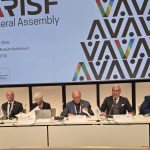
The ONOC President also met OCA officials and Seiko Hashimoto, President of the Japanese Olympic Committee. Her engagements extended to Mustapha Berraf, President of the Association of National Olympic Committees of Africa -ANOCA-, and Spyros Capralos, President of the European Olympic Committees -EOC-. Temengil attended ANOCA’s Extraordinary General Assembly and delivered brief remarks at its opening. These relationships can support exchanges in administration, leadership training and event organisation, although the statement did not attribute any specific commitments to the meetings with the African and European associations.
Federations can open technical pathways
The programme also included meetings with Mohamed Hasan Jalood, President of the International Weightlifting Federation -IWF-; Fabio Azevedo, President of the International Volleyball Federation -FIVB-; and Hugh Graham, Secretary General of the Asian Volleyball Confederation -AVC- and President of the Oceania Volleyball Zone. ONOC views these contacts as a possible route towards organising training camps, exchanging coaches and technical officials, sharing expertise and broadening development pathways for athletes. Graham’s position also connects the Asian and Oceania structures within the same sport, although no schedules, participants or funding have yet been announced for new volleyball or weightlifting programmes.
Temengil also reconnected with Gunilla Lindberg, Secretary General of the Association of National Olympic Committees -ANOC-, and met representatives of National Olympic Committees and federations from Asia and Africa. “Through these relationships, we can connect our National Olympic Committees, athletes and coaches with greater opportunities for development, knowledge exchange and international cooperation,” she said. The President added that the focus was on ensuring the engagements “translate into meaningful opportunities” for ONOC members. That approach reflects a message she had delivered to the ONOC International Relations Commission earlier in September: “Let us move beyond relationships for relationships’ sake and focus on partnerships that create change.”
Fukuoka turns the relationship into programmes
Cooperation with Fukuoka Prefecture provides the most developed example within the agenda. Temengil met a delegation led by Executive Director Hironobu Takashi to review the Memorandum of Cooperation signed in March 2026. The agreement seeks to expand access to training in Fukuoka for Oceania athletes, organise exchanges involving athletes, coaches and administrators, and build long-term development pathways. The relationship began before Tokyo 2020: 101 athletes from Oceania National Olympic Committees benefited from preparatory camps, most of them held in Fukuoka, while five municipalities in the prefecture established links with 15 Pacific countries and territories. In 2025, another 13 athletes representing eleven delegations attended a camp there before the World Athletics Championships in Tokyo.
ONOC intends to use this model to prepare its members throughout the next Olympic cycles. The organisation considers Brisbane 2032 a potential “Home Games” for the whole of Oceania and has established a Games Commission to coordinate calendars, investment and sporting pathways across the region. The impact of the Aichi-Nagoya meetings will become clearer if the contacts with federations and continental associations lead to programmes with confirmed dates, funding and participants, while the Fukuoka agreement can already build on previous training camps and exchanges. The strategy therefore positions international partnerships as a mechanism for strengthening both the management of National Olympic Committees and the preparation of their athletes and coaches.
 Last related articles