
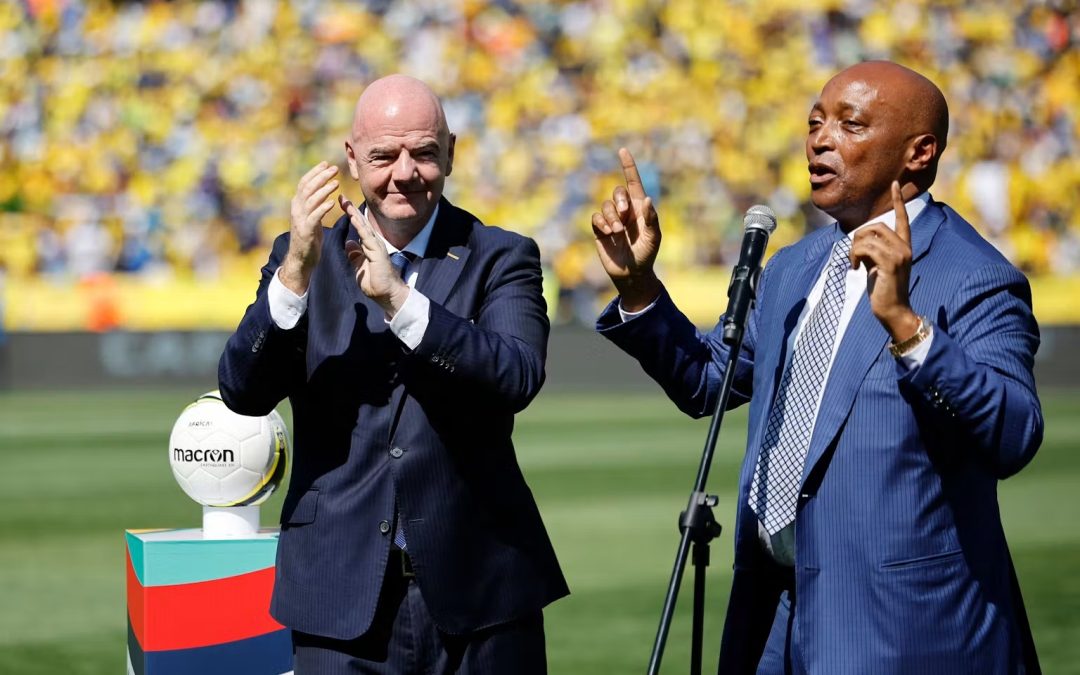
Ramón Vega announced this week his intention to challenge Gianni Infantino for the presidency of the International Federation of Association Football -FIFA-, presenting an eleven-page manifesto focused on governance reform and restoring trust. His announcement coincides with two institutional positions expressed on Thursday: European associations are calling for new leadership, while Patrice Motsepe, President of the Confederation of African Football, announced the unconditional backing of Africa’s 54 associations for Infantino. Alongside those electoral differences is another disagreement over reform: who should lead the review of FIFA’s operations.
Vega says he has secured the support of the five associations needed to submit his candidacy. “I already have that,” he told ‘El País’, without identifying his backers. His claim must be distinguished from documented endorsements and formal acceptance: candidates need five written declarations of support, must demonstrate an active role in football during two of the previous five years, and must pass an eligibility check. The deadline is November 18. The former Switzerland international brings a name into the debate over new leadership, but Europe’s call for a different president does not yet amount to an endorsement of his bid.
Europe calls for a different president
Aleksander Čeferin announced on Thursday in Berlin, Germany, that he would seek a final term as President of the Union of European Football Associations -UEFA-, reversing his intention to step down. All 55 associations asked him to continue, with the election scheduled for April 22, 2027, in Astana, Kazakhstan. He had already ruled out challenging Infantino in August. His decision keeps his future in European football separate from the search for an alternative FIFA president. “There is still important work ahead, and I have therefore accepted their request,” he explained.
The backing for Čeferin and the position on FIFA differ in scope: all 55 associations support his decision to continue, but 54, excluding Azerbaijan, support the reform proposals. UEFA says they have lost confidence in the current leadership and that institutional changes alone are insufficient. It calls for a figure rooted in football who can command confidence across regions. Its proposals separate the presidency from management functions and protect the independence of oversight bodies. That description does not identify Vega: the overlap between his proposals and Europe’s demands cannot replace the explicit endorsements he would need to become its electoral alternative.
Africa backs Infantino
In Cabo Verde, Motsepe outlined a different position during the strategy conference of the Confederation of African Football -CAF-. “There is a unanimous decision by the 54 CAF member associations to unconditionally support Gianni as president of FIFA,” he said, attributing that backing to Infantino’s record of supporting African football. The continent’s associations represent just over a quarter of FIFA’s 211 members. The announcement constitutes a collective political endorsement, although national associations each hold one vote in the election, rather than confederations voting as blocs.
Infantino linked his remarks to the resources allocated to the continent: “With the FIFA Forward programme we have invested one billion dollars in 10 years in Africa, with 124 different projects and many other actions.” He also pledged to seek additional resources and address disagreements through dialogue. Funding is part of Europe’s institutional debate too: UEFA’s proposals call for Forward allocations to be protected from political interference. The positions therefore combine assessments of the support received with demands concerning how development funding is allocated and the decisions behind it.
Who should lead the review?
The position attributed to Shaikh Salman bin Ebrahim Al Khalifa, President of the Asian Football Confederation -AFC-, introduces another difference. According to ‘BBC Sport’, a letter proposes that football institutions should lead the review rather than entrusting it to an external body. The broadcaster contrasts this with an earlier request, co-signed with European and North American leaders, for a fully independent assessment. Official AFC statements in July and August expressed opposition to the lack of consultation over FIFA Forward Enterprise -FFE- and called for transparency. The letter described by the broadcaster proposes a different review process, but does not amount to a collective decision by the confederation or an electoral endorsement of Infantino.
In September, Infantino proposed asking the Council about an independent external assessment and opening discussions on improving decision-making. The October 15 meeting places that debate ahead of the nomination deadline, as associations define their positions on reform and the presidential election. European associations plan another meeting before November 17; the deadline for submitting candidates falls the following day. The electoral calendar sets February 18, 2027, as the deadline for notifying members of accepted candidates, with the election taking place on March 18 in Rabat, Morocco.
