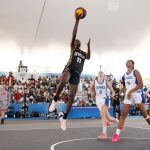
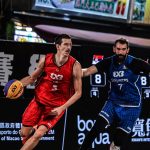
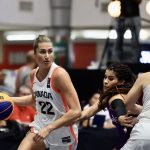
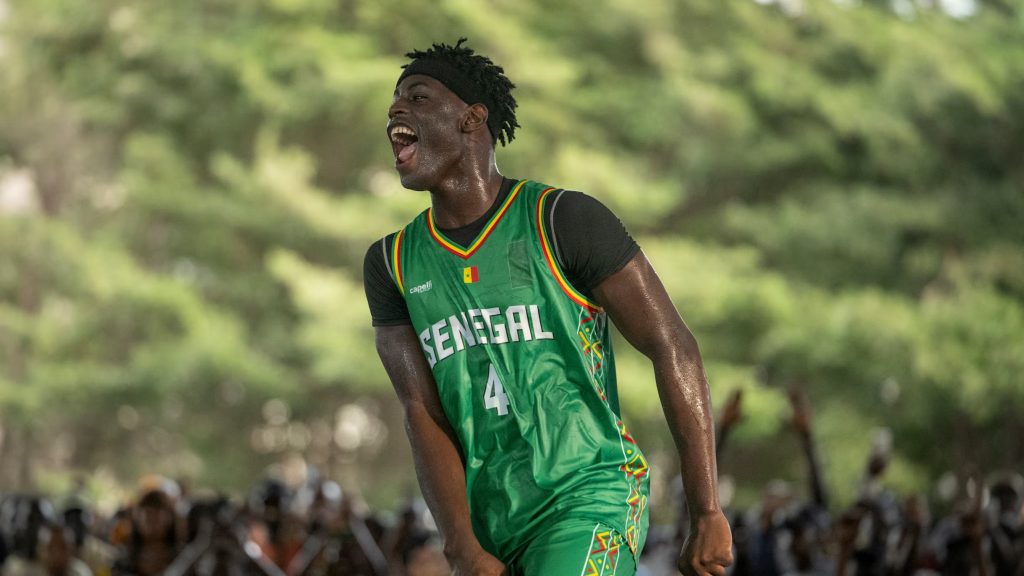
Senegal finished the 3×3 basketball tournament at the Dakar 2026 Youth Olympic Games with boys’ gold and girls’ bronze, while Poland claimed the girls’ title. The International Basketball Federation -FIBA- competition, held from 6 to 9 November at the Tour de l’Œuf Complex, brought together twenty-four national teams, twelve in each tournament. The hosts’ two medals gave a local dimension to the first Youth Olympic Games in Africa, alongside preparation and training programmes that began before the event.
Senegal’s boys won all five of their games, defeating Lithuania 14–13 in overtime in the final; Germany completed the podium after beating Latvia. In the girls’ tournament, Poland overcame China 12–11, while Senegal secured bronze with an 18–17 victory over Egypt. Both titles were decided by a single point, with the champions taking different routes: the hosts remained unbeaten, while Poland, who had lost to Senegal in the group stage, finished with four wins and one defeat.
A celebration shared with local communities
Senegal’s champions linked their achievement to the support from the stands and their families. “It is a joy, an honour for me, my family and my neighbourhood,” Sacoura Diop said after the final, in comments reported by news agency ‘APS’. His teammates also highlighted the encouragement from the crowd and the concentration needed to finish the tournament successfully. Supporters followed both national teams, making the court in Point E a meeting place for the young athletes and the community hosting the Games.
For Poland, the victory brought its first basketball medal at a Youth Olympic Games. Nicola Brzeska, Lena Olejniczak, Stefania Onuorah and Gabriela Stefanowicz were coached by Bartłomiej Koziatek, who told the Polish Olympic Committee that the players normally competed for 5×5 clubs and had never played together. “We had to build team chemistry in a week,” he explained. Preparations focused particularly on trust and relationships off the court, helping the four players believe they could challenge more established national teams.
Preparations began before the Games
FIBA’s work in Africa included a camp in Dakar from 31 October to 2 November 2025, supported by Olympic Solidarity and the Senegalese Basketball Federation. Young players from Senegal, Kenya, Egypt and Algeria took part alongside coaches, referees and table officials. The programme combined technical sessions, classroom instruction, video analysis and games. Another preparation camp followed in October 2026, involving participants from Senegal, Algeria, Côte d’Ivoire, Kenya and Uganda, with a focus on developing coaches and 3×3 coordinators as well as players. Together, the initiatives document preparations extending beyond the athletes themselves.
Five African countries were represented in the competition. Alongside Senegal’s medals, Egypt finished fourth and Kenya seventh in the girls’ tournament, while Côte d’Ivoire placed sixth and Algeria tenth in the boys’ event. Senegal was the only country competing in both categories, an exception granted to the hosts under a system limiting other National Olympic Committees to one team. That provision allowed the organisers to field two squads and give both groups international experience; the remaining places combined youth ranking criteria with geographical representation.
A shared venue and role models for young athletes
The Tour de l’Œuf hosted 3×3 alongside swimming, baseball5, breaking and skateboarding. According to the International Olympic Committee -IOC-, the venue plan prioritised existing facilities and shared use. During the tournament, IOC President Kirsty Coventry visited the competition with Christophe Dubi and Pierre Ducrey. They were welcomed by FIBA Secretary General Andreas Zagklis and 3×3 Commission Chair Carmen Tocala. Coventry praised the speed of the game and described the atmosphere as “electric”, noting that people outside the venue were trying to get in.
Among those supporting participants was Sonja Greinacher, an Olympic champion with Germany at Paris 2024, who attended as an Athlete Role Model. Her role included sharing experiences, guiding young athletes and passing on lessons from international competition. Her involvement connected two stages of 3×3’s Olympic journey: the discipline appeared at the Singapore 2010 Youth Olympic Games before making its Olympic Games debut at Tokyo 2020. In Dakar, Greinacher worked with participants on an experience she had already lived at the highest level: competing for an Olympic medal and managing the demands that come with it.
 Last related articles