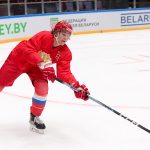
Canada and Poland have taken the dispute over Russia’s return to international sport to their borders. The Canadian government will prevent the Russian national team from participating in the World Junior Ice Hockey Championship, while Poland will not issue visas to Russian ski jumpers cleared by the International Ski and Snowboard Federation (FIS). The decisions, communicated on 11 November, highlight the gap between obtaining permission to compete and being able to enter the country hosting the competition.
There are important differences between the two cases. Canada maintains a route for individual neutral athletes but rules out a Russian national team using it. Its official position, published on 3 November, rejects Russia and Belarus being represented through their national symbols while the war against Ukraine continues. Ottawa links its sports policy to the international response to the invasion, and also requires government-funded events to prohibit such national representation.
Canada closes the door to athletes who already hold visas
Canada’s latest clarification affects those who already possess documentation allowing them to enter the country. Secretary of State for Sport Adam van Koeverden said immigration authorities would individually assess Russian and Belarusian athletes and officials to prevent their entry for the competition, even if they hold valid visas. The clarification is significant because Russian players compete in Canadian junior leagues. Their participation in those competitions does not mean they can represent Russia at the World Championship.
The International Ice Hockey Federation (IIHF) therefore faces another obstacle to implementing the Court of Arbitration for Sport (CAS) ruling ordering Russia’s reinstatement. On 4 November, the IIHF itself had warned of difficulties involving visas, security, logistics and competition formats. The problem also affects Norway, whose federation announced that Russia would take its place at the Under-20 World Championship. Canada’s restrictions leave the situation unresolved but do not, in themselves, confirm that Norway has regained its place.
Poland does not consider neutral status sufficient
In ski jumping, the restriction affects athletes admitted as neutrals by FIS. Poland’s foreign ministry told Reuters that participation in sporting competitions does not constitute an exemption from its entry restrictions. The decision affects the events in Wisla, from 4 to 6 December, and Zakopane, from 15 to 17 January. FIS referred responsibility for visas and entry to national authorities.
The federation has a specific policy for individual neutral athletes and published an updated list of approved participants on 9 November. That sporting assessment and permission to enter a country are separate processes, a distinction that creates difficulties when organising an international circuit. An athlete may meet their federation’s requirements and subsequently face restrictions preventing them from competing in certain events. Season planning therefore remains subject to decisions taken in each host country.
A calendar that needs participation guarantees
The consequences extend beyond the registration of Russian participants. The IIHF remains in discussions with national federations, organisers and host authorities to address the effects of reinstatement on its championships. Its statement acknowledges that time is limited and that the changes affect safety, the running of tournaments and their sporting integrity. Changing the participants also requires consideration for those already preparing for the competition, from displaced national teams to those having to reorganise their fixtures.
For international federations, both cases reinforce the need to establish in advance what conditions of participation hosts can guarantee. The next responses must clarify what will happen to places, fixtures and the teams affected. In ice hockey, that clarification is urgent: the World Junior Championship in Canada begins on 26 December, with Norway still awaiting an answer about its participation.
 Last related articles