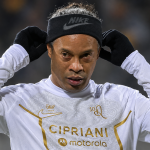
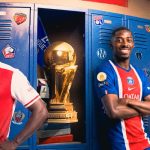
Ravenna beat Forlì 2–0 on Sunday, but their victory had begun long before kick-off. Ronaldinho, 46, played the opening 45 minutes and was involved in the build-up to the first goal, eleven years after his last professional appearance. His presence turned a derby in Italy’s third tier into international news, even reaching the screens of New York’s Times Square. A brilliant and successful commercial idea that opens a path whose philosophy is at the opposite end of the spectrum from sport.
The sporting result, in this case, supported the operation: the team won and the Brazilian contributed to a decisive move. Everything appears to have been justified, and the story had a happy ending. The commercial impact was also reflected in the stadium figures: Ravenna installed the Tribuna R10, a temporary stand with around 1,800 additional seats, and attracted 6,743 spectators, generating approximately €199,000 in gate receipts. Attendance was almost 59% above the average of 4,245 reported in October. The comparison with the recent match against Spezia is particularly revealing: that fixture attracted 4,943 supporters and generated €49,420, meaning Ronaldinho’s return quadrupled gate receipts with 36.4% more spectators. The increase also reflected the ticketing conditions: season tickets were not valid for this match, and holders had to purchase a separate ticket.
According to Il Messaggero, gate receipts alone would have covered Ronaldinho’s fee, which the Italian newspaper put at around €500,000. Commercial rights would have more than covered the rest.
Cipriani, Tonetti and an operation prepared in Miami
Behind the project is Ignazio Cipriani, Ravenna’s president and a member of the family associated with the international restaurant and hospitality business. Contact with Ronaldinho came through Lorenzo Tonetti, who had been friends with the Brazilian since his time at Milan. Cipriani explained that he was the one who suggested a return to the pitch and that they also work together on the R10 brand. The structure includes investment partner Black Duck, with whom he acquired the club in 2024, and Ariedo Braida, vice-president and former Milan executive. Flavio Briatore’s presence in the stands brought further attention on Sunday…
The strategy became visible when the signing was announced on June 23 at Cipriani Miami, with a private dinner followed by a party. A Serie C club was unveiling its marquee signing in the United States, bringing together football, VIP hospitality, fashion and business connections. Designer Giorgio Mallone contributed to the kit’s artistic direction, while artist Slawn reinterpreted the shirt to create collectors’ pieces. Ronaldinho is also listed as a shareholder in the club. The match was the most visible moment of a broader commercial relationship, designed to keep the association between the player and Ravenna working after he was substituted.
The commercial success is visible; the profit remains to be seen
There are concrete signs of demand. The club installed the aforementioned temporary stand with around 1,800 seats, and match reports described a full stadium. Some tickets approached €150, while the official shop sells the R10 collection shirt for €129. The international broadcast arrangements announced included markets such as Brazil, Britain and China, and media coverage across different markets brought Ravenna’s name to audiences unfamiliar with their division. The operation opened several avenues for revenue and exposure simultaneously: tickets, merchandise, content and sponsorship opportunities.
All this attention has value if the club can turn it into purchases, contracts and lasting connections. And, most importantly, the real test will come when Ronaldinho is no longer on the pitch. What legacy will Ronaldinho and his R10 brand have left for Ravenna?
The Mayweather and McGregor precedent
Boxing has long exploited the difference between sporting interest and the ability to attract an audience. The 2017 fight between Floyd Mayweather and Conor McGregor brought together a boxing star and a mixed martial arts star in a contest whose appeal exceeded its competitive logic. According to Showtime, it generated 4.3 million pay-per-view purchases in North America and more than $600 million in worldwide revenue. The contest sold personalities, rivalry and curiosity. Ravenna is using a similar tool, the appeal of a one-off occasion, with the important distinction that Ronaldinho played in an official league fixture rather than a friendly.
It is reasonable to expect more operations of this kind in divisions with limited exposure and a need for revenue, although they are less likely to become a long-term solution. Entertainment can finance a sporting project for a particular year, but it can also end up dictating its direction if team selection responds to commercial commitments before the coach’s judgement. For Ravenna, the next step is to use this attention to strengthen the squad, academy, facilities and sponsorship. If some of those who came for Ronaldinho stay for the club, those 45 minutes will have achieved more than selling an afternoon of nostalgia and fascination.
 Last related articles