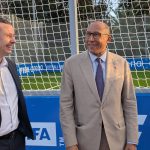
“The true measure of success is implementation.” Mattias Grafström took that message to Panama City on 17 November, when he became the first FIFA secretary general to address the FIFPRO General Assembly. Speaking to player unions gathered for the three-day meeting, he outlined how the agreement signed in June, which runs until the end of 2031, will be put into practice. It gives the global players’ union a voice on the FIFA Council and makes its consent necessary for certain reforms. The distinction matters in the dispute that most divided the two organisations: players will be able to negotiate minimum rest periods, while the Council will retain control of the international match calendar.
The agreement followed two separate disputes. In October 2024, the Court of Justice of the European Union ruled that several FIFA transfer rules breached EU law in the Lassana Diarra case. That same month, FIFPRO Europe, European Leagues and LaLiga filed a complaint with the European Commission over how FIFA had set the international calendar, including decisions concerning the 2025 Club World Cup. When the agreement was announced in June, FIFPRO and its continental divisions committed to withdrawing their own proceedings and their support for existing cases against FIFA, and to refraining from bringing or backing new cases outside football’s regulatory framework.
Where players’ consent is needed
On the FIFA Council, FIFPRO will be able to speak on matters affecting players as an observer without voting rights. That differs from the arrangement at UEFA, where David Terrier, the president of FIFPRO Europe, has held a voting seat on the Executive Committee since May. The global agreement also provides for union nominees on the Football Tribunal, which hears employment disputes with an international dimension, and on several committees. The union’s ability to shape new rules will come through the Global Social Dialogue Platform, chaired by FIFA with the confederations taking part. FIFPRO represents the players, the World Leagues Association (WLA) represents the leagues and European Football Clubs (EFC) represents the clubs.
Decisions through the platform will require agreement from FIFA and all three organisations. If one disagrees, the existing rules stay in place. If they reach consensus, FIFA must implement the outcome unless it can justify an exception under its regulations, such as a legal obstacle or an unreasonable operational burden. The process covers future transfer reforms and minimum standards on occupational health, holidays and recovery. A reform approved in June offers a practical example: when a player on fixed annual pay of less than €150,000 moves permanently to a club abroad, their former club must pay them 5% of the fixed fee it actually receives. The provision applies to contracts signed from 1 January 2027, subject to the exceptions in the regulations.
Where the calendar sets a limit
FIFA’s circular excludes the annex governing the release of players for national team duty, which is tied to the international calendar, from the consensus requirement. The agreement also commits FIFPRO to respecting that calendar. It does, however, set out a process for FIFA and the union to work together on decisions affecting workload and playing conditions at FIFA tournaments. If a proposed format adds matches, FIFPRO can discuss how those fixtures fit around recovery periods. The agreement leaves approval of the format with FIFA.
Part of the union’s influence will depend on how early it gets involved. FIFA is responsible for preparing the platform’s discussion papers and draft proposals, but the published documents do not specify what data on workload, travel or recovery FIFPRO will receive, or how far in advance. There is also work to do at domestic level. “This new relationship is not intended to remain limited to the global level,” Grafström and Stéphane Burchkalter, FIFPRO’s secretary general, wrote in a joint letter on 10 November. They called for closer cooperation with confederations and for national associations and player unions to negotiate on issues including collective agreements, standard contracts and ways of resolving disputes.
Unpaid wages and the first meeting
The agreement relaunches the FIFA Fund for Professional Players, with $20 million allocated for 2026–29 and FIFPRO represented on its steering committee. Ahead of the assembly, ‘AS’ and ‘Relevo’ reported that nearly $457,000 in FIFA funding had been allocated through FIFPRO’s Social Solidarity Fund to 48 players owed wages by clubs that had become insolvent or ceased to exist. Among them was Ilija Nestorovski, whose claim dates back to his time at Palermo. Some claims went back to 2015 and, according to ‘Relevo’, most of the players had already been paid.
The programme in Panama also includes a panel on the 2027 Women’s World Cup in Brazil, as FIFA and FIFPRO work towards minimum standards for women’s national teams. The agreement also aims to ensure players receive a fair share of the prize money from senior FIFA competitions. Grafström said he hoped the platform would meet for the first time before the end of the year. FIFA, clubs, leagues and the players’ union will have to agree on how it will operate.
 Last related articles