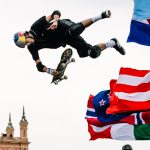
The World Skate Games have completed their first-week review in Asunción, Paraguay, with 74 world titles and five world records across artistic skating, speed skating and inline freestyle. The competition, which continues until Sunday, has brought championships to arenas, tracks and urban spaces, with free access to several venues and visits from schoolchildren. Alongside the finals, the opening week has featured organisational decisions shaped by rain, the debut of a Paraguayan national team and World Skate’s interest in returning with further international competitions.
The records reflect the programme’s diversity. Portugal’s Madalena Costa scored 264.69 points in artistic skating, while Spain’s Guillermo Gómez recorded 275.76 on his senior debut. In the 200m speed skating time trials, Colombia’s Santiago Vásquez clocked 17.108 seconds and El Salvador’s Ivonne Nochez 18.389; in junior free jump, Veronika Zherelnikova cleared 1.42 metres. A separate milestone accompanied those five records: USA’s Jack Walsh scored 188.60, the highest score recorded in World Skate scootering. Inline freestyle brought together 230 competitors from 31 countries to contest 22 titles and introduced separate junior categories in freestyle slides and free jump for the first time.
The city becomes part of the championships
The distribution of venues has allowed spectators to experience events without necessarily entering an enclosed sports complex. Courses along the Costanera waterfront, downtown, the Palacio de López esplanade and Cerro Lambaré offer free access, while enclosed venues have tickets available through the official platform. The vert installation beside the palace has placed athletes’ tricks against the backdrop of one of the country’s most recognisable buildings. Local media have reported spectators gathering at those locations, while venues at the Paraguayan Olympic Committee -COP-, in Luque, and the National Sports Secretariat -SND- combine competition with food areas, music and family activities.
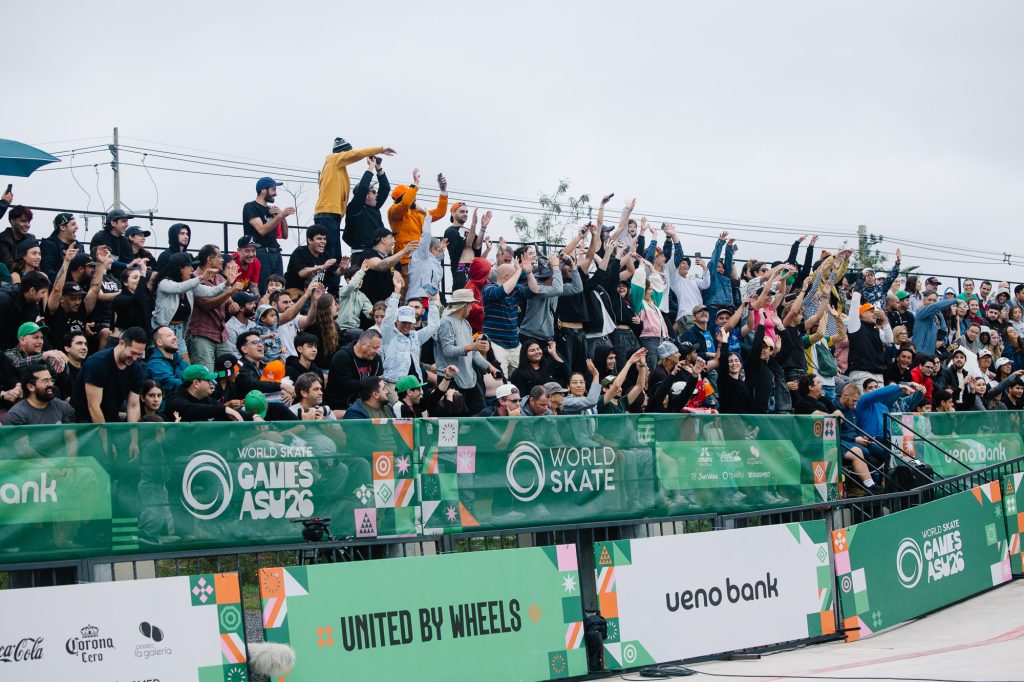
Roller freestyle street illustrates that connection between competition and spectators: it brought together 139 athletes from 24 countries, with almost equal participation by boys and girls in the junior divisions. Competitors from Brazil and Chile had groups of fans and teammates in the stands; Brazil won medals in every category and swept the junior women’s podium. Rain, however, prevented the finals from taking place, with titles decided on semifinal results. Storms and hail also required organisers to protect facilities and adjust activities, a situation the local organisers said they were able to address through experience gained at other international events.
School visits and new disciplines in Paraguay
Educational visits are another part of the review. Lorena Veiluva, President of the Paraguayan Skating Confederation, told ‘ABC Cardinal’ that schools and educational institutions had shown interest, with students visiting the parks and competitions. The Azufance social and educational programme, used at previous events, aims to introduce pupils to different disciplines. For Veiluva, turning those visits into sporting participation requires more than facilities: each discipline needs specific equipment. “Having sports equipment will enable younger athletes to take up these new sports,” she said.
The emergence of Paraguay’s first national inline hockey team provides a concrete example of that broader sporting participation. Its October 11 debut ended in an 8–0 defeat against Mexico, but introduced a team discipline in a country whose experience in roller sports is concentrated largely in artistic and speed skating. In the same sport, Namibia reached the Senior Women’s World Championship semifinals for the first time and finished fourth, having won junior bronze two years earlier. These are different trajectories within a championship bringing together established national teams and others building their international presence.
Champions from different regions and future events
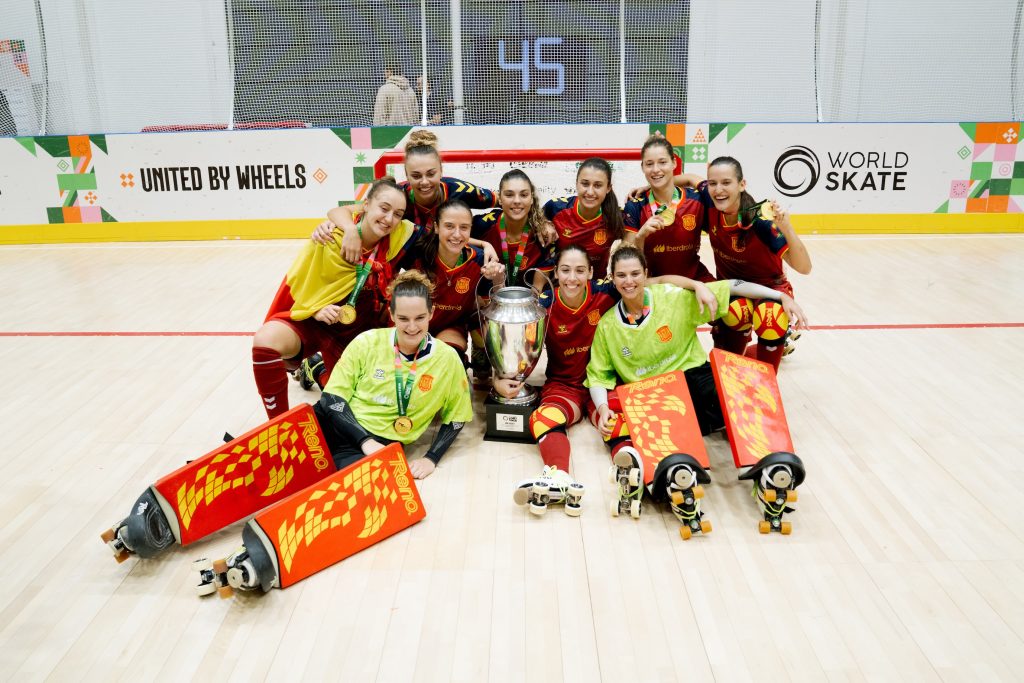
Sporting success has been spread across countries and disciplines. Japan’s Mizuho Hasegawa, 16, added the Park World Championship to the vert title she had won earlier at these Games, while Spain’s Egoitz Bijueska, 15, retained his park crown. Spain won the senior women’s and men’s under-19 rink hockey world titles, as well as the senior women’s inline hockey championship. Chinese Taipei topped the inline freestyle medal table with 18 medals, while France claimed five of the nine podium places in street scootering. During the second week, artistic and speed skating continue, street skateboarding gets underway, and the senior men’s hockey and junior women’s inline hockey championships progress.
Activity in Asunción has also opened discussions about the facilities’ international use after the Games. Francesco Zangarini, World Skate’s Sports Director, recalled the Artistic World Championships held in Paraguay in 2021 during an interview with ‘ABC Cardinal’ and expressed the organisation’s willingness to support other disciplines alongside the national governing body. Beyond sports facilities, he identified opportunities for children to discover, practise and train in these sports as an objective. His proposal for future competitions remains an intention rather than an awarded calendar: “The idea is to have not just one, but several World Cups that could be held every year.”
 Last related articles