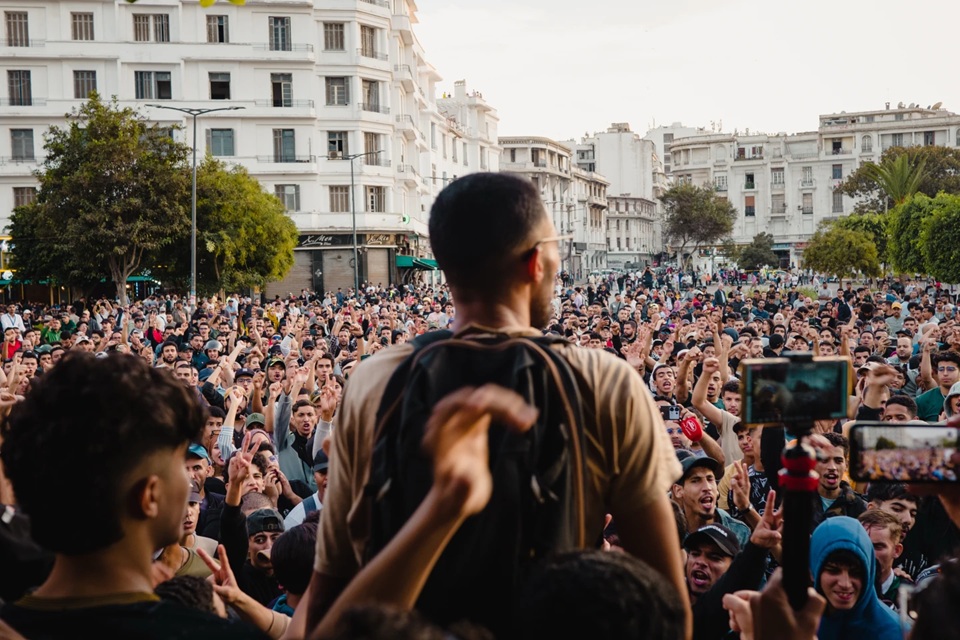
The demonstrations that spread across Casablanca, Rabat, Agadir and other Moroccan cities emerged in response to the deterioration of public services and the scale of government investment in major sporting projects, including the 2030 World Cup and the upcoming Africa Cup of Nations. Most of the protesters, many of them young, are calling for a fairer distribution of public spending and accuse the government of prioritising international image over essential needs at home.
According to data from the Ministry of the Interior, the protests have left three people dead and more than 400 arrested since late September. Amnesty International condemned the excessive use of force by the authorities and called for an independent investigation into the events in Lqliâa, where police opened fire while dispersing demonstrators.
As reported by AP News, protesters are demanding urgent improvements in healthcare and education, and some groups have even called for the resignation of Prime Minister Aziz Akhannouch, arguing that state spending favours stadiums over hospitals. In recent days, organisers have announced peaceful rallies and symbolic sit-ins across several cities, urging participants to remain calm and avoid clashes with police.
Football as spectacle versus basic needs
The Moroccan government is pursuing an ambitious sports-modernisation plan that includes the construction of a new 100,000-seat stadium in Casablanca and the renovation of at least 40 additional venues to host international competitions. The Royal Moroccan Football Federation –FRMF–, together with FIFA and the Confederation of African Football –CAF–, is overseeing preparations for the 2030 World Cup and the 2025 Africa Cup of Nations. These projects, worth several billion dirhams, stand in contrast to Morocco’s struggling healthcare and education systems.
Social organisations leading the demonstrations argue that sports funding should be redirected towards hospitals and schools. In videos circulating on social media, crowds chant “We want hospitals, not stadiums”, a slogan that has become emblematic of the movement. The Ministry of Finance has defended the projects as part of a long-term national development strategy with economic and tourism benefits.
The state’s use of sport as a political narrative
The protests highlight a widening gap between official discourse and public sentiment. According to AP News, demonstrators insist that football investments fail to address Morocco’s real needs and call for structural reforms in healthcare, education and employment. The authorities have pledged to strengthen social programmes and expand medical coverage, while civic groups continue to mobilise. The protests, coordinated through digital platforms and private servers, have so far unfolded in a relatively calm atmosphere following recent appeals for dialogue.
Football plays a central role in Morocco’s foreign policy and institutional projection. The joint bid to host the 2030 World Cup with Spain and Portugal has been promoted as a symbol of intercontinental cooperation and regional leadership. In his address to Parliament, King Mohammed VI reiterated “the need to ensure that sporting progress goes hand in hand with social justice and quality public services for all Moroccans”. The monarch urged his government to accelerate reforms in health and education and called on young people to demonstrate “responsibly and peacefully”.
At an institutional level, both the CAF and FIFA maintain their confidence in Morocco as host of the 2030 World Cup and next year’s Africa Cup of Nations. Both organisations believe preparations remain on schedule and that recent protests will not affect construction deadlines or commitments. The infrastructure projects are backed by public funding and private partners.
Youth groups have announced new peaceful demonstrations in the capital, insisting that “modernity must begin with hospitals” — a message that underscores how football has become a symbol of the state’s spending priorities.
 Last related articles