The National Basketball Association -NBA- and the International Basketball Federation -FIBA- reiterated on Thursday that they would proceed with plans for a professional men’s league in Europe after EuroLeague’s 13 shareholder clubs rejected their collaboration proposal. The joint statement and the subsequent appearance of George Aivazoglou, the NBA’s Managing Director for Europe and the Middle East, at Leaders Week in London mark a new phase in the negotiations: the alliance is pursuing its initiative while the European competition continues with its own franchise and expansion plans.
Reaching an agreement remains part of the NBA and FIBA’s approach, but their intention to develop the new competition does not depend on one. “The NBA and FIBA remain committed to moving forward with a new professional men’s league in Europe,” they said in the statement, which also highlighted the benefits of a partnership between all three organisations for clubs, players and fans. The message combines two objectives: bringing EuroLeague into a shared structure and continuing preparations for NBA Europe even if that integration does not happen. Direct competition between the two would follow from that second scenario; Thursday’s announcement did not signal a definitive break.
NBA Europe retains its 2027 target
In London, Aivazoglou maintained the timeline the NBA has been advocating: “We’re moving ahead with plans for a launch next year.” The statement retains 2027 as the target, without confirming that the entire proposed structure would operate from the outset. In September, Commissioner Adam Silver had already explained that the initial product could differ from the fully established league. ‘The Guardian’ reports a full league in 2028 and a preliminary phase in 2027, without official confirmation. The start of activity envisaged by the NBA should therefore be distinguished from the complete launch of all its teams and qualification mechanisms.
The model reiterated by Aivazoglou envisages 16 participants: 12 permanent teams and four qualifying on sporting merit. The NBA and FIBA’s official proposal offers qualification pathways through the Basketball Champions League -BCL- or an end-of-season tournament for clubs in FIBA-affiliated domestic leagues. The combination seeks to provide stability for investors without completely closing access to other teams. It differs from a league made up exclusively of permanent franchises, although it does not mean that all 16 places would be earned through results each year. The project also envisages aligning its schedule with domestic competitions and national teams.
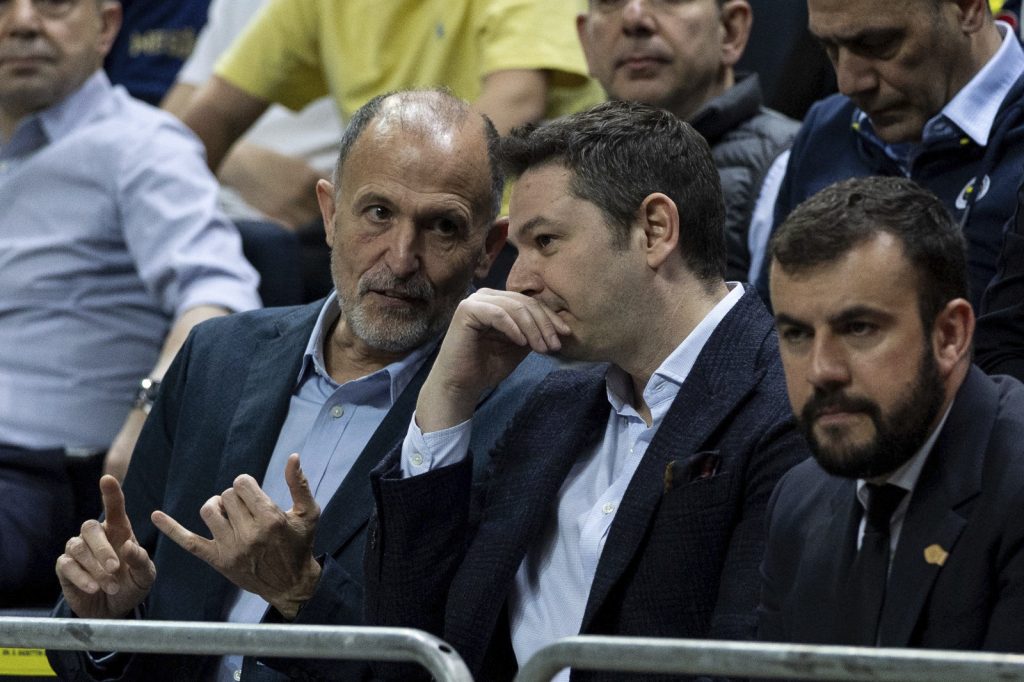
Chus Bueno (EuroLeague) and George Aivazoglou (NBA)
Collaboration remains on the table
The shareholders rejected the proposal presented, rather than ruling out any future agreement. FC Barcelona confirmed to ‘Associated Press’ that the clubs would reconsider an amended offer. That response keeps a collective negotiating route open, while potential discussions with individual participants must be distinguished from agreements to join. The NBA has acknowledged interest from basketball clubs, football organisations and external investors, but that interest does not make existing EuroLeague teams members of NBA Europe. Any eventual participation would require agreement on both entry terms and the relationship with their existing commitments.
Thursday’s appearance also outlined the NBA’s commercial ambitions: preserving European basketball’s identity while broadening its audience through additional entertainment elements. “It will be a global brand and platform. It will transcend Europe’s borders,” Aivazoglou said, according to remarks reported by ‘Eurohoops’. His approach links investor appeal to an international commercial reach extending beyond current audiences. For clubs, the questions include how revenue and commercial rights would be shared; for the organisers, the challenge is converting that potential demand into broadcast agreements, sponsorships and activity in arenas.
Two projects in the same market
If the two projects operate separately, they would compete for teams, players, sponsors, broadcast rights and public attention. They would also need to fit their games around domestic leagues, national teams and venue availability. The institutional distinction matters: EuroLeague belongs to its shareholder clubs, while NBA Europe is being developed through the NBA–FIBA alliance. An agreement would need to resolve who runs the competition, how clubs participate in decisions and what obligations they accept when joining. Operating separately, each structure would need to build a sporting and commercial proposition capable of attracting participants, without another league’s arrival automatically guaranteeing greater revenue for everyone.
On Tuesday, EuroLeague agreed to advance the conversion of its 13 shareholders’ ten-year licences into franchises and instructed its Board of Directors to continue assessing new entrants. A final recommendation is due to be submitted for approval in the coming weeks, as part of its plan to reach 24 teams in 2027–28. NBA Europe, meanwhile, retains its publicly stated target of starting in 2027 and continues discussions with prospective participants and owners. The official announcement outlining the project also envisages resources for academies, domestic leagues and development programmes for players, coaches and referees.
 Last related articles