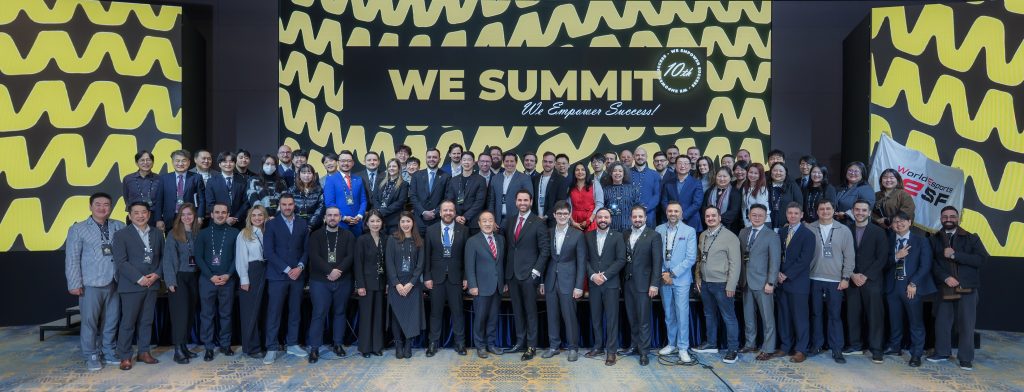
The World Esports Summit 2025, organized by the International Esports Federation -IESF-, has successfully concluded its tenth edition, consolidating its position as a strategic forum for the global development of esports. Held on 10–11 February 2026 in Busan, South Korea, the event brought together federations, publishers, international sports bodies, technology companies, and public institutions under the theme “Shaping the World of Esports”.
Hosted at the Wyndham Grand Busan, the Summit gathered more than 40 speakers from across the international ecosystem, including the President of the IESF, Vlad Marinescu; Gustavo Arellano (FIBA); Eric Stranne (FIA); James Yang (Tencent); Ray Ng (Moonton); Valentin Capelli (WADA); Junghwan Han (KADA); Dipesh Makwana (Alibaba Cloud); and Tomica Madjercic (Sportradar), alongside institutional and federation representatives from multiple continents. Marinescu opened the event with a message focused on unity: “We are this community, we speak the language of the youth.”
Common standards for a global ecosystem
The sessions addressed the core strategic pillars of the IESF, including governance and federation development, integrity and anti-doping frameworks, technological innovation, and sustainable ecosystem growth. In one institutional intervention, it was emphasized that “international federations are essential to connect national structures, publishers, and public stakeholders within a coherent global framework.”
The opening ceremony included representatives from the Ministry of Culture, Sports and Tourism of South Korea -MCST- and the Busan Metropolitan City. Within the broader discussion on sports diplomacy, speakers underlined that esports can serve as a tool for international cooperation, strengthening ties between regions and cultures through regulated structures and shared standards.
Integration with traditional sport
A key focus of the Summit was the growing integration between traditional sport and digital competitions. Dedicated panels examined how organizations such as FIFAe, FIBA, and FIA are developing official esports tournaments alongside their conventional competitions, addressing regulatory matters, talent development, and audience expansion.
In this context, it was stated that “through sport, even the smallest nations can make their voices heard, and esports should be no exception,” highlighting the inclusive potential of the digital ecosystem on the international stage. The long-term sustainability of the sector was also addressed, as Alex YoungMan Kim noted: “The keyword for driving esports sustainability will be balance.”
Balancing technology and integrity
The tenth edition devoted specific attention to the development of ethical standards and anti-doping frameworks adapted to esports. From an education and integrity perspective, it was stated that “esports ethics is about building fairness and trust through education, not punishment,” reinforcing the preventive role of structured programs.
Sessions dedicated to artificial intelligence and regulatory innovation stressed that “innovation is essential, but it must move hand in hand with responsibility,” placing emphasis on balancing technological progress with competitive integrity safeguards. With record participation and an agenda centered on cooperation, global standards, and institutional convergence, the World Esports Summit 2025 reaffirmed the role of the IESF as a platform for international coordination in the structured evolution of the global esports ecosystem.
 Last related articles