Karate travelled a long and difficult road before finally reaching the Olympic stage. A discipline with millions of practitioners worldwide, deep cultural roots in martial arts traditions and a unique position among combat sports, finally reached the Olympic Games at Tokyo 2020 after decades of international efforts.
However, that historic appearance did not lead to a permanent place in the world’s biggest sporting event. After just one Olympic participation, karate was removed from the programme for Paris 2024 and will also not feature at Los Angeles 2028.
The debate over karate’s Olympic future continues, with many questioning why a sport with millions of practitioners and a strong global presence has been unable to establish a permanent place on the Olympic programme.
Masoud Rahnama, President of the Iran Karate Federation, believes one of the main reasons is linked to shortcomings in the sport’s judging system. In his technical assessment, Rahnama argues that inconsistent refereeing and the significant influence of officials’ decisions on competition outcomes have damaged karate’s image at the highest level.
“Karate around the world has suffered considerably from shortcomings in judging regulations, and perhaps one of the biggest reasons behind the failure to secure a permanent Olympic place is this issue,” Rahnama said. “Simply put, we have witnessed situations where refereeing decisions have played an important role in determining the outcome of competitions.”
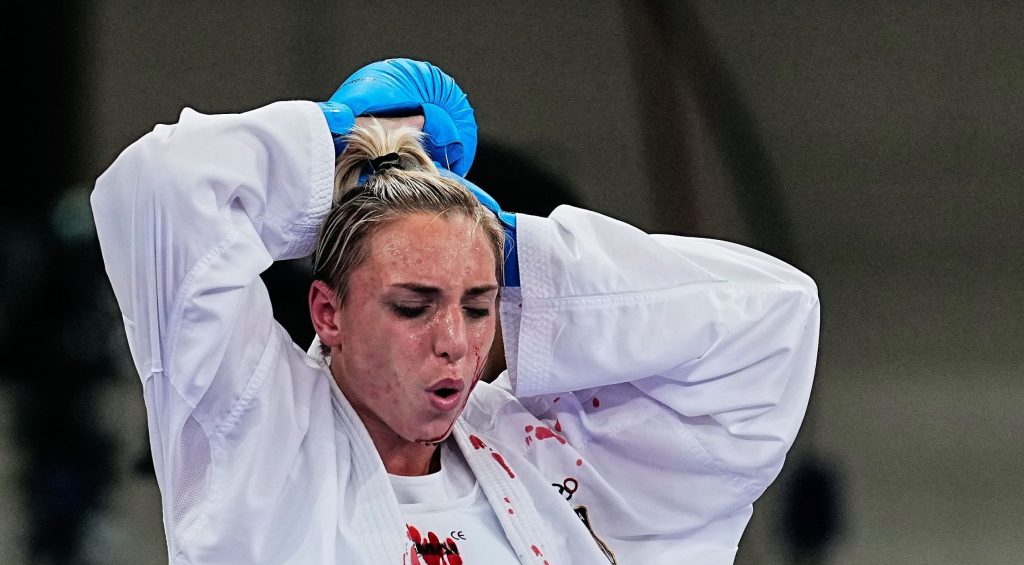
Silvia Semeraro – Tokyo 2020
Karate is built on precision, timing, control and the execution of technically correct movements. Unlike combat sports where physical dominance is often the main objective, karate places significant importance on controlling techniques and avoiding unnecessary contact. While this principle reflects the philosophy of karate, it has also created challenges in the modern sporting environment.
For spectators watching a karate match for the first time, understanding the result can sometimes be difficult. The difference between a successful scoring technique and a rejected action due to insufficient control often requires detailed knowledge of the rules. This complexity can make the sport less accessible to a wider audience.
The modern Olympic movement is no longer based only on sporting history, tradition or the number of athletes involved. Sports must also demonstrate strong media appeal, clear competition formats and the ability to connect with millions of viewers around the world.
Tokyo 2020 represented karate’s greatest opportunity to demonstrate its Olympic potential. After decades of campaigning, the sport finally had the chance to showcase itself on the biggest sporting stage. However, one of the most controversial moments of the Games created a wider discussion about karate’s rules and competitive structure.
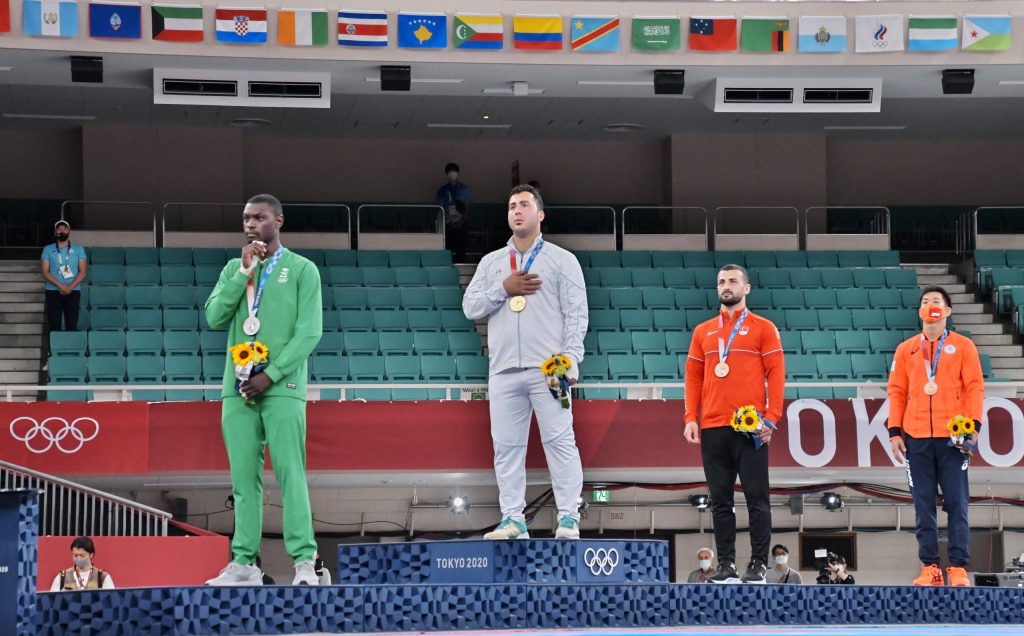
Sajad Ganjzadeh – Tokyo 2020
In the men’s +75kg final, Saudi Arabia’s Tareg Hamedi faced Iran’s Sajad Ganjzadeh. Hamedi delivered a powerful technique that left his opponent unable to continue, but he was penalised under karate’s rules regarding excessive contact and control. The decision resulted in Hamedi being disqualified, with Ganjzadeh awarded the gold medal.
The incident received international attention. For many viewers unfamiliar with karate, the decision raised a difficult question about how a technique that appeared effective and decisive could result in defeat for the athlete who performed it.
The controversy became a symbol of karate’s challenge in communicating its rules to a global audience. A sport that is technically sophisticated and respected within the martial arts community has often struggled to explain the logic behind some decisions to casual spectators.
Compared with karate, judo has successfully maintained its Olympic position because its competition structure is generally easier for a worldwide audience to understand. Concepts such as ippon, waza-ari, successful throws, holds and submission techniques provide a clearer framework, allowing spectators with limited technical knowledge to follow the reasons behind victory.

Bahman Asgari – Doping for Tokyo
Judo has also changed its rules over the years, but these reforms have largely focused on protecting the essence of the sport, improving athlete safety and preventing negative tactics. The discipline has managed to maintain a balance between tradition and the expectations of modern elite sport.
Taekwondo has followed a different approach. Through continuous rule changes, the introduction of technology and adjustments to competition formats, the sport has attempted to improve speed, transparency and entertainment value. These reforms were designed to make taekwondo more attractive and accessible to modern Olympic audiences.
Nevertheless, karate’s absence from future Olympic programmes cannot be explained only by judging regulations. The International Olympic Committee has increasingly focused on attracting younger generations, expanding digital engagement, reaching new audiences and increasing the commercial appeal of sports.
In this evolving Olympic environment, sports such as skateboarding and 3×3 basketball have managed to maintain their relevance by combining sporting quality with strong connections to younger audiences and modern media platforms. These disciplines have also benefited from clearer international structures and more established governance systems.

Luca Maresca
Despite having millions of practitioners worldwide, karate has struggled to create the same level of media impact and commercial appeal within the Olympic movement. Alongside these challenges, issues surrounding global unity and governance have also complicated the sport’s path towards Olympic recognition.
The diversity of karate styles and the historical differences between various schools have always been part of the discipline’s identity. However, instead of becoming a source of strength within a unified global structure, these differences have remained one of karate’s biggest challenges in its Olympic journey.
The World Karate Federation has spent years attempting to create a standardised competition system, but the process has not overcome the divisions that exist within the karate world. The federation has faced difficulties in bringing together different traditions, organisations and perspectives under a single framework capable of meeting the expectations of the Olympic movement.
For any sport seeking a permanent Olympic future, unity, clear rules, a strong global structure and a competition format that is easily understood by athletes, media and spectators are essential.
Karate remains one of the world’s most influential martial arts, with millions of people practising the discipline across continents. However, the Tokyo experience showed that traditional popularity alone is no longer enough to guarantee success in modern international sport.
A return to the Olympic programme will require karate to reconsider aspects of its competition regulations, improve judging transparency, strengthen governance structures and create a stronger connection with younger generations of athletes and fans.
Tokyo 2020 was both a historic opportunity and a major test for karate. It demonstrated the global appeal and potential of the sport, but it also revealed the changes required if karate is to compete successfully in the rapidly evolving landscape of Olympic sport.
 Last related articles