Gianni Infantino’s latest commercial initiative has exposed more than internal disagreement within FIFA. It has revealed a deeper institutional resistance to a leadership style increasingly defined by opacity, political alignment, and aggressive commercial ambition. In the end, Infantino did not lose to external pressure. He lost to FIFA itself.
UEFA, the Asian Football Confederation, and CONCACAF formed a rare and decisive front against the proposed commercialisation plan centred around FIFA Forward Enterprise. The project involved selling a 20 percent minority stake to private equity investors, a move designed to raise approximately 4.2 billion dollars in immediate capital. FIFA President Gianni Infantino indicated that these funds would be distributed to member associations, widely interpreted as an attempt to secure support for the proposal. The structure implied an overall valuation of around 20 billion dollars and immediately raised concerns about governance, transparency, and the future control of the game.
At the heart of the backlash was Infantino’s calculated secrecy. The true identity of the investors behind the proposal was deliberately concealed under the pretext of non disclosure agreements. This was not viewed as routine confidentiality. It was seen as institutionalised concealment.
Names that did surface only deepened the concern. Joshua Kushner, brother of Donald Trump’s son in law, was linked to the initiative through his investment firm Thrive Capital. Alongside this, a consortium of Middle Eastern and East Asian investors, led by Saudi Arabia and the United Arab Emirates, was positioned as a central financial pillar of the project.
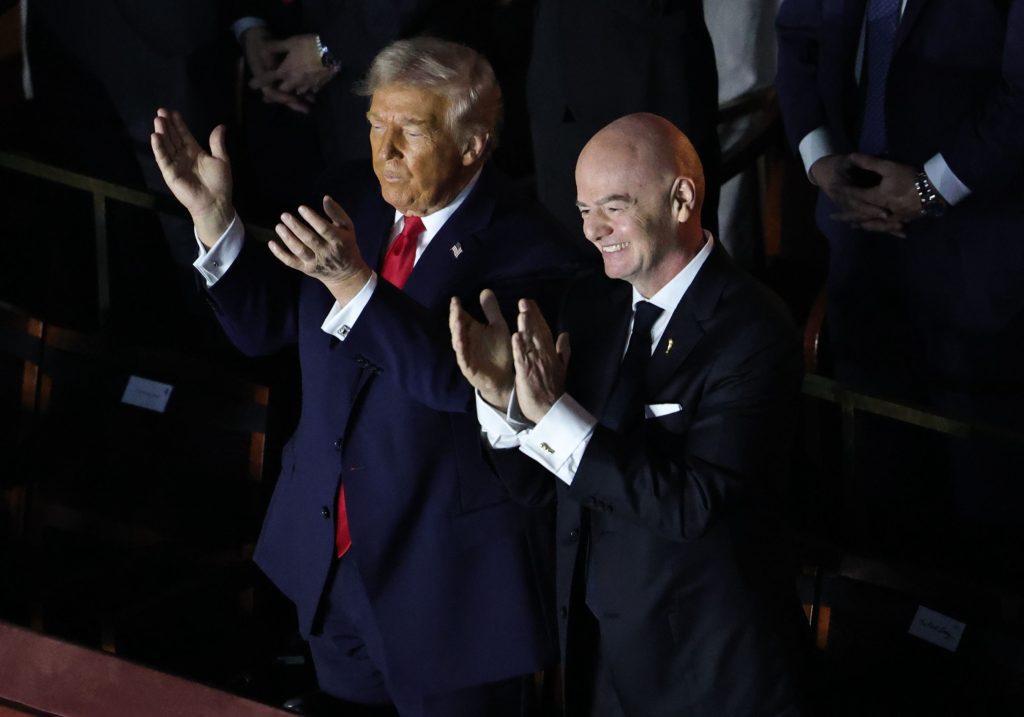
World Cup 2026: Final Draw, Washington D.C
SoftBank, the Japanese investment giant led by Masayoshi Son, played the role of financial architect and facilitator. Its close relationship with Saudi Arabia’s Public Investment Fund added another layer of political and economic complexity. For many within FIFA’s confederations, the structure of the deal pointed towards a concentration of influence that extended far beyond sport.
Infantino’s strategy to secure approval relied heavily on financial incentives. National federations, particularly those with limited resources, were promised unprecedented levels of funding. The scale and timing of these promises raised serious ethical questions. The distinction between development support and inducement became increasingly blurred.
The opposition from UEFA and its counterparts was therefore not simply a matter of financial disagreement. It was a defence of governance principles. There was a growing belief that FIFA was drifting towards a model where commercial and political interests would outweigh transparency and accountability.
These concerns were not formed in isolation. They were shaped by recent experience. The 2022 World Cup in Doha had already highlighted the extent to which political considerations could shape FIFA’s decisions. By the time the 2026 tournament was staged across the United States, Canada, and Mexico, those concerns had intensified.
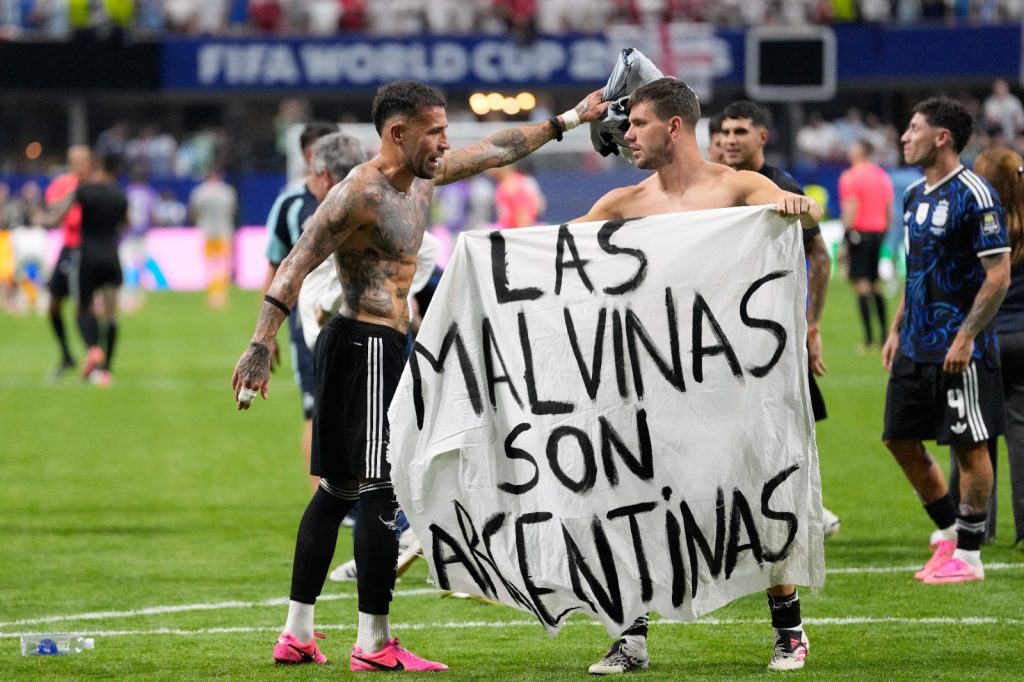
The banner referencing the Malvinas Islands
Despite the use of world class infrastructure, the 2026 World Cup was marked by controversy. Questions surrounding refereeing consistency, particularly in the use of VAR, undermined confidence in the competition. The failure to issue a red card to American forward Folarin Balogun became a focal point of criticism, especially amid suggestions of political interference involving Donald Trump.
On the pitch, incidents of unsporting behaviour, notably involving Argentina during the final, were met with limited response. Off the pitch, FIFA’s inconsistent handling of political expression further damaged its credibility. The organisation remained silent when Egypt’s head coach raised the Palestinian flag and when Giovani Lo Celso, Nicolás Otamendi, and Lisandro Martínez displayed a banner referencing the Malvinas Islands. Yet it acted decisively to suppress Iranian fans who brought the historic Lion and Sun flag into stadiums. These contradictions exposed a governing body struggling to apply its own principles consistently.
FIFA’s history is not short of controversy. The era of Sepp Blatter was defined by governance failures of a different kind. However, the structural issues remain unchanged. A voting system heavily influenced by smaller federations continues to shape outcomes, often reinforcing a leadership model that prioritises political alignment over reform.
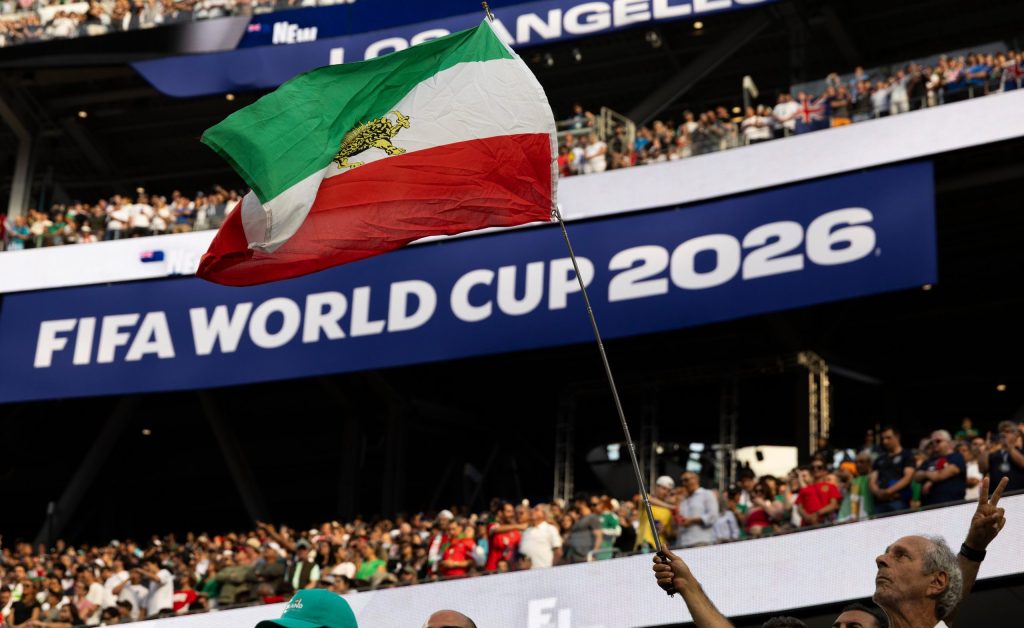
World Cup 2026: IR Iran 2:2 New Zealand
By 2026, these longstanding issues had reached a breaking point. Even political leaders began to respond. The United Kingdom’s newly appointed prime minister, Andy Burnham, openly called for Infantino’s resignation, stating that the mere existence of such a proposal demonstrated that FIFA was under the wrong leadership.
Infantino’s approach has been defined by a constant balancing act between politics, commerce, and sport. In practice, that balance has tilted too far. His repeated appeals to political neutrality have often served as justification for inaction in the face of clear inconsistencies and ethical concerns.
For other international sporting bodies, including the International Olympic Committee, the lessons are clear. The challenge is not simply to generate revenue or expand influence. It is to maintain credibility while navigating an increasingly complex intersection of political power and commercial ambition.
What FIFA leaves behind in this episode is not just a failed proposal. It is a warning. Even the most powerful leaders in sport can lose control when transparency is sacrificed and trust is eroded. Infantino’s defeat was not procedural. It was institutional.
And it may not be the last of its kind.
 Last related articles