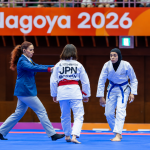
Three consecutive appearances at the Asian Games have given Ju-Jitsu something that cannot be created by a single competition. Continuity.
The sport made its Asian Games debut in Jakarta-Palembang in 2018, returned in Hangzhou in 2022 and was again part of the programme at Aichi-Nagoya in 2026. Each edition has brought athletes, coaches, referees and national federations into the environment of one of Asia’s biggest multi-sport events.
That progression matters. A debut can attract attention, but returning to the same competition creates valuable experience. Athletes and officials become familiar with the demands of a multi-sport Games, national federations gain greater experience of the process, and the sport strengthens its position within the wider Asian sporting structure.
Much of that progress has involved the Ju-Jitsu Asian Union, national member federations, the Ju-Jitsu International Federation, the Olympic Council of Asia and the organising committees. Coaches, referees and technical officials have also made an important contribution, much of it behind the scenes.
The Asian Games have also given Ju-Jitsu an opportunity to present more than its competitive side. Discipline, respect, courage and sportsmanship are among the values associated with the sport. Their importance is perhaps greatest when young people experience them through training and competition rather than simply hearing them described.
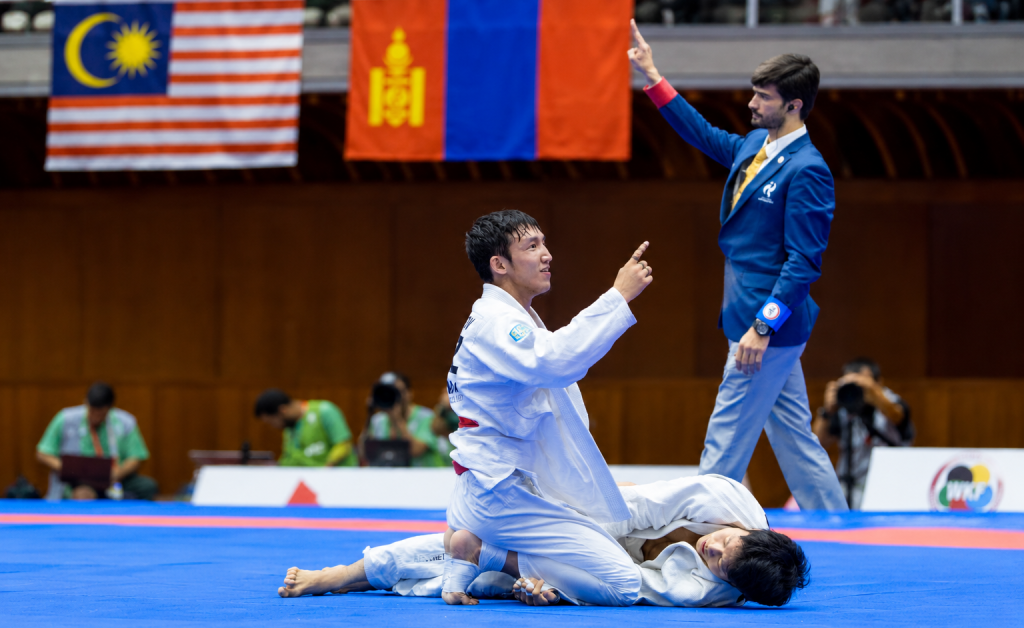
Asian Games 2026
This is why the latest agreement between JJIF and the International School Sport Federation deserves particular attention.
The two organisations signed a memorandum of understanding in Lausanne covering cooperation in education and sport. JJIF President Panos Theodoropoulos and ISF President Željko Tanasković said the agreement is intended to bring JJIF expertise into schools and create opportunities for Ju-Jitsu to be included in ISF events, including the Universiade.
The Asian Games story becomes interesting
A place on the Asian Games programme gives Ju-Jitsu visibility at the highest level. Schools can provide something different, giving young people an opportunity to discover the sport at an early age and decide how far they want to take their journey.
ISF’s multi-sport Games for athletes under 15 and under 18 provide a natural setting for that connection. With qualified coaches, supportive schools and strong links with national federations, more young athletes could have the opportunity to discover Ju-Jitsu and progress into organised competition.
The foundations are already there. The experience gained through three Asian Games editions can now help create new pathways for young athletes, bringing together schools, coaches, national federations and international organisations.

Panos Theodoropoulos & Željko Tanasković
This is also why the three Asian Games appearances should be viewed as more than a record of participation. They represent experience, visibility and a growing place for Ju-Jitsu within the continental sporting structure. The opportunity now is to build on that foundation and connect it with the next generation.
Ju-Jitsu has every reason to look ahead with confidence. Its presence at three editions of the Asian Games provides a strong platform, while the agreement with ISF opens another avenue for introducing the sport to young people through schools and youth competitions.
The coming years could bring a new chapter in that development. If national federations, schools, coaches and the two international organisations continue working together, more young athletes will have the chance to discover Ju-Jitsu, develop their skills and find a pathway into organised competition.
For a sport that has established itself on the Asian Games programme, this is an encouraging direction. The medals from Jakarta, Hangzhou and Aichi-Nagoya will remain part of the record. The greater opportunity now is to ensure that some of the young people watching those competitions can one day become the athletes competing in them.
 Last related articles