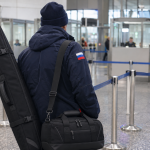
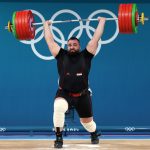
Russia is beginning to realise that regaining ground within international federations does not guarantee the ability to compete, and that politics and its invasion of Ukraine continue to carry weight. The decisions announced this week by Poland, Canada, Finland and Norway have shifted the conflict from international federations to border controls. While parts of international sport lift restrictions on Russian athletes, governments maintain their own entry requirements. The start of the winter season has exposed that contradiction, but its consequences could extend well beyond the snow, and Los Angeles 2028 should start asking who will be eligible to compete and who will be allowed to enter… These are two questions that need answers by next year, when many sports begin their qualification processes.
Sport is opening up, albeit cautiously. World Aquatics allowed senior Russian and Belarusian athletes to return in April with their national flags, anthems and uniforms, subject to integrity and anti-doping requirements. World Gymnastics lifted its restrictions in May; the ISU announced in June the readmission of neutral skaters for 2026/27; the FIS established conditions for individual participation in September; and the FIL confirmed this Thursday that its neutral athlete procedure would continue, excluding team events. In ice hockey, the IIHF faces a reinstatement ordered by CAS. And the most important body, the IOC, took its own step on July 7 when it provisionally lifted the Russian Olympic Committee’s suspension after determining that it had removed sports organisations from territories under the Ukrainian committee’s jurisdiction from its membership and committed not to operate there. It also withdrew its restrictive recommendations on Russian participation.
Four governments and different restrictions
In contrast to these developments in sport, Poland confirmed this past Wednesday that it would not issue visas to Russian ski jumpers for the upcoming events in Wisla and Zakopane, even if the FIS had approved them as neutrals. Canada announced that it would prevent Russian players and officials from entering for the forthcoming World Junior Ice Hockey Championship, even if they hold valid visas (although it continues to allow individual neutral athletes to participate). Finland will apply restrictions from November 16 to short-term work carried out under a visa, including professional sport and athletes competing as neutrals. Norway also announced this Thursday measures to prevent Russian and Belarusian professionals and their support personnel from entering the country to compete… These are four restrictions of the kind an increasing number of countries are beginning to adopt to prevent Russian athletes from competing around the world, particularly in Europe.
Winter sport is currently at the centre of the problem because its circuits pass through countries that remain firmly opposed to the invasion of Ukraine. However, the disagreement had already emerged in a summer sport: on October 14, World Gymnastics reported that Dutch visas had been refused to three Russian athletes for the World Championships in Rotterdam. Sweden has also examined the possibility of refusing visas ahead of the Nordic World Ski Championships in Falun.
Political relations have not returned to normal
This recent opening in sport does not reflect an improvement in diplomatic and political relations. Canada explicitly links its sporting position to the continuation of the war, while the European Union remains at odds with Moscow, with cybersecurity also becoming part of that confrontation. In July, the EU attributed cyberespionage and sabotage activities to the FSB’s 16th Centre, identifying France, Germany, Poland, Cyprus, the Netherlands, Austria, Slovakia, Romania and Finland among the countries affected. In that context, the actions of certain governments against Russia are understandable. For them, nothing has changed.
And although it is important to distinguish those attributed cyberattacks from the bomb threats of recent weeks — against schools in Italy, the United Kingdom and Ireland, alongside transport disruption in France and threats to European flights — these incidents are often attributed directly to Russia, even though Moscow has denied involvement…
Dakar does not guarantee entry to Los Angeles
While all this unfolds, Russia’s return has taken on a very different appearance at the Dakar 2026 Youth Olympic Games: a delegation of 13 athletes, competing with national symbols, has won eight gold medals, four silver and two bronze after the penultimate day. The opening to youth categories had been endorsed by the Olympic Summit in December 2025. But competing in Senegal does not guarantee being able to do so in the United States, for example. Amid so much uncertainty, a potential US refusal of entry would be a conceivable scenario, given what is happening in other countries. There is also a signal in the opposite direction: the White House established a task force for 2028 whose remit includes streamlining visas and accreditation for foreign athletes and officials. Kirsty Coventry’s IOC needs that coordination to translate into concrete arrangements for countries such as Russia.
The outcome of this situation needs to be followed closely: it has led to government action and has definitively moved beyond the boundaries of sport. A federation’s willingness to give a Russian athlete an opportunity, with or without a flag, is not enough; politicians in each country must also be willing to allow it. We will see what consequences follow from this wave of restrictions that, for now, Canada, Poland, Finland and Norway have set in motion…
 Last related articles