The IOC’s discipline-driven Olympic model could reshape the future of international sport. But its success will depend on more than television audiences and commercial appeal. Governance, athletes’ rights and sporting integrity must carry equal weight.
The changes Kristy Coventry is proposing for the Olympic Games, with a greater emphasis on individual sporting disciplines, appear to be moving closer to implementation. They are expected to attract considerable attention at the 147th IOC Session in April 2027, with the future of the Brisbane 2032 Olympic Games likely to feature prominently in discussions.
International Sports Federations are waiting to understand how the new model will operate and what mechanisms will govern its implementation. They need clarity before they can shape their future policies around an Olympic programme increasingly organised around individual sporting disciplines.
For now, many IFs remain uncertain about their future role and whether they will retain the same level of involvement and influence they have traditionally enjoyed. What they do understand, however, is that the technical and sporting management of Olympic disciplines cannot be delivered effectively without their expertise and participation.
The experience of boxing at Paris 2024, following the removal of the International Boxing Association from the Olympic Movement, offers an important reminder. The problems and controversies surrounding boxing at the Games exposed the risks of disrupting established relationships between the IOC and international governing bodies.
IFs remain a key component in the successful delivery of multi-sport events, particularly the Olympic Games. Their contribution cannot simply be replaced by the IOC, regardless of the resources and organisational capacity at its disposal.
The IOC cannot reasonably expect to deliver Games to the standard demanded by athletes, spectators and the wider sporting community without the cooperation of the federations responsible for the disciplines themselves.
This does not mean, however, that every international federation, regardless of its governance record or the sporting appeal of its disciplines, should be guaranteed an Olympic platform. Both the quality of sporting administration and the ability to attract audiences must form part of the equation.

Lin Yu-ting, Paris 2024
Television audiences cannot be ignored
The governance of IFs deserves particular attention. At the same time, the Olympic programme must respond to changing audience expectations. Some disciplines have struggled to attract television viewers, raising legitimate questions about their place in an increasingly competitive Olympic environment.
Taekwondo, hockey, rowing, modern pentathlon, canoe sprint, beach volleyball, sailing and shooting were among the sports whose television audience figures in Japan at Tokyo 2020 placed them towards the lower end of the rankings.
Tokyo was, of course, an exceptional edition of the Games. Held under restrictions imposed by the COVID-19 pandemic, it took place without spectators in the venues, leaving television as the principal means through which audiences could follow the competitions. Nevertheless, the available figures provide an important indication of the differences in the popularity of individual sports.
Karate offers a particularly interesting example. After years of campaigning, the World Karate Federation finally secured a place at the Olympic Games, with the sport included among the five additional sports proposed by the Tokyo organisers.
Competing in its birthplace, Japan, karate might reasonably have been expected to attract a substantial television audience. Yet its reported share of television viewers was just 20.6 per cent. This compared with 48 per cent for baseball and softball, 36.9 per cent for skateboarding and 21.4 per cent for sport climbing.
For a sport making its Olympic debut on home soil, the figures raised an important question about the decision to include it in the programme.
Judo, by contrast, demonstrated the strength of its appeal in Japan. It attracted 49 per cent of television viewers, making it the second most-watched sport at Tokyo 2020, behind table tennis.
Baseball and softball, athletics, swimming, artistic gymnastics, football, skateboarding, basketball, badminton, tennis, volleyball, wrestling, golf and sport climbing also featured among the 15 most-watched sports.
These figures do not, in themselves, determine the sporting value of an Olympic discipline. However, they provide an important commercial indicator that the IOC and international federations can no longer afford to overlook.
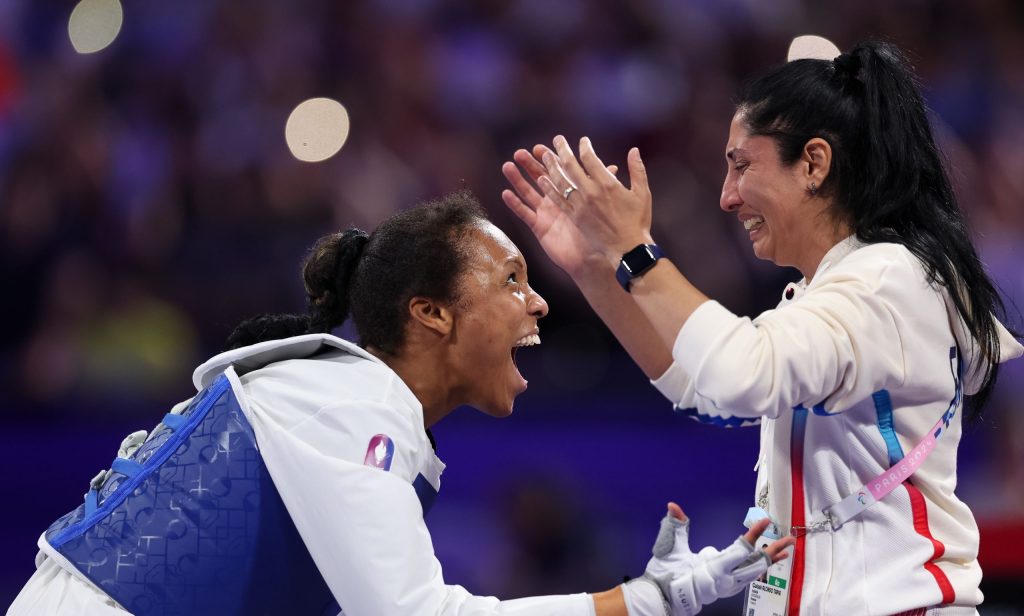
Paris 2024 Olympic Games
The commercial direction of the Olympic programme
The IOC’s emerging approach to a discipline-driven Olympic programme reflects an increasingly commercial understanding of the Games. Television exposure and the ability of individual disciplines to attract audiences are likely to become more influential in decisions about the Olympic programme.
Geographical reach and the development of a sport across different regions will also matter. A discipline with a limited international footprint may struggle to demonstrate the commercial value required to justify its place, even if it has a long history within its respective federation.
However, a purely commercial approach carries risks. It could undermine the traditional foundations of the Olympic Games and push fundamental priorities, particularly athletes’ human rights, further down the agenda.
A discipline-driven model may force international federations to modernise, innovate and reconsider how they present their sports to global audiences. That pressure could be positive. But if the distinct sporting cultures and values of individual disciplines are ignored, the consequences could extend beyond commercial failure to ethical and behavioural problems within sport itself.
The challenge, therefore, is not simply to identify which disciplines attract the largest television audiences. It is to establish a framework that recognises the wider responsibilities of international sports governance.
A revolution must have consistent standards
In my view, a successful discipline-driven Olympic model must be built on a consistent set of evaluation criteria.
These should include global popularity and sporting appeal, rather than simply the number of countries affiliated to a federation; geographical reach and the representation of athletes from different continents; the number of competitors; the quality and competitiveness of sporting events; and meaningful opportunities for women and men to participate.
Audience engagement, particularly among younger generations, must also be considered. Above all, however, the integrity of the institutions governing these disciplines must become a central part of the assessment.
Transparency in governance, democratic and credible elections, athlete independence, anti-corruption measures and effective anti-doping policies should carry the same weight as commercial and audience considerations.
A federation should not be able to secure its Olympic position simply because its discipline attracts viewers, just as a large membership base should not automatically guarantee its place in the programme. Sporting popularity and institutional credibility must go hand in hand.
Coventry has presented this project to the sporting world under the banner of Fit for the Future. I regard it as a potential revolution in the Olympic Movement for the 21st century.
But revolutions are not judged by the scale of their promises. They are judged by the principles on which they are built and the results they deliver.
If the IOC succeeds in creating a model that combines commercial sustainability with sporting diversity, institutional accountability and the protection of athletes’ rights, it could redefine the future of the Olympic Games.
If, however, commercial interests become the dominant measure of Olympic value, without equal consideration for governance, integrity and the sporting cultures represented by international federations, this ambitious project could ultimately fail to achieve its purpose.
 Last related articles