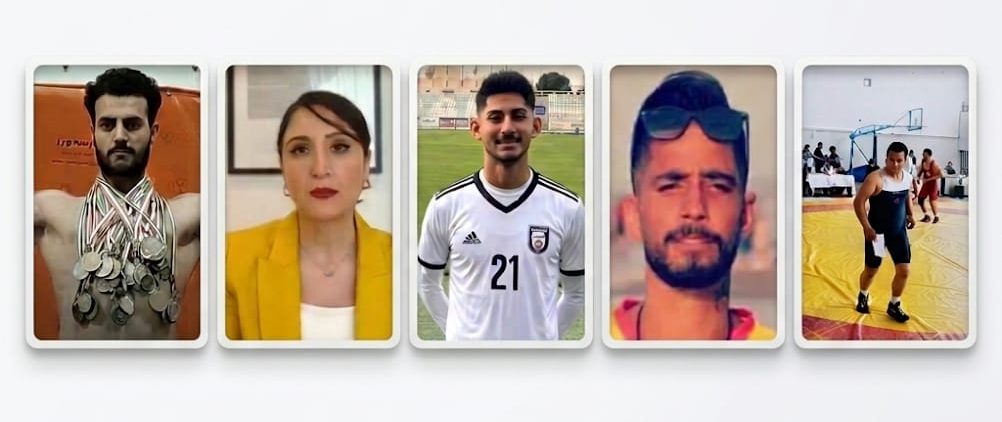
At least six Iranian athletes who took part in peaceful street protests have been sentenced to death, while many others remain in solitary confinement under heavy interrogation or are serving prison sentences.
Those sentenced to death include equestrian athlete Taraneh Rahimi, water polo player Ali Pishehvar, mountaineer Maryam Hedavand, wrestler Ehsan Khodadadi, kickboxer Benjamin Naghedi and footballer Ehsan Hosseinipour.
Their cases are part of a wider massacre of Iranian athletes who have participated in protests or spoken out against the country’s political establishment.
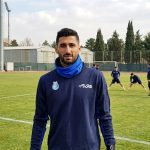
Former Iran national-team goalkeeper Rashid Mazaheri is among the athletes whose fate remains unknown. In an Instagram post, Mazaheri blamed Supreme Leader Ali Khamenei for the killing of protesters in Iran’s streets, with the death toll reported at more than 42,000.
His wife, Maryam Abdollahi, told an Iranian television channel based in Germany that Mazaheri was being held in solitary confinement. His current whereabouts and fate remain unknown.
Mazaheri is not the only Iranian footballer to have been imprisoned. Amir Nasr-Azadani, bodybuilder Khaled Pirzadeh, equestrian athlete Rasoul Salehi, and boxers Amin Imanian and Shayan Seyed-Nazari have received prison sentences ranging from one to nine years and remain behind bars.
Many political prisoners in Iran have also been denied access to independent lawyers, raising serious concerns over the legal process surrounding the cases of protesters and athletes.
Navid Afkari
Wrestler Navid Afkari was arrested, imprisoned and executed on 12 September 2020 after being accused of killing a man affiliated with the authorities and security forces.
Afkari maintained his innocence. A voice recording that emerged from prison before his execution was widely circulated and became one of the most powerful accounts of the pressure faced by an Iranian prisoner awaiting execution.
In the recording, Afkari said he had been denied a fair trial and argued that the authorities were looking for someone to put beneath the noose.
His execution triggered international condemnation and made Afkari a symbol of the risks facing Iranian athletes who challenge the authorities.
Woman, Life, Freedom
The suppression intensified after the nationwide protests known as the Woman, Life, Freedom movement.
Among the athletes arrested during the protests and later executed were karate athletes Mohammad Mehdi Karami and Saleh Mirhashami, wrestler Majidreza Rahnavard and kung fu athlete Mohammad Hosseini.
Their executions drew international condemnation and further highlighted the treatment of protesters sentenced to death by Iranian courts.
The pattern has continued beyond the Woman, Life, Freedom protests. According to reports, the regime in Iran also executed athletes who were arrested during the January 2026 protests, known as the Shirokhirshid Revolution. Wrestler Saleh Mohammadi, karate athlete Sasan Azadvar and MMA fighter Gholamreza Shekarab were among those put to death.
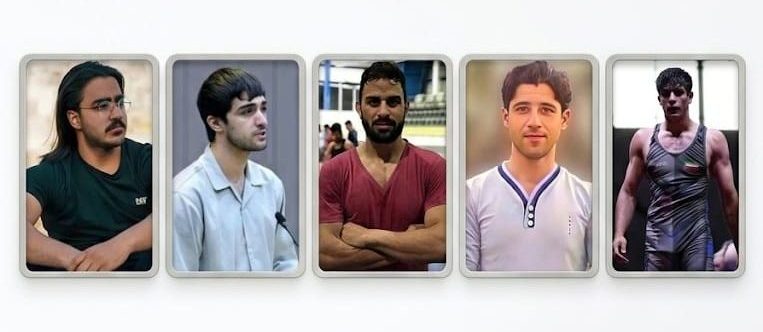
65 Athletes
SportsIn reported in February that it had identified 65 athletes who supported Crown Prince Reza Pahlavi and were killed during the massacre of protesters in cities across Iran. Some media outlets later reported an even higher number of athletes among those killed.
The athletes identified came from a wide range of sports, including football league and national-level competitors in taekwondo, basketball, baseball and boxing.
The cases of athletes killed, imprisoned or sentenced to death show the extent to which Iran’s massacre has reached the sporting community.
For some athletes, participation in street protests or criticism of the regime has resulted in imprisonment. For others, it has ended in execution.
The latest death sentences have once again focused attention on the grave risks facing Iranian athletes who choose to speak out, while the fate of several others remains unknown.
 Last related articles