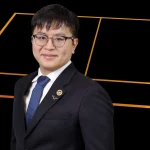
Timur Turlov has been elected president of the International Chess Federation – FIDE – after defeating Wadim Rosenstein by 110 votes to 85 in the second round of the election held on 26 September in Samarkand, Uzbekistan. The businessman and president of the Kazakhstan Chess Federation succeeds Arkady Dvorkovich, who led the organisation for two terms between 2018 and 2026. At 38, Turlov becomes FIDE’s eighth president and the second youngest in its history. His ticket, with five-time world champion Viswanathan Anand as deputy president, combines the backing of one of chess’s leading private sponsors with a programme of digital transformation, funding for national federations and governance reform.
The election took place during the General Assembly, alongside the 46th Chess Olympiad, with representatives of 196 national federations participating. Turlov led the first round with 96 votes, ahead of Rosenstein’s 76 and Jan Henric Buettner’s 20, both rival candidates representing Germany. A second ballot two hours later confirmed his victory. “We are all one family, and we will continue working as one. This is a great responsibility and a vote for a better future of our sport,” he said after the result. The new president also thanked his opponents for their participation and argued that developing chess worldwide depends on making member federations “stronger and more independent”.
From sponsor to president
Turlov is an economist and chief executive of Freedom Holding Corp., an international financial services group listed on Nasdaq. He has led the federation in Kazakhstan since January 2023 and, according to figures released by FIDE, his company has allocated approximately US$30 million to developing chess in the country over three years, while also supporting more than 20 major international FIDE tournaments. His relationship with the governing body already encompassed competitions, training and educational projects before the election. On 17 September, Freedom was also announced as the main sponsor of the 2026 World Championship match, extending a strategic partnership with FIDE dating back to 2023.
The move from financial backer to president makes the management of those commercial relationships a central issue for his term. His candidacy documents, published on the FIDE Congress website, state that Turlov will abstain from voting on potential sponsorship contracts between Freedom and FIDE, agreements with the International School Chess Federation (ISCF) and hosting bids submitted by the Kazakhstan federation. Those decisions will rest with FIDE’s governing bodies. Turlov is also the founding president of the ISCF, established in September 2024 to expand chess in schools and education systems, and leads the association bringing together the federations of Azerbaijan, Kazakhstan, Kyrgyzstan, Turkmenistan, Türkiye and Uzbekistan.
Anand and institutional continuity
The election brings the Dvorkovich era to a close, although the transition began in July. Dvorkovich suspended his presidential duties after being placed under European Union sanctions, and Anand, deputy president since 2022, assumed the interim presidency. Turlov had initially been part of Dvorkovich’s election team before launching his own presidential bid. Anand’s continued presence and the new president’s existing role in funding FIDE therefore preserve links with the previous administration. Dvorkovich congratulated the winner, saying that his team had “the energy, a clear plan, and resources” to deliver its proposals.
Turlov’s programme proposes a shared digital platform for FIDE and its members, more equal access to management tools and support to help federations attract funding and build stable sources of income. It also includes expanding school chess, publishing the international calendar well in advance, improving conditions for players, coaches and arbiters, and increasing women’s representation in leadership. These remain campaign commitments whose implementation will require budgets, assigned responsibilities and decisions by FIDE’s governing bodies. Anand brings experience as both a five-time world champion and an administrator, alongside continuity in relationships with players and national federations.
Russia and international obligations
Russian participation will be another issue facing the new leadership. During the campaign, Turlov said that complying with the Court of Arbitration for Sport (CAS) ruling restricting that participation was a “red line” for preserving FIDE’s position within the Olympic movement. At the same time, he expressed hope that Russian sporting organisations would eventually meet the conditions required to return to full participation. His position makes any future change conditional on compliance with international sporting obligations, against a backdrop in which the war in Ukraine and sanctions against Dvorkovich have directly shaped the leadership transition.
Forming the new leadership team is the next step on the Assembly’s agenda. It provides for the election of four vice-presidents and for the newly elected president to nominate candidates for treasurer, secretary of the Council and three further vice-presidential positions. Those appointments will establish how responsibilities are divided within Turlov’s team and who will implement his financial, technological and educational programme. “We may have different opinions, but we all share one belief—that chess is important and that we can do much more to develop it around the world,” the new president said after the vote.
 Last related articles