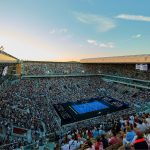
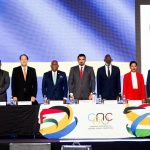
The International Padel Federation -FIP- and Premier Padel have launched a new campaign to promote the sport’s inclusion in the Brisbane 2032 Olympic Games. Presented on Tuesday as the two organisations formally recognised 20 October as World Padel Day, the initiative highlights international growth, female participation and modular courts. The aim is to turn expanding participation and professional competition into an Olympic opportunity, although no proposal from the organising committee that includes padel has been announced.
Luigi Carraro, FIP president, links that ambition to opportunities for players: “Our ambition is to give the next generation, in Australia and around the world, the opportunity to dream of representing their country on the Olympic stage.” The campaign includes a promotional film and presents the opportunity to discover the sport and continue playing it as part of its potential legacy. Its approach combines men’s and women’s competition with facilities that can be adapted to existing settings.
From recreational growth to international competition
The World Padel Report 2026 estimates around forty million amateur players across 191 countries and territories, with women accounting for 47% of participants and more than 91,000 courts worldwide. Court numbers increased by more than 20% compared with the previous report. These are federation estimates, drawn from a survey of seventy national associations alongside information from its international activities. The sport’s presence in a country does not necessarily mean it has an affiliated federation there, and the participation figure extends beyond licensed players.
FIP membership reached 115 after fifteen federations joined at the assembly held on 12 October in Madrid, Spain. The federation has developed circuits connecting junior competition through FIP Promises with the CUPRA FIP Tour and Premier Padel. At that meeting, Alejandro Blanco, president of the Spanish Olympic Committee -COE-, voiced his support: “I cannot imagine the Olympic movement’s future without padel.” His statement adds national Olympic committee backing to the federation’s campaign.
The growth also has an economic dimension. The World Padel Impact study, produced by OpenEconomics using FIP data, estimates annual worldwide expenditure of €6.84 billion, a GDP contribution of €8.6 billion and more than 235,000 full-time equivalent jobs. The analysis covers court rental, facility construction, equipment and tournaments. These figures estimate economic activity associated with padel, rather than federation revenue. Together with the increase in facilities, they indicate the scale of the market behind the campaign, although they do not calculate the impact of a potential Olympic competition.
A temporary court in the host country
Promotion in Australia found a recognisable setting on 15–16 August: a temporary court beside the Sydney Opera House, overlooking the harbour. The Padel Invitational, organised by Padel Australia in collaboration with Premier Padel and FIP, brought together international professionals, former tennis player Pat Rafter and local club players. The federation uses that experience to illustrate how the sport can be staged in existing spaces. Such flexibility offers alternatives to permanent venue construction, although an Olympic application would require detailed plans for capacity, services, accessibility and operations.
Experience at multisport events provides another foundation. Following the 2023 European Games, padel featured this year at the South American, Mediterranean and Asian Games. At the latter, Japan won the women’s tournament and Qatar the men’s, extending the prominence of national teams beyond the sport’s traditionally dominant markets. These appearances build experience of national-team formats and delivery alongside other sports. Padel has also been confirmed as a medal sport at the Istanbul 2027 European Games.

What the Olympic programme now requires
The campaign comes under a different framework from previous additions. The International Olympic Committee -IOC-, led by Kirsty Coventry, approved a methodology in June that will assess disciplines from Brisbane 2032 onwards. The process covers governance, integrity, anti-doping compliance and athlete safeguarding, alongside global appeal, cost, operational complexity and athlete representation. Organisers will be able to propose up to four additional disciplines for the Summer Games, taking responsibility for their costs. The model links proposed additions to their operational feasibility, alongside sporting appeal and the ability to attract audiences.
Institutional recognition remains a relevant step. FIP highlights recognition from continental Olympic organisations, but does not appear in the IOC’s public directory of recognised international federations consulted for this article—a requirement within the published pathways for adding disciplines. No IOC announcement confirming such recognition was located either. August’s update distinguishes between the programme evaluation process and additional disciplines proposed by the host. For padel, establishing access to that process will determine how its campaign can become a proposal eligible for consideration for Brisbane.
 Last related articles