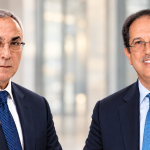
The announced departure of Cindy Hook, CEO of the Brisbane 2032 organising committee, has opened a debate about the relationship between Games organisers and the government of Queensland, Australia. ‘The Australian’ has published reports linking her decision not to renew her contract to political tensions, while Queensland Premier David Crisafulli denied on Wednesday that he had pushed her out. The leadership change comes as the organisation prepares for a phase increasingly focused on procurement, operations and project delivery.
Hook announced on Tuesday that she would leave when her four-year contract expires. She presented the decision as a transition after building the organisation and establishing its vision, strategy and identity. “The foundations for success have been well laid. This is the right time to hand over to a new CEO,” she said. Committee president Andrew Liveris praised her leadership and her work on financial and governance processes. An international search for her successor will begin immediately, with an appointment expected in the coming months.
Reported tensions and the Premier’s denial
According to ‘The Australian’, sources connected to the Games describe Hook’s unease over government influence and concerns within the government about the time she spent in the United States. Crisafulli denied influencing her departure: “No, is the answer.” He added that her contract was coming to an end and that the organisation was entering a phase requiring a leader with a different skill set.
An earlier statement helps explain the change in expectations. When Hook was appointed in December 2022, Liveris said the board had selected a CEO with a ten-year horizon in mind, expecting her to remain through the Games. That ambition, however, sat alongside a renewable four-year appointment: the legislation prevents any individual CEO term from exceeding that period. Her departure changes that expectation of continuity, but the difference between the two messages does not establish that she was forced out.
Who appoints the next CEO?
The appointment process already provides for government involvement. The law allows the committee’s board to appoint the CEO with the Queensland Premier’s consent. It must also notify Australia’s Prime Minister, who has fourteen days to raise an objection. Both must receive sufficient information about the candidate’s suitability. Once appointed, the CEO manages day-to-day operations in accordance with the board’s priorities and is accountable to it. Government involvement in the selection is therefore provided for in law and does not, by itself, constitute improper interference.
Responsibility for building venues must also be distinguished from responsibility for organising the event. The committee handles planning, ceremonies, ticketing, sponsorship, volunteers and venue operations during the Games. The Games Independent Infrastructure and Coordination Authority -GIICA- has specific responsibilities for delivering designated facilities and monitoring other venues. These bodies must cooperate, but replacing the committee’s CEO does not, in itself, alter that division of responsibilities.
A transition towards contracts and operations
Queensland’s Minister for Sport and the Olympic and Paralympic Games, Tim Mander, described the change as a move from the initial phase into a period focused on procurement, operations, project delivery and event readiness. That evolution increases the financial consequences of the committee’s decisions: procuring services, developing commercial agreements and organising venue operations require clearly defined budgets, obligations and responsibilities. The next CEO will have to carry out those tasks under the board’s priorities and coordinate with the authorities responsible for infrastructure.
The selection of a successor will provide an opportunity to examine how this division of authority works in practice. The chosen candidate’s experience, the priorities assigned by the board and the terms of appointment will provide concrete measures for assessing the next phase. The law requires remuneration and employment conditions not prescribed by the legislation to be determined by the board with the responsible minister’s written approval. That process provides a verifiable basis for examining the relationship between organisers and government, while reports of political pressure remain attributed to ‘The Australian’, alongside Hook’s explanation and Crisafulli’s denial.
 Last related articles