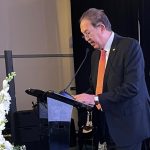
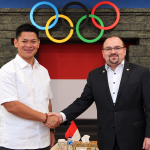
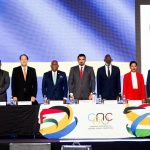
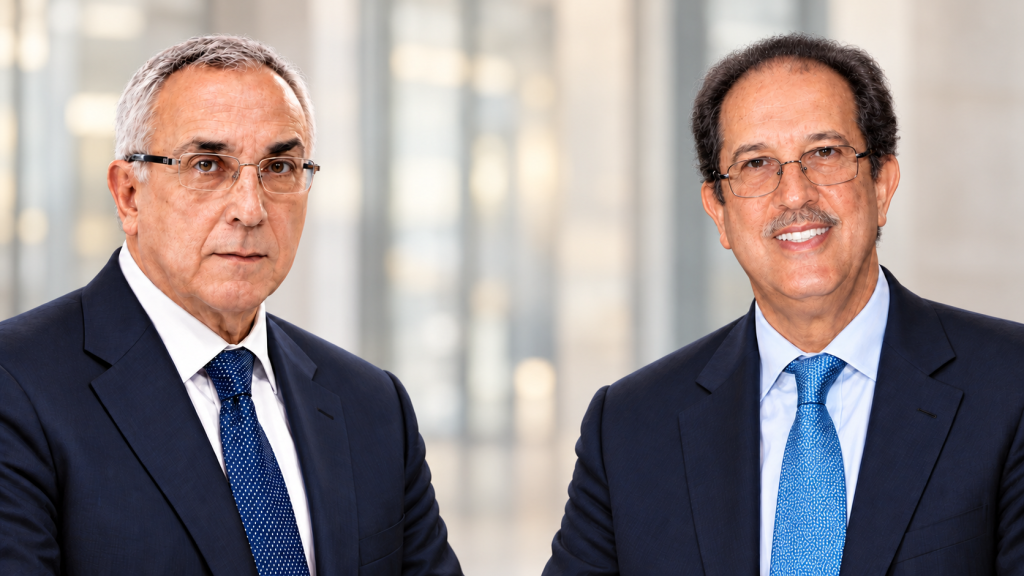
Mustapha Berraf has drawn up a proposed joint programme for the Association of National Olympic Committees (ANOC), which he intends to develop with Alejandro Blanco for the 2026–2030 period. The 17-page document, entitled “ANOC Vision 2026 – One Olympic Family. One Shared Future”, seeks to turn the proposed alternating presidency into a common four-year roadmap. It is Berraf’s proposal for discussion with Blanco, still subject to internal review, rather than a final agreement between the two leaders or an approved ANOC programme.
The arrangement envisages Berraf serving as president for the first two years and Blanco for the following two, with a strategy providing continuity throughout the four-year period. Both that arrangement and the initiatives outlined in the document would need to comply with ANOC’s Constitution and the decisions of its competent governing bodies. The aim is to ensure that a potential handover does not split the cycle into two separate administrations, but instead preserves shared priorities, projects and evaluation criteria.
Initiative 206 at the centre of the proposal
Initiative 206 forms the programme’s central framework, connecting the needs of the 206 National Olympic Committees with the expertise and opportunities available across their network. The proposal pays particular attention to committees with fewer resources or limited access to technology, international contacts and specialist knowledge. It includes tools such as 206 NOC Insights, designed to identify their priorities; 206 Continental Bridges, intended to encourage cooperation across continents; and a Knowledge & Expertise Network to share practical solutions in event organisation, management, marketing, communications and technology.
This work falls within ten strategic commitments covering NOC representation, opportunities for athletes, international cooperation, transparency, innovation, and the participation of women and young people, among other areas. The document proposes an ANOC Women Network and an ANOC Next Generation Network, alongside education, mentoring and career transition initiatives for athletes. The intention is to build on existing commissions and structures, avoiding the creation of a new administrative body for every commitment.
A gala and a summit to attract funding and partners
Among the main new proposals is the ANOC One World Gala, conceived as a gathering of Olympic champions, athletes, international personalities, businesses, foundations and philanthropists. Under the theme “Sport for Humanity – The Power of Sport to Change Lives”, it would seek sponsorship, charitable contributions and voluntary donations of sporting memorabilia for auction. Potential net proceeds could support solidarity initiatives benefiting National Olympic Committees, particularly those facing financial or operational difficulties.
The second proposal is the ANOC World Sport & Future Summit, an international platform connecting NOCs with businesses, universities, institutions, the media and the technology sector. Its agenda could cover artificial intelligence, digital transformation, sustainability, infrastructure and new economic models for sport. An associated platform, the ANOC 206 Opportunity Hub, would enable committees to present projects to potential partners. The two events would serve complementary purposes—generating resources and opening up opportunities for cooperation—but their development would depend on feasibility studies, financial assessments and institutional approval.
Funding and measurable results
The search for new partners aims to broaden ANOC’s sources of support through agreements with businesses, universities, technology companies, foundations and development organisations. The proposed ANOC 206 Shared Opportunity Mechanism could direct a proportion of newly generated resources towards initiatives benefiting NOCs, in accordance with the organisation’s financial rules and decisions. The document recognises the leadership of the International Olympic Committee (IOC) and presents this funding as additional support, without duplicating the responsibilities of Olympic Solidarity or the Continental Associations.
To assess results, Berraf proposes the ANOC 206 Shared Impact Dashboard, which would track cooperation between committees, opportunities for athletes, women’s and youth participation, partnerships and resources generated. The first phase, in 2026–2027, would identify needs and establish a baseline, followed by implementation and evaluation, culminating in an overall assessment in 2030. The next step envisaged is to discuss and develop the document with Blanco before presenting any jointly agreed version to National Olympic Committees.
 Last related articles