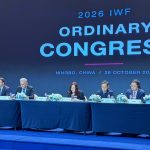
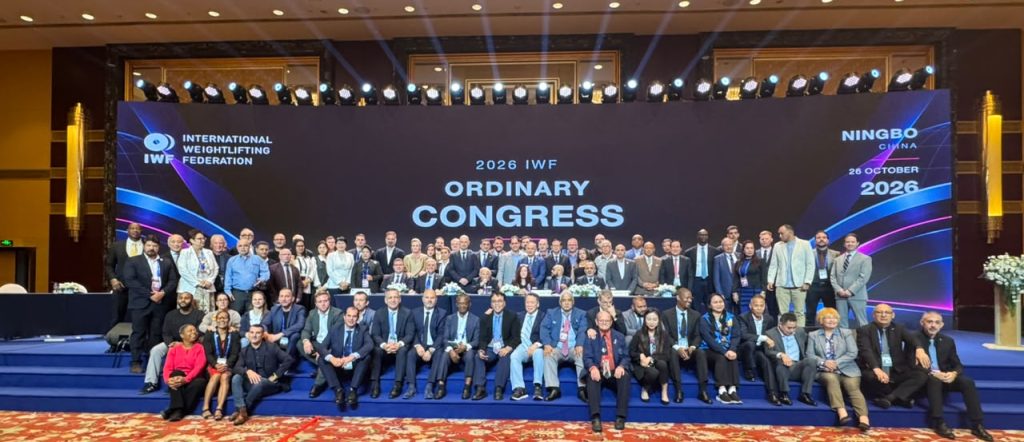
The International Weightlifting Federation (IWF) Congress rejected proposals to remove term limits for its senior leadership on 26 October in Ningbo, China. The decision preserved one of the measures introduced through the organisation’s reform process and was supported by officials who could themselves have benefited from the changes. The meeting took place without President Mohammed Jalood, who is hospitalised in Curaçao and whose message to delegates was read by First Vice President Ursula Papandrea.
The initiatives came from seven national federations. Bosnia and Herzegovina, Iraq, Jordan, Korea, Lithuania and Libya had proposed removing term limits for the President and Secretary General, while Yemen submitted a proposal concerning Executive Board members. The Executive Board itself had recommended rejecting the amendments, which faced strong opposition from delegates who considered them a step backwards from the federation’s reforms.
Quiñones opposes a change that would also benefit him
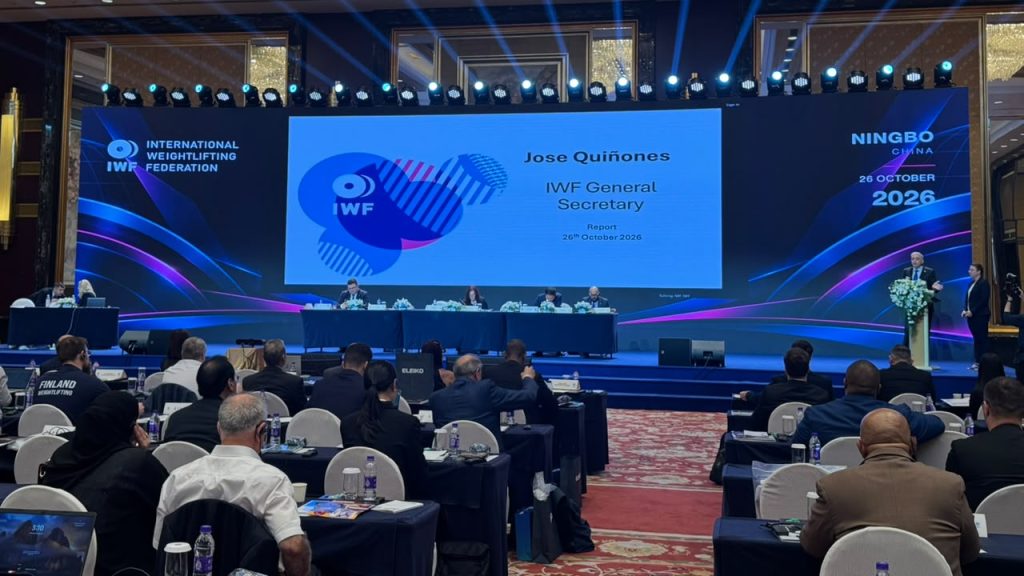
One of the most significant interventions came from Secretary General José Quiñones, who opposed amending the Constitution to facilitate anyone’s continued tenure, including his own. He argued that future generations must have opportunities to take on responsibilities and improve upon the work already done. Astrit Hasani, IWF Vice President and President of the European Weightlifting Federation, took a similar position, explicitly calling for delegates to vote against the proposals.
The rejection produced a particularly striking outcome: according to accounts of the meeting, none of the seven federations behind the proposals ultimately voted in favour of their own amendments. Term limits therefore remained intact at a Congress also marked by Jalood’s absence. With no return date indicated in the available information, continuity in the discharge of his duties remains an issue for the organisation, although the meeting was able to proceed with its business.
Financial reports receive support, but also scrutiny
The Secretary General’s report, financial reports and committee reports were approved unanimously and without objections. That support did not prevent several delegates from expressing concern about expenditure levels and the risk of depleting reserves if operating deficits continue. Quiñones responded that the federation had developed a plan to address its financial position and prevent those difficulties from recurring.
The sporting debate centred on another initiative from Hasani, this time concerning separate medals for the snatch and the clean and jerk, drawing on the model used at the European Games. In contrast to the Olympic format, which awards medals based on the combined total of both lifts, the proposal seeks to recognise performances in each independently. It received a positive reception and was referred to the Technical Committee for examination, without any regulatory change being approved or its scope being specified.
Three athlete representatives on the Executive Board
Congress also confirmed that Athletes’ Commission elections would begin on 27 October and that three elected athlete representatives would participate in the IWF Executive Board. Their presence will allow athletes to contribute directly to decisions within a federation simultaneously addressing financial matters, competition proposals and the continuation of its reforms.
The meeting precedes the Ningbo World Championships, which will take place from 27 October to 8 November and open the Olympic qualification pathway towards Los Angeles 2028. As competition launches that journey, Congress has decided to retain term limits, leaving the technical examination of the medal proposal and the implementation of financial measures as its next steps.
 Last related articles