World Bandy will begin its international season with two events dedicated to its youngest players. The boys’ U16 Club World Cup will take place from October 30 to November 1 in Katrineholm, Sweden, followed by the girls’ U17 competition from November 6 to 8 in Mölndal and Gothenburg. Sixteen teams will compete across the two tournaments, with a special milestone for the boys’ event: forty years since the launch of a competition that has brought together successive generations of bandy players.
The Federation of International Bandy -FIB- has confirmed the schedules and live coverage of every match, available through Bandyplay for viewers in Sweden and FIB TV elsewhere, with options to watch individual games or the entire tournament. Clubs from Sweden, Norway and Finland will give young players an opportunity to compete beyond their domestic leagues in a sport played with skates, sticks and a ball on an ice field roughly the size of a football pitch.
A tradition moves to a new home
The boys’ competition, also known as the Mini World Cup, began in Bollnäs in 1986 and is the longest-running international tournament currently overseen by FIB. It spent most of its history there, although it also visited Vetlanda before moving to Katrineholm in 2025. The Swedish federation serves as the host association, while Katrineholm Bandy handles local organisation. The move retained the involvement of Klas Ström, one of the driving forces behind the event during its years in Bollnäs.
The Kronfågel Ice Arena, which opened in October 2020, is owned and operated by the municipality and can accommodate around 2,000 spectators. Its indoor ice field will welcome six Swedish teams, three from Norway and one from Finland, including the combined teams Katrineholm/Västerås SK, Spånga/Helenelund and Tillberga/Örebro. IFK Vänersborg will defend the title they won at the same venue in 2025, beating Villa Lidköping BK 4-3 after the teams went into half-time level at 3-3.
Two venues for the girls’ competition
The girls’ U17 Club World Cup will return to the two venues used last year: Åby Ice Stadium in Mölndal and Ruddalen Ice Hall in Gothenburg. Norwegian teams Ready/Sarpsborg and Stabæk IF will join Sweden’s Skirö AIK, Villa Lidköping BK, IFK Vänersborg and Västerås SK. Each team will face every other side once in the preliminary round. The top two will advance to the final, while the remaining four will play classification matches to determine their finishing positions.
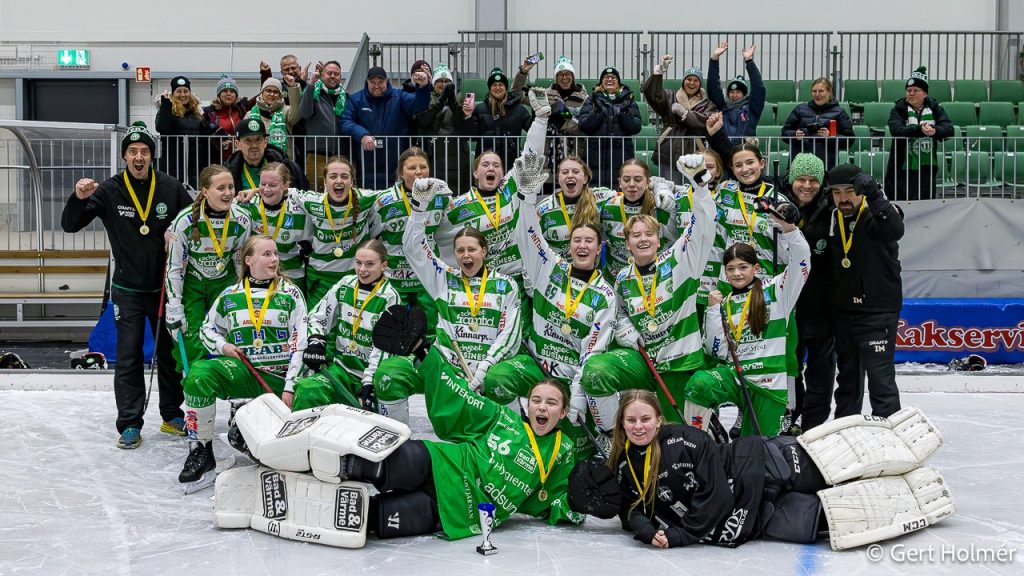
Västerås are the defending champions after beating Villa Lidköping 2-1 in the 2025 final. Silja Carlsson settled that contest with the only goal of the second half after the teams had reached the interval level. This year’s format guarantees every team five preliminary-round matches before either the final or a classification game. The three-day schedule therefore offers an international experience that includes facing every other club in the competition.
Youth competitions continue in a season shaped by costs
The opening events come in a season without either the men’s or women’s senior Group A World Championships. FIB explained that Finland, Norway and Sweden had decided not to participate for financial reasons, preventing those championships from taking place in 2026-2027. Youth competitions, meanwhile, retain their place in the federation’s approved programme. Clubs and junior national teams will continue to have opportunities to meet internationally during a season with less activity at the highest senior level.
After these opening World Cups, the calendar will continue at the Gubbängen indoor arena in Stockholm, with the boys’ U19 club tournament from January 2 to 4 and the U17 event from January 4 to 6. The next major gathering of junior national teams will take place from April 1 to 4 in Uppsala, bringing together the girls’ U17 and boys’ U17 and U19 World Championships. The Swedish federation will host the event, with Uppsala BoIS responsible for local organisation, extending the youth calendar that begins this week in Katrineholm through to the spring.
 Last related articles