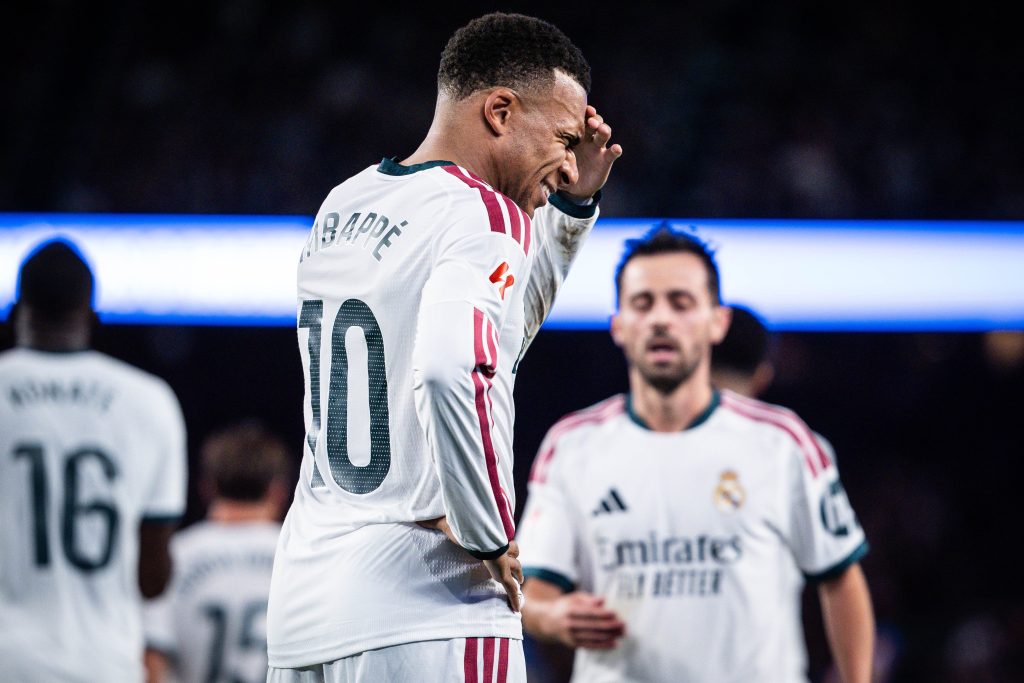
The case of Kylian Mbappé and the controversy that erupted in China in recent days highlights an increasingly evident reality in elite sports: public exposure does not end when the cameras stop rolling or athletes leave the field of play. In an industry where footballers are global figures, brand ambassadors and role models for millions of people, a comment made in an apparently informal setting can take on unexpected proportions and end up affecting much more than their personal image.
The controversy, which stemmed from a comment by the Real Madrid forward about a meme related to Mao Zedong, escalated, leading to the termination of commercial agreements and the suspension of LaLiga broadcasts on Chinese state television. Mbappé issued an apology, as did the club and the Spanish competition. However, beyond the details of the incident, the case raises questions about the price of fame: to what extent can an athlete separate their personal life from the public figure they represent, and how much control do they have over the consequences of their own words?
Fame as a spotlight that never switches off
For decades, an athlete’s image was built primarily on their results, performances and behavior during competition. Today, that landscape is much broader. Social media, interviews, entertainment content and the constant circulation of videos have turned every public appearance into a potential source of repercussions. The line between the footballer who competes and the person who speaks outside the field is becoming increasingly difficult to maintain.
In this context, figures like Mbappé are no longer just football players. They also represent brands, clubs, sponsors and commercial ventures operating in countries with different cultures, sensitivities and interests. This does not mean they should give up their personalities or weigh every word as if they were addressing a press conference, but it does mean their remarks can reach audiences they never anticipated. A comment that seems harmless can take on a different meaning when it is taken out of context, translated and circulated among millions of people.
When a personal statement becomes a business problem
The impact of the case shows that an athlete’s reputation is no longer an exclusively individual matter. Following the controversy, three Chinese companies — Dongpeng, Mengniu and Milkground — ended their commercial agreements with Mbappé, while China Media Group suspended LaLiga broadcasts on its platforms. The reaction also led Real Madrid and the Spanish competition to issue public apologies in an attempt to contain a crisis that ultimately involved institutions and stakeholders unrelated to the original statement.
Behind these decisions lies a logic that runs throughout modern sports: brands invest not only in an athlete’s performance, but also in the values they convey, their ability to connect with specific audiences and the trust they can inspire in consumers. As a result, when a controversy emerges, the risk spreads throughout the entire commercial chain. In Mbappé’s case, the episode also highlighted the importance of the Chinese market to Spanish football and the difficulty of separating an individual star’s conduct from the economic interests of the clubs and competitions they represent. The scale of the consequences reveals the extent to which public image has become an asset that is both valuable and vulnerable.
How much control does an athlete have over their own image?
The paradox is that the same exposure that allows athletes to build multimillion-dollar personal brands also reduces their margin for error. An elite footballer may have communications advisers, representatives, legal teams and carefully negotiated advertising contracts, but no structure can guarantee that a spontaneous remark will not turn into a crisis. Furthermore, the speed at which digital content circulates makes it difficult to control how it is interpreted: once a clip goes viral, subsequent explanations must compete with a first impression that has already reached millions of people.
This creates tension between public responsibility and individual freedom. Expecting an internationally renowned figure to exercise caution does not mean they must live permanently by a script or that every mistake should result in a financial penalty. However, it is equally impossible to ignore that the influence that comes with fame carries responsibilities that do not disappear when an athlete speaks away from the field. Mbappé’s apology and the subsequent reactions from his club and LaLiga illustrate this dynamic: the footballer is accountable for his words, while the organizations associated with him must manage consequences that can extend far beyond his original intentions.
 Last related articles