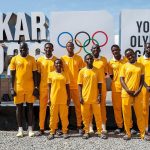
The participation of the Refugee Olympic Team at the Dakar 2026 Youth Olympic Games represents a historic moment for the Olympic Movement and for young athletes who have found in sport an opportunity to rebuild their lives. For the first time, the team took part in this competition, marking a new chapter since its debut at the Rio 2016 Olympic Games. Its appearance at Abdoulaye Wade Stadium during the Opening Ceremony was met with a warm reception from the public and recognition that went beyond sporting results.
Beyond their yellow uniforms, which have made them an easily recognisable presence, the six athletes have attracted attention because of the significance of their participation. Their time at the Youth Olympic Village and the various competition venues has been marked by meetings with officials, representatives of international organisations and fellow athletes. In Dakar, their presence has also helped highlight the stories of millions of displaced people and demonstrate how sport can create spaces for integration, recognition and cultural exchange.
Dakar 2026: sport, integration and encounters that transcend borders
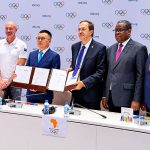
The experience of the young refugees in Senegal has been shaped by opportunities for cultural exchange and dialogue with people who, despite coming from different parts of the world, share similar experiences and challenges. The welcome they received reflects the spirit of Teranga, a traditional Senegalese concept associated with hospitality and generosity. During their visit to the Youth Olympic Village, the athletes also had the opportunity to meet International Olympic Committee (IOC) President Kirsty Coventry, who approached them to offer greetings and words of encouragement. They were subsequently visited by Edem Wosornu, Assistant High Commissioner for Protection at UNHCR, and Abdouraouf Gnon-Kond, the organisation’s regional director.
One of the most significant moments took place during a visit to the African Renaissance Monument in Dakar, where members of the team met young players from the Syrian Baseball5 team. The squad is made up of refugees living in the Azraq camp in Jordan and is part of a programme led by the World Baseball Softball Confederation (WBSC), with the support of Olympic Solidarity and the Olympic Refuge Foundation. Although the athletes did not share a common language, they found in sport a means of communication that helped build connections and camaraderie. The following day, the Refugee Olympic Team supported the Syrian side in its match against Senegal, cheering them on as they celebrated a 2–1 victory over the host nation.
A team of six athletes representing millions of refugees
The delegation representing the Refugee Olympic Team at Dakar 2026 comprises six athletes, all residing in African countries, who are competing in three sports: athletics, judo and taekwondo. Arno, aged 15, represents the Kenyan Olympic Committee in judo, while Clement, 16, and Nyataba, 17, are competing in the 800 metres. Meanwhile, Florencia and Rachid, both aged 16, are taking part in the 200 metres under the representation of Uganda. Completing the team is Lourance, aged 16, who is competing in the women’s under-49kg taekwondo category, representing Kenya. Each of them carries a story of displacement and resilience, but also the opportunity to compete internationally and share their talent on a global sporting stage.
The presence of this delegation takes on particular significance on a continent facing major challenges related to forced displacement. According to figures compiled by UNHCR, more than 117 million people remain displaced worldwide, approximately 39 million of whom are in sub-Saharan Africa. In this region, around one-third of displaced people are refugees and asylum seekers, while approximately half are children. Against this backdrop, the Refugee Olympic Team seeks to raise awareness of a reality affecting millions of families, while giving young athletes the opportunity to develop their abilities and represent a cause that transcends national borders.
 Last related articles