Alejandro Blanco launches an independent campaign for the presidency of ANOC as the power-sharing agreement gives way to December elections.
The president of the Spanish Olympic Committee has presented his “ABC” campaign for the full 2026–2030 term, setting the stage for a direct contest with Mustapha Berraf in Hong Kong.
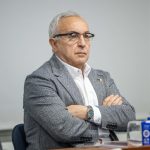
Alejandro Blanco has formally launched his campaign for the presidency of the Association of National Olympic Committees (ANOC), presenting an independent platform for the full 2026–2030 term, just two days after reports emerged that the power-sharing agreement he had proposed with Mustapha Berraf had collapsed.
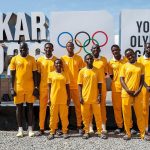
The president of the Spanish Olympic Committee presented his campaign on Friday in Dakar, Senegal, unveiling a new identity, “ABC — Alejandro Blanco for ANOC,” built around five principles: credibility, consensus, commitment, closeness and change.
The launch marks a decisive turning point in an election that, until recently, appeared to be heading towards an unprecedented agreement under which Berraf would lead ANOC for the first two years of the next presidential term, before handing over the position to Blanco in 2028.
Instead, both candidates are now preparing to compete for the presidency when the ANOC General Assembly meets in Hong Kong on December 7–8.
A campaign for the full four-year term
Blanco’s campaign is explicitly presented as a bid to lead ANOC throughout the 2026–2030 cycle.
Through a dedicated website, blancoforanoc.com, and a campaign video available in Spanish, English and French, the Spanish official outlines his vision for an organisation that would strengthen the representation of its 206 National Olympic Committees while providing more practical support to its members.
His message emphasises the responsibilities of national Olympic leadership, drawing on his experience as president of the Spanish Olympic Committee since September 2005.
“I want to lead ANOC with your support and put my experience, knowledge and dedication at the service of all National Olympic Committees,” Blanco states in his campaign presentation.
The five principles of his platform aim to turn institutional representation into tangible results. Credibility focuses on accountability and transparency; consensus places dialogue at the centre of decision-making; and commitment focuses on achieving measurable improvements.
Closeness reflects a promise to maintain an accessible relationship with National Olympic Committees, particularly those facing financial and operational challenges, while change calls for ANOC to adapt to the evolving realities of international sport.
The campaign also identifies the autonomy of National Olympic Committees and the creation of greater opportunities for athletes as priorities.
The silence surrounding the 2+2 agreement
Beyond the campaign’s stated objectives, its timing and presentation carry considerable political significance.
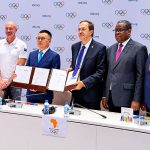
The proposed agreement between Berraf and Blanco, developed with the involvement of ANOC Senior Vice President and Olympic Council of Asia President Sheikh Joaan bin Hamad Al Thani, sought to establish a shared leadership arrangement for the next four years.
Under that understanding, Berraf would serve as president from 2026 to 2028, followed by Blanco for the remainder of the term.
The agreement was presented as an opportunity to preserve unity within the Olympic Movement and avoid a potentially divisive electoral contest.
However, questions surrounding its constitutional implementation remained unresolved.
ANOC’s current rules do not provide for an automatic presidential succession based on a private agreement between candidates. A presidential vacancy would trigger the procedures established in the organisation’s constitution, rather than automatically transferring the position to a designated successor.
A legally binding rotation would therefore have required a different constitutional framework.
Reports published on November 4 indicated that the proposed agreement had collapsed, leaving both candidates free to pursue the presidency independently.
Blanco’s new campaign provides the clearest public indication yet of this change in direction.
Significantly, the published campaign message focuses exclusively on his own leadership proposal. It makes no reference to Berraf, the proposed rotation or an eventual assumption of office in 2028.
That omission should not be interpreted as an explicit rejection of the previous understanding. Blanco has not publicly provided a detailed account of the negotiations or the reasons behind their reported breakdown.
Nevertheless, the contrast between the earlier power-sharing proposal and his current campaign for the full presidential term is unmistakable.
From negotiated succession to electoral competition
The return to a direct election changes the political landscape for ANOC’s 206 members.
Both candidates bring extensive experience within the Olympic Movement, although their institutional backgrounds and continental relationships differ.
Berraf, president of the Association of National Olympic Committees of Africa (ANOCA), has promoted a collective vision for ANOC’s future, emphasising cooperation between continental associations, knowledge-sharing and greater participation by women, young leaders and athletes.
Blanco, meanwhile, is presenting his candidacy around institutional independence, dialogue and the delivery of services that directly address the needs of National Olympic Committees.
The leadership of the European Olympic Committees has publicly expressed its support for Blanco, while Berraf maintains an established political base within African Olympic structures.
Other continental relationships will also influence the campaign, although the support of a continental leader does not automatically translate into the votes of individual National Olympic Committees.
The contest will ultimately be decided by ANOC members through the organisation’s electoral procedures.
A test for ANOC’s institutional future
The December election now carries significance beyond the choice between two experienced Olympic leaders.
It will determine how ANOC positions itself within an increasingly complex international sports governance environment, in which National Olympic Committees face growing demands concerning financial sustainability, institutional autonomy, athlete development and their relationship with the International Olympic Committee.
Both candidates have emphasised unity and cooperation, but the collapse of the proposed shared presidency has returned responsibility for choosing ANOC’s leadership directly to the organisation’s members.
The election will also include the position of Senior Vice President, a role whose constitutional responsibilities have received greater attention during the debate over the proposed presidential rotation.
For Blanco, Friday’s announcement represents a transition from a possible participant in a negotiated succession arrangement to a candidate publicly seeking his own mandate.
For Berraf, it means pursuing the presidency through the same electoral process rather than through the previously proposed division of the term.
The immediate question is no longer how two leaders might share the presidency, but which candidate can convince a sufficient number of National Olympic Committees that his programme offers the strongest future for ANOC.
With the General Assembly approaching, Blanco’s campaign launch has brought that choice into sharper focus.
Hong Kong will now have the final say.
 Last related articles