The English Karate Federation attracted more than 400 entries for its Autumn Championship on 22 November, underlining its ability to bring together a substantial number of clubs and competitors. The event was the federation’s second open competition, following the EKF National Open, and came at a time of continuing division in British karate.
Karate has a long history in the UK, but challenges facing the sport internationally, including declining participation and organisational fragmentation, have also affected its position in Britain. However, the difficulties facing English karate cannot be explained by these wider trends alone. The British Karate Federation has been at the centre of concerns over governance and transparency, issues that have also featured in previous SportsIn reporting.
A major development was the recognition of the newly established English National Karate Governing Body by the BKF and the World Karate Federation, despite ENKGB having no members at the time. The decision raised serious questions about the basis for that recognition and its implications for clubs and athletes across England.
Some clubs and competitors joined ENKGB to maintain access to Karate 1 events and other official WKF competitions. Others chose to give up that opportunity. The majority, however, remained with the EKF rather than join a structure they regarded as imposed.
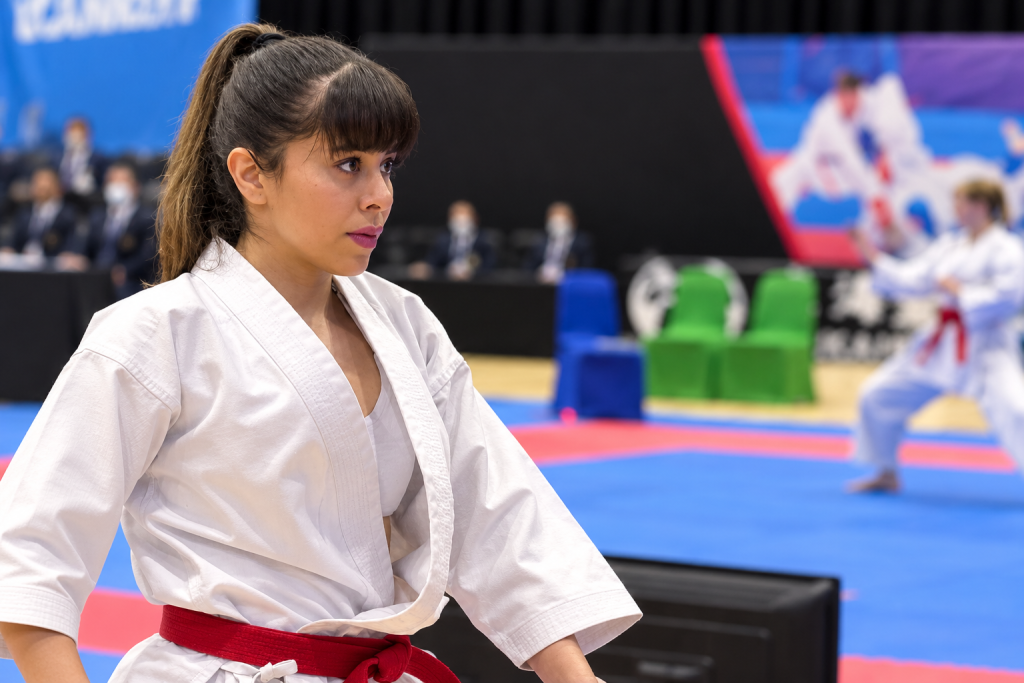
Ehda Tabaghforoosh – EKF Autumn Championship
The EKF has responded by relying on its membership and the policies of its executive board, led by Steve Coupland. Its move towards greater transparency and its transition to a Community Interest Company have formed part of efforts to strengthen the federation’s organisation. Although the split caused considerable damage, the recent competition turnout shows that the EKF continues to draw support from a substantial section of the karate community in England.
The continued cooperation of referees with European and international WKF experience has also been notable. Rather than move to the newly recognised body, they have continued working with the EKF. Their decision can be seen as a sign of continued confidence in the federation and a commitment to professional and ethical standards within the karate community.
The EKF now operates as an independent federation and stages its competitions under the WKF format and rules. This allows its clubs and athletes to compete within a familiar competitive framework without being part of the BKF structures. The turnout at its recent events suggests that this independent model continues to attract substantial support across English karate.
 Last related articles