Mustapha Berraf wants the Dakar 2026 Youth Olympic Games to leave Africa with more than its first experience of hosting an Olympic event. The President of the Association of National Olympic Committees of Africa -ANOCA- has combined visits to competitions with meetings with athletes and officials, while the continental organisation identifies training and organisational expertise as key elements of the Games’ legacy. Berraf expressed that ambition in a message published in 2025: “Africa will have to take a step further and prepare to host the Olympic Games themselves one day.” It is a long-term objective for which Senegal provides an initial practical reference, although hosting Dakar does not mean Africa has been awarded a future Olympic Games.
The closing stages of Dakar offer an opportunity to begin assessing that progress. Awarded in 2018 and postponed from 2022 to 2026 because of the pandemic, the Games conclude on 13 November as the first Olympic sporting event held on African soil. For ANOCA, their value also lies in the experience gained by local teams and African Olympic committees that have sent representatives to observe the organisation. That learning addresses needs Berraf outlined in an interview published in August: strong institutions, skilled personnel, diversified resources and more equitable access to expertise. “Differences in size or means must never become differences in the capacity to act,” he said.
Venue visits as opportunities for cooperation
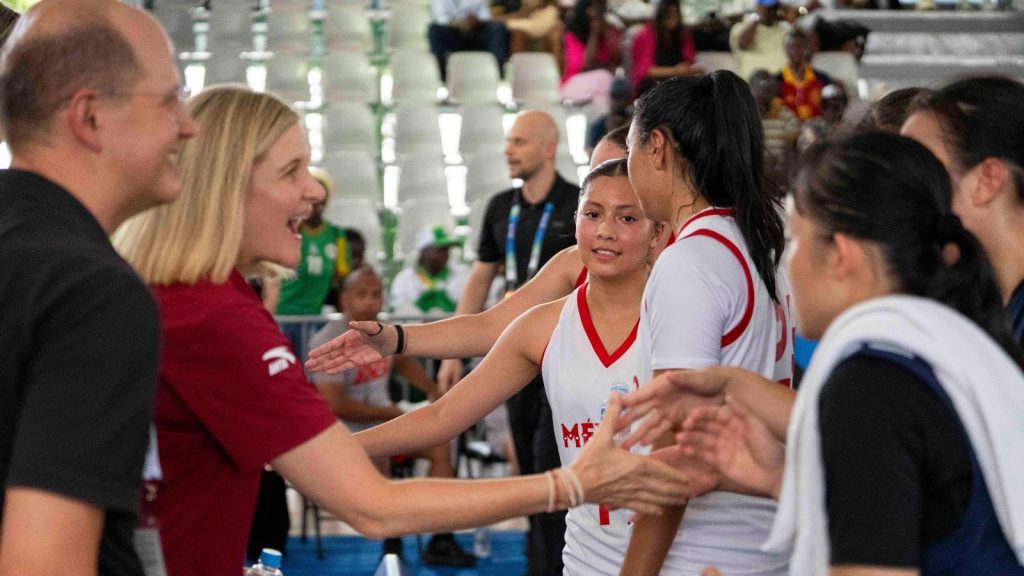
At the Tour de l’Œuf Complex, Berraf watched the 3×3 basketball tournament, featuring 24 teams across the boys’ and girls’ competitions, and spoke with FIBA Secretary General Andreas Zagklis and Sonja Greinacher, a Paris 2024 Olympic champion serving as an Athlete Role Model. International Olympic Committee -IOC- President Kirsty Coventry also visited the competition on a separate programme. During her visit, Zagklis highlighted how Senegal had embraced the discipline, building on its basketball tradition: “The enthusiasm of the local community reflects the sport’s growing connection with fans across the world.” The public response offers federations an opportunity to strengthen relationships with local communities while showcasing their competitions in a new setting.
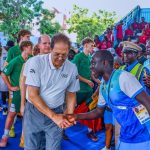
Berraf’s itinerary included the exhibition centre in Diamniadio, where World Boxing oversaw an Olympic boxing competition for the first time. Alongside its President, Gennadiy Golovkin, he took part in discussions about athlete welfare, preparation for high-performance sport and life after competition, with Olympic silver medallist Richard Torrez Jr. among the young athletes’ role models. He also visited introductory shooting activities, where he was welcomed by Hazem Hosny, Melis Giraud and Egyptian shooter Jomana Elsayi, and the Hockey5s site at Place du Souvenir, alongside British international Darcy Bourne. Both activities belong to the ten-sport engagement programme, outside the medal competitions. He completed his visits with archery and beach wrestling, a discipline rooted in Senegalese sporting culture.
Training the people who will deliver future events
The need to turn experience into lasting expertise also features in Coventry’s message. Addressing the SportsBiz Africa Forum in Kigali through a message delivered in September, she said: “We need investment. We need skills and expertise. And above all, we need to invest in people.” One example is the Dakar 2026 Learning Academy, developed by the organising committee and the IOC to train and recruit more than 400 Senegalese and African professionals aged 21 to 35. The programme combines Games planning, sports operations and personal skills development before participants join the organising team. Its purpose is to retain expertise for future competitions and other professional settings, strengthening local teams and their ability to take on new responsibilities.
During the Games, in an assessment of the opening week published on 7 November, Coventry said Dakar was “creating opportunities for young people and showing what can be achieved through strong partnership, ambition and belief”. She credited the collective work of the organising committee, Senegalese authorities and the Olympic Movement. Humphrey Kayange, Chair of the IOC Coordination Commission for Dakar 2026, offered a further explanation in an interview published on 11 November: “Talent is universal. Talent is everywhere. Sometimes opportunities are scarce.” The former captain of Kenya’s rugby sevens team linked African performances to opportunities to compete and investment in young athletes. That distinction helps explain ANOCA’s approach: talent needs coaches, competition and sustained support to develop.
From Dakar to Los Angeles and Brisbane
Berraf conveyed that message to Zambia’s delegation during a visit to the Youth Olympic Village. According to its national Olympic committee, he congratulated the team on its judo bronze medal and encouraged preparations for future objectives, particularly Los Angeles 2028 and Brisbane 2032, without judging the Games solely by medal totals. Continuity also features in the cooperation agreed with China: support for African medallists and promising young athletes after Dakar with Brisbane as their target, specialised training camps for athletes qualified for Los Angeles, and coach education in Chinese institutions. “No talent should have its future limited by a lack of resources,” Berraf said in the statement announcing the agreement. The programmes aim to complement national preparations through access to facilities, training and technical expertise.
For Africa’s 54 national Olympic committees, sustaining those opportunities requires capabilities beyond sending a delegation to the Games. Berraf’s priorities include better use of digital tools, more diverse sources of funding and cooperation that allows organisations with very different resources to share expertise. ANOCA believes observers, trained professionals and young people involved in Dakar can take that experience back to their countries. The ambitions to host future Olympic events and improve athlete preparation depend on that continuity: retaining teams, applying what they have learnt and maintaining programmes after the event ends. As Berraf put it in his August interview: “Our responsibility is to prepare the future.”
 Last related articles