From developing young talent and modernizing sports infrastructure to hosting world championships and major institutional gatherings, Azerbaijan’s Minister of Youth and Sports is pursuing a vision that extends well beyond the field of play.
There is a difference between a country that hosts major sporting events and one that becomes an important meeting place for international sport. The first demonstrates organizational capacity; the second requires something more enduring: credibility, relationships, institutional confidence and a clear sense of direction. Under the leadership of Minister of Youth and Sports, Farid Gayibov, Azerbaijan is increasingly working to bring these two ambitions together.
Since taking office in 2021, Gayibov has pursued an approach that connects the development of sport at home with a more prominent international role for his country. His background as President of European Gymnastics gives him a particular understanding of the international sports movement, its institutions and the importance of relationships between governments, national federations and international governing bodies. Rather than treating major events as isolated achievements, his work increasingly reflects a broader ambition: to establish Azerbaijan as a country where sport is developed, celebrated, administered and shaped.
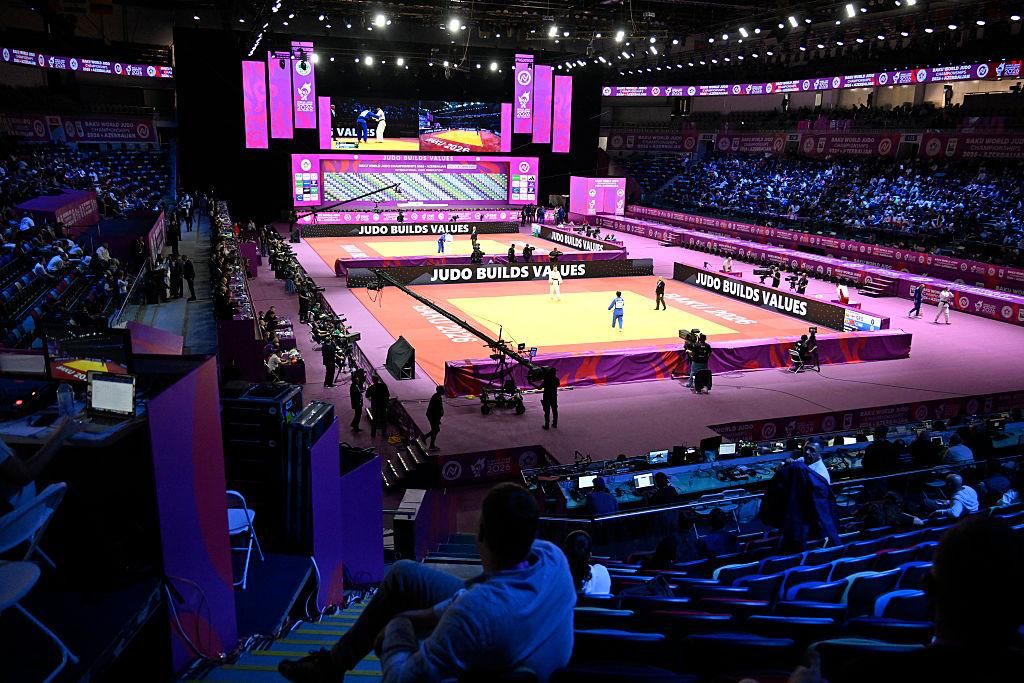
The results of this approach have become particularly visible in 2026, with Baku holding the title of World Capital of Sport. The Azerbaijani capital has hosted an impressive succession of international competitions and institutional gatherings, including the World Judo Championships, the World Sumo Championships, major aquatic sports events and the European Aquatics Congress. Together, they illustrate a sporting strategy that is gaining both depth and international recognition.
The World Judo Championships offered one of the clearest demonstrations of Azerbaijan’s organizational capabilities. Held in Baku in October, the individual competition attracted 622 athletes representing 93 countries, according to the official records of the International Judo Federation. The championship brought the world’s leading judoka to the National Gymnastics Arena and placed Azerbaijan at the center of international attention. Its significance extended beyond the competition itself: the presence of international federation officials and the accompanying institutional meetings reinforced Baku’s ability to serve the administrative as well as the competitive needs of a major Olympic sport.
The European Aquatics Congress, held in Baku from October 8 to 10, provided an equally important example of a different kind of sporting influence. Representatives of 46 member federations gathered in the Azerbaijani capital to address governance reforms, constitutional matters and the future direction of aquatic sports in Europe. Elections to independent governance bodies also formed part of the Congress. These were not simply ceremonial meetings or opportunities for diplomatic exchanges. They were formal institutional proceedings in which decisions affecting the organization and governance of European sport were considered and taken.
That distinction is central to understanding the direction in which Gayibov is helping to position Azerbaijan. Hosting athletes and spectators brings prestige, tourism and international exposure. Hosting the leadership of international federations brings something different: direct participation in the institutional life of sport and the opportunity to become a trusted location for the meetings at which its future is determined.
Baku’s selection as host of the SportAccord Convention from May 9 to 13, 2027, represents a particularly significant milestone. The gathering is expected to bring together more than 1,700 delegates from over 120 international federations, alongside representatives of the International Olympic Committee, host cities and the wider sports industry. International federations will hold official meetings during the convention, while senior administrators and sports leaders will participate in conferences and strategic discussions. For Azerbaijan, this is much more than another event on the calendar. It is an opportunity to welcome a substantial part of the international sports movement and to strengthen Baku’s standing as a location for its institutional business.
The international dimension, however, tells only part of the story. What makes Gayibov’s approach more substantial is the effort to connect this growing international profile with practical improvements in Azerbaijan’s domestic sporting system.
One example is AzerFit, an initiative developed through the Azerbaijan Sports Academy to assess the physical abilities of children and support more systematic approaches to youth athletic development. During its pilot phase, 488 children aged between nine and 15 underwent a series of ten physical assessments covering strength, endurance, flexibility, agility and coordination. The initiative offers an early foundation for identifying sporting potential and improving the understanding of youth physical development, with further expansion under consideration.
At the same time, the ministry has maintained a regular dialogue with the country’s sports federations. By September 2026, Gayibov had held his 28th such meeting, with discussions extending beyond competition results to safeguarding, sports education, federation administration, digital systems and the organization of youth sports schools. These may attract less public attention than international championships, but they are among the elements on which a sustainable sporting system ultimately depends.
Investment in facilities is another part of the picture. The renovation of the Republican Olympic Sports Lyceum, including classrooms, accommodation and dedicated training halls for wrestling and judo, has improved an important environment for the preparation of young athletes. The development of private sports clubs and facilities, alongside efforts to expand sporting opportunities in the regions, points toward a broader objective: ensuring that progress is not concentrated exclusively in the capital or among established elite competitors.
Azerbaijan’s regional sporting presence has also become increasingly visible through clubs competing in European handball, volleyball and basketball competitions. These opportunities matter because they expose athletes, coaches and sporting organizations to international standards and experience, while encouraging the development of talent beyond Baku.
Gayibov’s international engagement reinforces this domestic agenda. His meetings with leaders of international federations, cooperation with European sporting organizations and involvement in discussions on anti-doping and sports governance reflect a minister who understands that the development of modern sport depends on both national investment and international partnerships. The agreements signed in Baku in August between the Azerbaijani, Belgian and Spanish volleyball federations, during a visit by European Volleyball President, Roko Sikirić, provide a practical example of how institutional contacts can lead to cooperation in training and development.
There is, of course, no single measure by which the success of a national sports policy can be judged. Medals and major events offer visible evidence of progress, but the more important long-term questions concern participation, the quality of coaching, opportunities for young people and the strength of the institutions that support athletes throughout their careers. The initiatives being advanced in Azerbaijan suggest that Gayibov recognizes this wider responsibility.
What is emerging is a coherent relationship between two objectives that are sometimes pursued separately. Azerbaijan is investing in its sporting foundations while strengthening its ability to attract the international organizations that govern sport. One creates opportunities for the next generation of athletes; the other creates opportunities for the country to participate more actively in the global sporting community.
The decision to bring SportAccord to Baku in 2027 gives this ambition a particularly powerful expression. It confirms the international confidence that Azerbaijan has built as a host and creates a platform for the country to deepen its engagement with the institutions and leaders whose decisions influence the future of sport.
For Farid Gayibov, the opportunity is not merely to place Azerbaijan on the international sporting calendar. It is to help establish the country as a lasting part of international sport’s institutional geography — a place where athletes compete, young talent develops, federations cooperate and important decisions are made.
That is a considerably more ambitious legacy than hosting a successful championship. It is the vision of a country seeking not only to welcome international sport, but to contribute meaningfully to its future.
 Last related articles