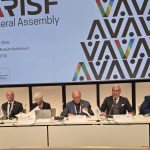
The International Sport for All Federation -FISpT- held its Electoral General Assembly and Congress on Friday in Civitanova Marche, Italy, bringing together representatives of the Sport for All movement from different countries. During the meeting, delegates approved the federation’s new Statutes and elected the Executive Board that will lead the organisation during the upcoming mandate.
The Assembly endorsed a statutory reform aimed at strengthening FISpT’s alignment with the principles of the Olympic Movement, with a clear focus on good governance, transparency, accountability and ethical leadership. The updated regulatory framework seeks to consolidate the federation’s role within the international sports community and to adapt its operations to the institutional standards of the Olympic environment.
A statutory reform to strengthen FISpT governance
The new Statutes establish that the organisation, recognised by the International Olympic Committee -IOC-, is governed under Italian law and has its registered office in Rome. The text also redefines the federation’s legal representation, assigning this responsibility to the CEO, with the aim of reinforcing clarity in decision-making and institutional accountability.
In electoral matters, the Assembly confirmed Isa Mohamed Abdulrahim Mohamed Alrafaei, from Bahrain, as President of FISpT, and appointed Marco Tomasini, from Italy, as CEO and Secretary General. The new organisational structure includes vice presidencies dedicated to areas such as sport, education, parasport and development, shaping a governance model designed to address the main strategic fields of the Sport for All movement.
A new Executive Board for the next institutional cycle
The Executive Board elected for the new mandate features broad international representation, with members from Europe, Asia, Africa and America. This composition reflects the federation’s geographical and functional diversity, as well as its commitment to integrating different perspectives and experiences within the global Sport for All ecosystem.
Following the Electoral General Assembly, the Congress addressed a range of topics related to the development of Sport for All, with contributions from experts representing international federations, national organisations and other stakeholders from the Olympic sphere. The programme included discussions on emerging disciplines, the role of traditional sports, community-based initiatives in challenging contexts and innovative approaches to inclusive physical activity.
Objectives and expansion of the federation
On Saturday, the newly constituted Executive Board held its first official meeting, focusing on defining strategic priorities, the working framework and the roadmap for the start of the mandate, with the aim of ensuring institutional continuity and enhancing the federation’s global impact. In this context, Isa Mohamed Abdulrahim Mohamed Alrafaei stated: “I am honoured to continue serving as President of the International Sport for All Federation, and I trust that the new leadership will help FISpT grow stronger and faster, becoming one of the leading organisations within the Sport for All environment.”
The Assembly also reflected significant growth in participation, with the admission of new national, individual, associate and committee members, bringing together organisations and individuals from 45 countries across four continents. Marco Tomasini highlighted this development, noting: “The presence of representatives from the International Olympic Committee and sport managers from different parts of the world, with diverse backgrounds, represents a key opportunity for FISpT to continue growing and to strengthen its position as a reference organisation in the field of Sport for All.”
 Last related articles