
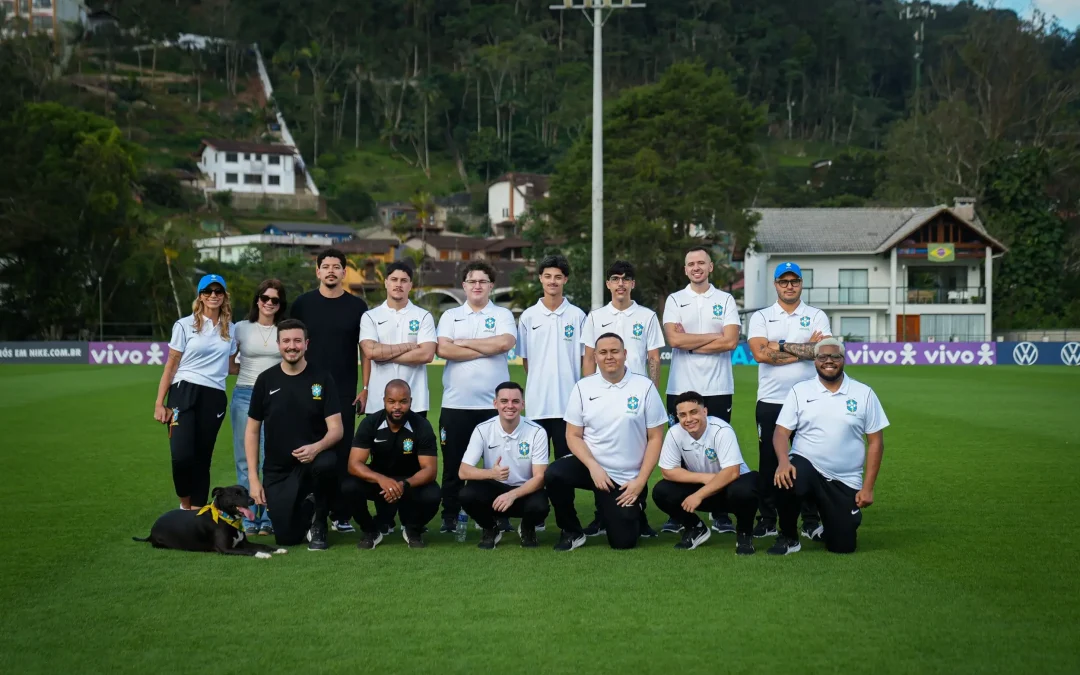
The football federations of Japan and Brazil have withdrawn their national esports teams from the FIFAe Finals 2026, scheduled to begin on Friday in Jeddah, Saudi Arabia. Both announced their decisions on October 10, citing security concerns, although their statements identify different considerations: Japan refers to conditions in the host country, while Brazil highlights risks involving airspace and transit airports. The Tunisian Esports Federation has also announced its withdrawal. The decisions concern a video game competition organised by the International Federation of Association Football -FIFA-, rather than the conventional football World Cup.
The FIFAe Finals comprise three World Cups: eFootball on console, eFootball on mobile and Rocket League. That structure explains the dates in the statements: Japan lists its competition as October 16–23, while Brazil refers to the overall event, which runs until October 25. The field announced in September comprised 29 countries and 40 teams, with twelve national teams in each eFootball competition and sixteen in Rocket League. Japan had qualified for console and mobile, while Brazil was among the qualifiers for all three tournaments.
Japan and Brazil’s reasons
The Japan Football Association -JFA- said it had decided not to participate following “a comprehensive assessment of the current situation in the host country and the available information regarding safety and security”. The statement does not identify specific incidents or assign responsibility to the organisers. Its decision affects a delegation that included Ax and Tess on console and AO and Fuga on mobile, alongside technical adviser Naoki Shishikura. The federation therefore bases its withdrawal on its own assessment of the conditions for participation.
The Brazilian Football Confederation -CBF- explained that its decision followed escalating tensions and regional security instability, particularly risks involving the airspace and airports through which its delegation would travel. It also stressed that the physical safety and wellbeing of players, coaching staff and other professionals were “absolute priorities for the organisation and take precedence over any sporting commitment”. Brazil’s team was preparing for the competition at Granja Comary, in Teresópolis, when its participation was cancelled.
Security also includes the journey
Brazil’s explanation broadens the scope of the assessment: security at an international competition extends beyond the venue where matches are played. Flight routes, stopovers and the ability to complete the return journey also affect a delegation’s travel. A host venue can provide suitable facilities and services while the routes used by each national team still require a separate assessment. Assurances concerning the competition venue and travel conditions are therefore connected issues that require different information.
The decisions raise legitimate questions about the organiser’s assessments, communication with federations and contingency plans as regional conditions change. They also place the protection of players and staff within the governance of an esports competition, whose delegations must travel to and stay at the host location just as they do at other international events. However, the withdrawals do not, in themselves, establish that FIFA has failed to meet its obligations. Nor do the Japanese and Brazilian statements establish that their decisions were coordinated or formed part of a joint action.
Tunisia joins the withdrawals
The Tunisian federation likewise announced that it would not participate because of the security situation in Saudi Arabia and concerns for its delegation’s safety. The decision was also reported on Monday by ‘Tunisie Numérique’. In this case, the announcement comes from an esports federation, unlike the football governing bodies that announced Japan and Brazil’s withdrawals. Tunisia had qualified for the eFootball Mobile World Cup and appeared in Group B of the draw published by the organiser.
The official schedule reviewed still lists eFootball as starting on Friday, with the console and mobile finals on October 23, and Rocket League running from October 20 to 25 at the Abadi Al Johar Arena. At the time of writing, no specific public response from FIFA to the withdrawals had been located, nor any official announcement changing the dates or venue. The published schedule follows a qualification process involving more than 120 national teams and five in-person continental championships.
