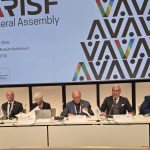
Representatives of the National Olympic Committee of Kazakhstan and the Olympic Committee of Serbia met in Astana to advance their cooperation and discuss shared priorities on the international Olympic agenda. Kazakhstan NOC Secretary General Alimzhan Akayev and Sports Department Director Bektur Kiyatbay received a Serbian delegation led by its President, Dejan Tomašević. Preparations for Dakar 2026 and Los Angeles 2028, the development of team sports and the exchange of expertise were central to the discussions.
The meeting coincided with Tomašević’s visit to the Kazakh capital for the opening of the Games of the Future 2026, an event combining physical and digital disciplines. During his stay, he also attended a reception hosted by Kazakhstan Basketball Federation President Abay Alpamysov, where discussions covered cooperation between sports organisations, the exchange of high-performance expertise and potential joint initiatives. Neither meeting has yet resulted in the announcement of specific projects, budgets or timetables.
From Belgrade to Astana in less than three months
The direct precedent for the Astana meeting took place in Belgrade on 18 May. Participants included Kazakhstan NOC President Gennadiy Golovkin; Akayev; Tomašević; and Serbian Sports Minister Zoran Gajić. The delegations discussed athlete support systems, sports medicine and recovery, management education, youth development and the organisation of major events, alongside preparations for the forthcoming Olympic and Youth Olympic Games.
That first meeting covered a broader agenda than the latest talks in Astana. Serbia presented its sustainability, digitalisation and inclusion programmes for the LA28 cycle, as well as its experience in hosting European and World Championships. Kazakhstan outlined its work through Olympic Solidarity programmes and the education of sports specialists. The delegations also explored opportunities to exchange knowledge between Expo Astana 2017 and Expo Belgrade 2027, which will be held under the theme ‘Play for Humanity: Sport and Music for All’.
Two sporting systems with complementary strengths
The emphasis on team sports introduces an area in which the two countries have potentially complementary capabilities. Serbia has built a strong international record in basketball, water polo, volleyball and handball, supported by its coaching structures, national teams and development systems. Kazakhstan has traditionally achieved its best results in boxing, wrestling, judo, weightlifting and several winter disciplines, meaning Serbian experience could provide useful reference points for its team-sport programmes.
Cooperation could involve exchanges between coaches and sports administrators, joint training camps or work in physical preparation, sports medicine and recovery, all areas included in the May meeting. For now, these remain possibilities rather than confirmed projects. The two committees do, however, share a working horizon shaped by Dakar 2026 and LA28. Their leadership also includes two former elite athletes from different sporting backgrounds: Golovkin built his career in boxing, while Tomašević competed in basketball.
Sporting cooperation supported by bilateral relations
The relationship between the two committees builds on an existing institutional framework. In November 2023, the relevant ministries signed a memorandum of understanding on sports cooperation intended to provide a legal basis for future work. One year later, Presidents Kassym-Jomart Tokayev and Aleksandar Vučić oversaw the signing of ten documents covering defence, education, employment, tourism, technology and other areas. These included a tourism memorandum between the Kazakhstan Ministry of Tourism and Sports and the Serbian Ministry of Tourism and Youth, but not a new agreement specifically dedicated to sport.
Diplomatic relations between the two countries were established on 10 December 1996 and are described by the Serbian authorities as friendly and free from unresolved bilateral issues. Kazakhstan’s refusal to recognise Kosovo and its support for Serbia’s territorial integrity form part of this favourable political context, although neither Olympic committee has connected those issues to its sporting cooperation. Vučić’s visit to Astana in February 2026, the launch of a direct air connection between the two capitals and the two Olympic meetings held since May have created a more stable framework for defining their first exchanges and joint projects ahead of Dakar and Los Angeles.
 Last related articles