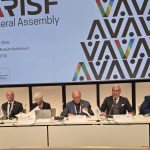
The Fédération Internationale de l’Automobile (FIA) is once again at the center of controversy. While the latest FIA presidential elections continue to be challenged in the French courts, Mohammed Ben Sulayem is already working on a statutory reform that could pave the way for him to remain indefinitely at the head of the organization. Although the court allowed the Emirati official to begin a new term without applying precautionary measures, the judicial process is still moving forward and continues to cast doubt on the legitimacy of the electoral system used in 2025.
The situation has generated concern both inside and outside the paddock. At a time when motorsport is undergoing global expansion, with new venues, manufacturers and strategic markets, discussions surrounding governance, transparency and concentration of power are becoming increasingly relevant. The possibility of modifying the statutes once again to eliminate the term limit imposed during the tenure of Jean Todt has reopened an old debate about how long the same figure should remain at the helm of an international federation.
An electoral process marked by controversy
Mohammed Ben Sulayem’s re-election was surrounded by questions long before it took place. The FIA president ultimately became the only valid candidate after internal rules required each contender to present a list of vice presidents from different world regions. The key factor was in South America, where there was only one eligible representative for the position: Fabiana Ecclestone. Her inclusion in the official candidacy left no room for any rival attempting to compete for the presidency.
Laura Villars, one of the figures who attempted to present an alternative candidacy, brought the case before the French courts alleging irregularities in the process. However, within the FIA, the issue found almost no public resistance. The federation’s political structure, deeply dependent on internal balances and regional support, has resulted in very few voices daring to openly question the decisions of the current administration. In that context, the lack of electoral competition further fueled criticism regarding the democratic state of one of the most influential organizations in world sport.
The term limit Ben Sulayem wants to eliminate
The new point of tension revolves around the intention to modify the rule limiting presidential mandates to three terms. The measure was introduced during Jean Todt’s tenure, as he believed that excessive permanence in power weakened institutional independence and encouraged structures that were difficult to renew. Ironically, Todt himself became the first president forced to step down because of the very rule he implemented, despite many within the FIA wanting him to continue.
Now, Mohammed Ben Sulayem seeks to eliminate that restriction by relying on the broad support he maintains within the World Motor Sport Council and the General Assembly, the bodies responsible for approving any statutory change. Internal departures and tensions during the second half of 2025 further strengthened his political position within the federation. If the reform succeeds, the United Arab Emirates official could seek re-election indefinitely, consolidating a leadership model that many consider increasingly similar to the longest and most controversial eras in the FIA’s recent history.
 Last related articles