The global anti-doping landscape is undergoing a silent yet profound transformation. For years, the World Anti-Doping Agency (WADA) was the undisputed axis of the system, setting standards, overseeing organizations, and acting as the moral and technical reference for clean sport. However, the sustained growth of the International Testing Agency (ITA) is beginning to shape a different scenario, where execution, management, and, above all, operational independence no longer rest solely within the traditional orbit.
Recent agreements with World Aquatics and the Union Cycliste Internationale (UCI) are not isolated events but signs of a broader trend: federations increasingly seeking to separate sports governance from anti-doping management by delegating responsibilities to a specialized, international body external to their own structures. In this movement, the ITA is not only gaining workload but also legitimacy, accumulated expertise, and a role that is starting to redefine the historical balance of the global system.
Federations seeking distance: independence as the new standard
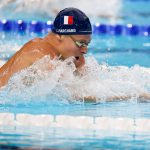
The extension of the agreement between World Aquatics and the ITA until 2028 reinforces this logic. The federation is not only maintaining the collaboration that began in 2019 but expanding the delegated functions: review of decisions made by national anti-doping organizations, long-term storage of more than 400 samples per year for reanalysis over ten years, and the guarantee of at least 3,000 out-of-competition tests before Los Angeles 2028. The ITA now intervenes in virtually the entire operational chain of the aquatic sports anti-doping program, from planning to long-term monitoring.
At the same time, the UCI’s decision to delegate results management and legal procedures to the ITA marks an even more sensitive step. This is no longer just about testing and biological passports — functions already transferred in 2021 — but about who investigates, processes, and communicates anti-doping rule violations. It is the legal core of the system. Cycling, historically affected by doping scandals, is deepening a path that began in 2008 with external structures such as the CADF and now culminates in an almost complete outsourcing to an independent body.
The structural growth of the ITA and a new balance in global anti-doping
Beyond these recent agreements, the ITA already provides services to more than 60 international organizations, including the IOC and numerous Olympic federations. This has enabled it to develop legal, scientific, and operational teams with a cross-disciplinary specialization that few entities can match. The experience accumulated across different sports gives it a multi-sport perspective that strengthens its position as a comprehensive provider of independent anti-doping programs.
In this context, WADA maintains its regulatory and global oversight role but is no longer the only reference point when it comes to practical implementation. The ITA is consolidating itself as the executive arm chosen by federations seeking credibility, transparency, and institutional distance. Without openly stating it, the international anti-doping system is beginning to operate with two complementary poles: one that regulates and another that executes, redefining who, in day-to-day practice, truly guarantees the protection of clean sport.
 Last related articles