The International Olympic Committee -IOC- brought together the leading representatives of the Olympic Movement this Thursday in Lausanne for the 14th Olympic Summit, held at Olympic House. The meeting addressed key governance matters, the Olympic calendar and policy issues, with particular focus on athletes’ access to sport in an international context shaped by geopolitical tensions.
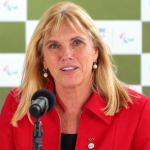
Chaired by IOC President Kirsty Coventry, the Summit reviewed the “Fit for the Future” consultation process launched by the organisation. Coventry thanked the participating bodies for their engagement and noted that the contributions received have helped “identify opportunities and challenges that guide us towards collective success as one Olympic family”.
Political neutrality and athletes’ access to sport
Within this framework, the Olympic Summit endorsed the principles established by the IOC Working Group on the protection of the Fundamental Principles of Olympism, underlining that the Olympic Charter and its regulations provide robust tools to safeguard the political neutrality of the Olympic Movement. Participants agreed that this neutrality is essential to ensure athletes can access sport worldwide without external interference.
At the same time, the need to further clarify the concept of political neutrality and its practical application in sport was acknowledged. This work will be taken forward by the IOC Working Group, which will continue to examine how these principles apply across the diverse realities of International Federations and international competitions.
Lifting restrictions on young Russian and Belarusian athletes
The Summit also reaffirmed that athletes have a fundamental right to compete free from political or governmental pressure, while recalling their responsibility to respect, uphold and promote Olympic values before, during and after competitions. This balance between rights and obligations was a central element of the institutional discussion.
In line with these principles, participants supported the recommendation of the IOC Executive Board that young athletes holding passports from Russia or Belarus should no longer face general restrictions on access to international youth competitions, in both individual and team events. The definition of youth competitions and the specific application of this measure will depend on the regulations of each International Federation.
Differences between youth and senior competitions
The Summit specified that, in youth events, the standard protocols of federations or international event organisers regarding flags, anthems, uniforms and related elements should apply, provided that the relevant national sports organisation is in good standing. These guidelines are recommended for the Dakar 2026 Youth Olympic Games and for international youth competitions more broadly.
In parallel, the Olympic Summit agreed to maintain unchanged the IOC Recommended Conditions of Participation, adopted on 28 March 2023, for senior competitions, which will continue to be reviewed as necessary. Sanctions against the governments of Russia and Belarus also remain in force, including restrictions on the accreditation or invitation of government officials to international sports events, as well as the recommendation that federations refrain from organising international competitions in Russian territory.
The IOC thus conveyed a differentiated approach by competition category, with measures aimed at protecting young athletes’ access to international sport, while preserving the existing restrictions and participation conditions in the senior sphere.
 Last related articles