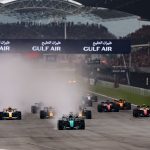
Starting with the 2026 season, Formula 1 begins one of the most profound technical transformations in its recent history. The championship is entering a new era defined by lighter single-seaters, radically evolved hybrid engines, and a series of innovations that will change the way drivers compete and engineers design their cars. The first test of these new regulations will come with the Australian Grand Prix in Melbourne, an event that will mark the beginning of a cycle in which energy efficiency and strategic management will be just as important as pure speed.
The single-seaters of this generation have been designed to be more agile and manageable. The wheelbase has been reduced by 20 centimeters to 340 cm and the width shortened by 10 cm to 190 cm, while total weight drops by around 30 kilograms thanks to changes in the chassis and power unit. Drivers such as Lewis Hamilton have highlighted improvements in the cars’ handling, although the reduction in aerodynamic load—around 40% less drag—means the cars will start the championship between one and two seconds per lap slower than their predecessors. At the same time, the new regulations introduce new technical terminology, including concepts such as active aerodynamics, boost mode and superclipping, terms that reflect the complexity of this new phase of the championship.
Hybrid engines and sustainable fuel: the heart of the new regulations
The most profound change lies in the power unit. The new generation of hybrid engines redefines the balance between thermal and electric power, bringing both energy sources close to an almost equal split. The 1.6-liter turbocharged V6 engine will remain the core of the system, but it will now generate around 400 kW (536 horsepower), while the MGU-K electric unit will contribute up to an additional 350 kW, representing an increase of nearly 300% in electric energy delivery compared with the previous generation.
This transformation is accompanied by the removal of the MGU-H system, which previously recovered thermal energy from the turbocharger. Its disappearance introduces new challenges for engineers and drivers, particularly in managing turbo lag during acceleration and corner exits. The Fédération Internationale de l’Automobile (FIA) has experimented with new start procedures to mitigate this effect, while teams such as Scuderia Ferrari have opted for engineering solutions such as smaller turbochargers to improve engine response. Added to this is the requirement to use 100% sustainable fuels, produced through synthetic processes or biofuels derived from waste and biomass, opening a new field of technological innovation for manufacturers and suppliers.
Active aerodynamics and energy management: the new strategy on track
The 2026 regulations also redefine aerodynamics and energy management during races. The front and rear wings now feature active aerodynamics systems capable of opening on straights and closing in corners to reduce drag or increase stability depending on the circuit’s demands. This system replaces the historic DRS, which for fifteen years had been the main tool for facilitating overtaking.
Energy strategy therefore takes on a central role in race development. Drivers will be able to activate a new overtaking mode that releases additional electric energy when they are within one second of the car ahead. This is complemented by boost mode, which allows drivers to manually manage the delivery of electric power to attack or defend position. However, all that energy must later be recovered through driving techniques such as “lift and coast,” the use of shorter gears in corners, or the so-called superclipping process, in which the hybrid system begins to recharge the battery at the end of straights, momentarily reducing the available power.
This new balance between power, aerodynamics and energy efficiency will force drivers and teams to adopt different driving styles. Figures such as Lando Norris, the reigning champion, anticipate that these tools could generate unusual overtakes and constant position changes within a single lap. Others, such as four-time champion Max Verstappen, have expressed reservations about the growing role of energy management in the competition. Meanwhile, the category’s chief executive, Stefano Domenicali, has called for patience as the championship and its protagonists adapt to regulations that redefine the relationship between technology, strategy and speed in the pinnacle of motorsport.
 Last related articles