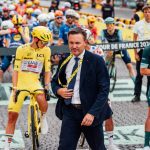
Just days before the start of the Tour de France, the debate over safety in professional cycling has intensified, fueled this time by statements from Jonathan Vaughters, director of the EF Education-EasyPost team. The former cyclist and current leader harshly criticized the Union Cycliste Internationale (UCI), pointing out that the organization is dominated by politicians and bureaucrats lacking real experience in the demands of the sport. For Vaughters, the UCI’s inability to act effectively is putting riders at risk.
The criticisms add to concerns voiced by key peloton figures such as Tadej Pogacar, Jonas Vingegaard, and Mathieu van der Poel, who have also raised their voices on various safety issues. From managing concussions to the increased number of riders, the worries are many and point to a lack of concrete action from the governing body. In this context, cycling governance faces growing pressure to adopt effective measures and protect its athletes.
Open debate and questioned decisions in the middle of the season
Vaughters’ words point to a representation crisis in decision-making at the highest levels of cycling. He states that those with direct experience—such as cyclists, coaches, or mechanics—are excluded from key spaces, while positions are assigned by political agreements. This disconnect, he says, prevents urgent changes to improve race safety. These statements come at a particularly sensitive moment, with the Tour de France under scrutiny and accident risks ever-present.
Riders themselves have reported alarming situations. Vingegaard, after a crash in March, said he was not evaluated for a possible concussion despite obvious signs. Van der Poel, meanwhile, criticized the decision to increase the number of participants to 184, noting it worsens the fight for space during stages. At the same time, the UCI is pushing technical adjustments—such as reducing gear size or handlebar width—that have sparked divided opinions. For many, the solution must go beyond cosmetic measures and focus on a comprehensive redesign of safety in professional cycling.
 Last related articles