There is a growing illusion that football can be separated from politics simply by regulation, policing, or selective enforcement. The events surrounding Mohammad Mohebi’s goal celebration against New Zealand and the atmosphere at SoFi Stadium expose how fragile that illusion really is.
Mohammad Mohebi, the Iranian national team midfielder, ignited controversy after scoring the equaliser and celebrating with a gun gesture directed toward sections of the crowd who oppose the current political establishment and argue that the national team does not represent Iran. Whether interpreted as provocation, symbolism, or instinctive emotion, the reaction was immediate and polarised.
But the gesture did not emerge in a vacuum. It landed in a context already saturated with political tension, where sport has become another arena for competing narratives about legitimacy, identity, and representation.
That context includes the aftermath of the January 2026 anti-government demonstrations in Iran, during which, according to reports from various sources, protesters were shot in the streets, and others were arrested and later executed. These events remain deeply contested in their interpretation and documentation, but their political impact inside and outside Iran is undeniable. For many, they form the backdrop against which every symbol in public life is now read.
At the same time as the Iran vs New Zealand match was being played at SoFi Stadium in Los Angeles, reports emerged that two young protesters arrested during the January demonstrations had been executed in Iran.
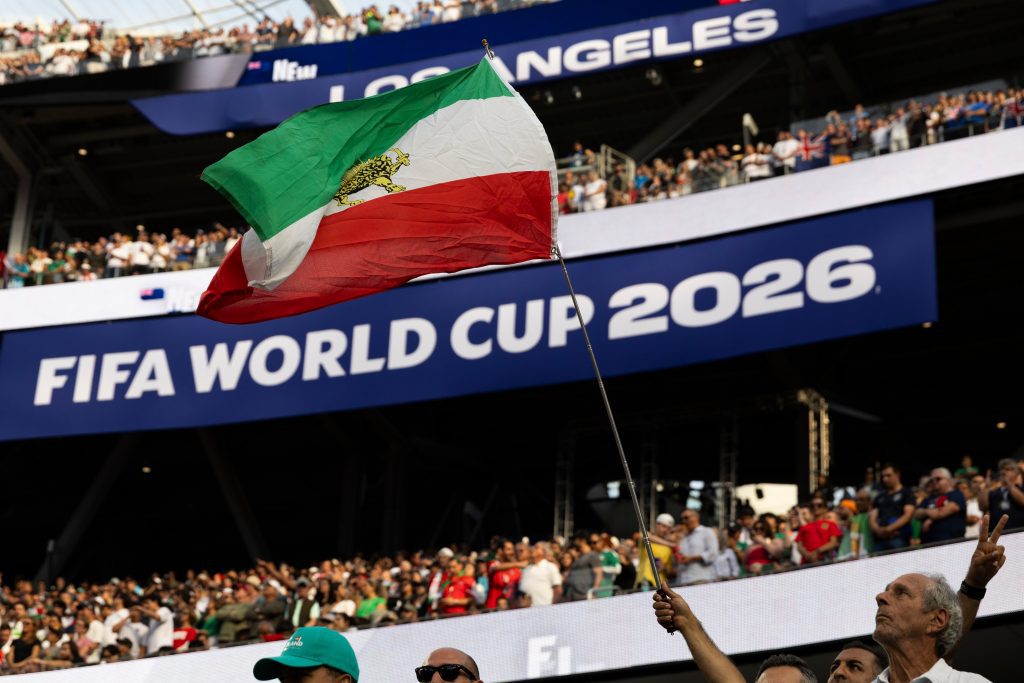
Iran vs New Zealand match – FIFA 2026
In addition, several footballers who were detained during the street protests have been named among those affected, including Ehsan Hosseini Pour, Amir Nasr Azadani, Abbas Yahya Begi, Rashid Mazaheri, and Mohammad Hossein Hosseini. They remain in prison, and some are reportedly at risk of facing the death penalty
Against this backdrop, the response of FIFA has once again come under scrutiny. The organisation has long positioned itself as politically neutral, yet its enforcement choices often suggest a more selective reality.
FIFA previously restricted entry of flags and clothing featuring the historical Lion and Sun emblem at SoFi Stadium, labelling it a “pre-revolution” symbol. Supporters of the emblem argue it is cultural and historical rather than partisan. Yet in practice, its presence was tightly controlled, while other clearly political symbols appeared throughout the stadium environment with far less consistent enforcement.
In a related legal dispute, Iranian-American citizen Kermanian filed a lawsuit against FIFA in California. The court ultimately ruled in FIFA’s favour, reinforcing the organisation’s argument that stadium expression is governed by its internal regulations. Legally defensible or not, the outcome highlights a recurring reality: the rules of expression in global sport are not neutral, but institutionally defined.
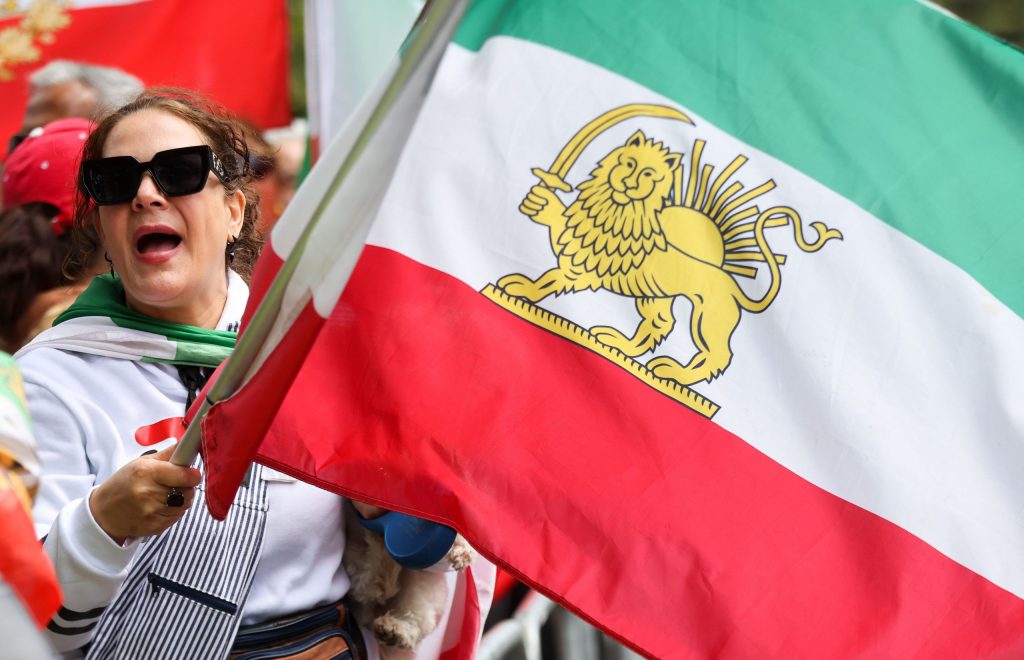
Lion and Sun flag
Despite restrictions, significant numbers of Lion and Sun flags reportedly appeared in the stands, with some claiming broadcast coverage avoided showing them. Meanwhile, other groups inside the stadium openly displayed political identity markers, including pro-Islamic Republic supporters and pro-Palestinian symbols, reflecting the layered and competing politics of diaspora communities.
There were also reports of further symbolic escalation, with some individuals bringing Israeli flags into the stadium, framing their presence as commentary on broader regional conflicts. The result was not a football match insulated from politics, but a concentrated stage of global political expression.
What this reveals is not that football has become political. It always was. What has changed is the scale, visibility, and intensity of that politicisation, especially in diasporic contexts where stadiums become surrogate parliaments and flags become arguments.
FIFA can sanction gestures, restrict symbols, and enforce codes of conduct. What it cannot do is erase the political meaning that millions of spectators bring with them into the stadium. In that sense, the question is not whether football should be political. The question is whether global sport institutions are willing to acknowledge the politics they already manage, unevenly and often inconsistently, every single day.
 Last related articles