The Balogun case has reopened a rift between UEFA and FIFA. FIFA’s decision this Monday to suspend the automatic one-match ban that should have applied to the United States forward after his red card prompted an unusually strong response from UEFA. For the European body, FIFA had crossed “a red line”.
The message is not limited to one incident or one player. UEFA argues that a sending-off must carry a minimum automatic suspension and that this consequence cannot become a flexible decision, especially during a World Cup and after other players have served similar punishments. If the rules are not applied equally to everyone, the competition loses credibility.
A sanction with a political reading
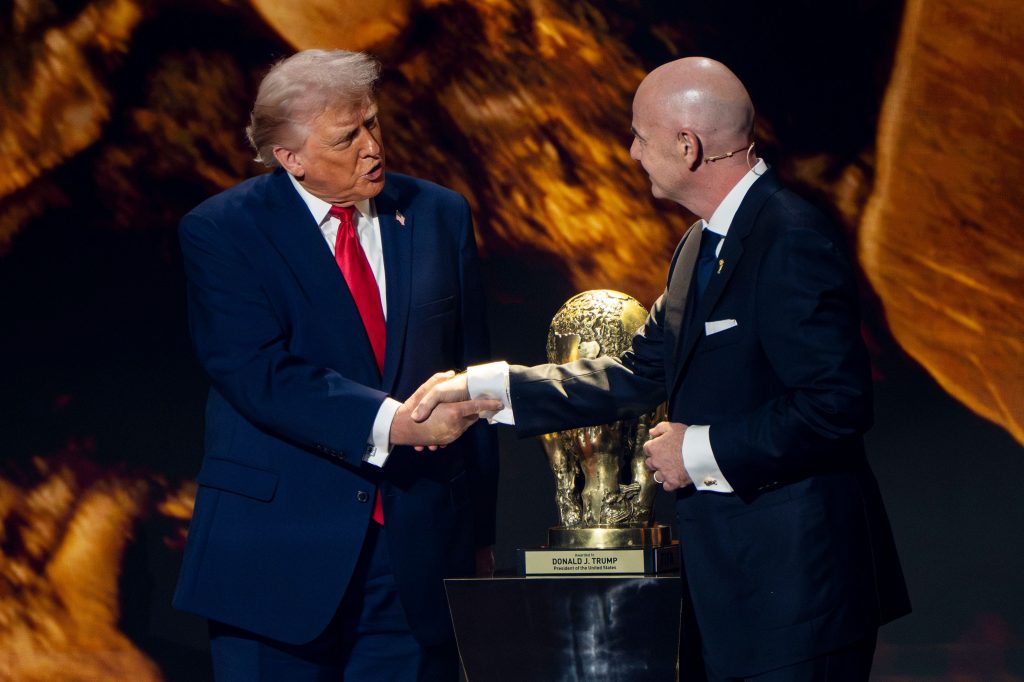
The context makes the case even more delicate. Donald Trump admitted that he had called Gianni Infantino to ask for the sanction to be reviewed. FIFA later defended the independence of its disciplinary bodies, but the episode left a strange feeling because, in the supposedly biggest World Cup in history, the regulations once again became mixed with political power and institutional influence.
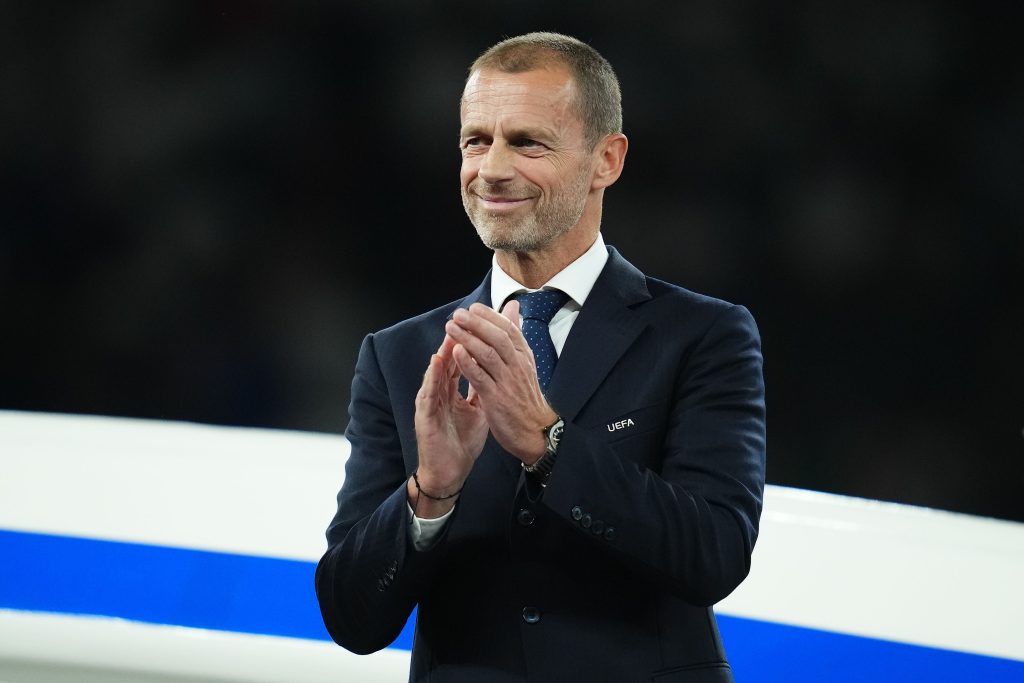
On a personal level, Aleksander Čeferin, UEFA president, has already spoken out on several occasions about international conflicts: he defended the idea that Russia could not return to European competitions while the war in Ukraine was still ongoing, and UEFA launched an explicit message in 2025 against the killing of civilians and children in Gaza. Infantino, by contrast, has maintained a much closer relationship with Trump, who appears to hold the key to stopping these conflicts but does not use it.
This UEFA reaction is another episode in the tense relationship between the two biggest football bodies in the world. Nyon and Zurich have spent years clashing over the international calendar, the expansion of the World Cup, the new Club World Cup, the distribution of money and FIFA’s ability to make global decisions that directly affect the European ecosystem.
The Club World Cup
The Club World Cup is the main battleground. FIFA wants to turn it into a top-level global competition, with more teams, more matches and greater commercial value. UEFA, however, sees the world governing body moving directly into a space that Europe had controlled until now: club football.
The Champions League remains the main product of European football, but FIFA no longer wants to limit itself to the national-team World Cup. It also wants a major global club competition. The problem is that both ambitions collide over the same players, the same dates and the same markets. The risk is saturation.
The calendar, another power issue
The complaint filed by FIFPRO Europe, European Leagues and LaLiga against FIFA before the European Commission shows that the debate is no longer only sporting. The question is whether FIFA can act as regulator, organiser and commercial beneficiary of the competitions it promotes itself.
The paradox is that UEFA has also expanded its own tournaments, while worrying that, if FIFA gains more and more competitive space, Europe will lose room to organise its own product. And if the calendar continues to grow, players will remain trapped in an increasingly demanding structure. The Balogun case has become a new trigger for friction between the two institutions based in Switzerland.
 Last related articles