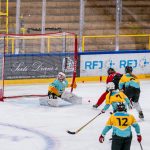
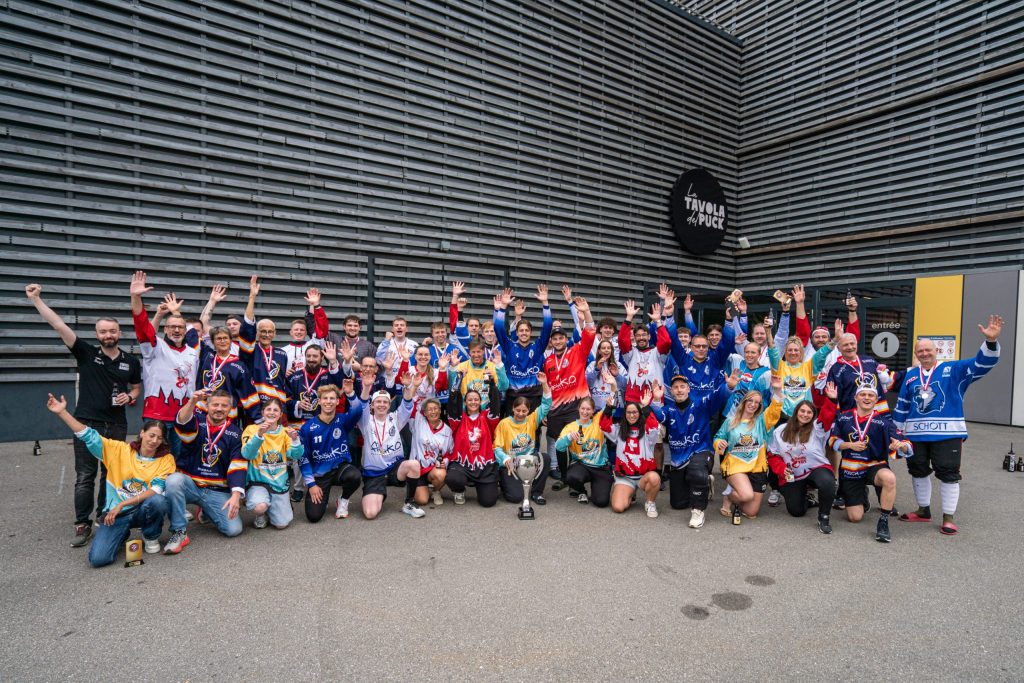
Short Bandy completed its first international club competition in Porrentruy, Switzerland, on 12 and 13 September. The Swiss Cup brought together six teams from the Netherlands, Germany and the host country at the Raiffeisen Arena, providing a first opportunity to assess a discipline that had not previously staged an international club tournament. Nijmegen Capitals became its inaugural champion, EC Mainzer Woelfe finished second and Rinkball Dübendorf took third place. The result established the first podium, although the main objective was to test the format outside the environment in which it had been created.
The Federation of International Bandy -FIB- officially added the discipline during its Annual Congress in Pori, Finland, on 17 January. Eight months later, the 22 matches played in Porrentruy enabled the federation to assess how its rules, organisation and competition system would work with clubs from three countries. Players, coaches, referees and officials were able to identify situations that do not always emerge while regulations are being written. The tournament therefore transformed institutional approval into a first international experience on the ice.
From paper to the rink
The discipline was created in Czechia in 2021 in response to the shortage of large ice surfaces in several European countries. Traditional bandy is played by teams of eleven on an ice surface measuring approximately 100 by 60 metres, similar in size to a football pitch. Its creator, Miroslav Samec, began with one question: “How can the elements of big-ice bandy be transferred to an ice hockey rink?” The answer retained some of the original sport’s rules and movements while adapting them to a far more widely available type of venue.
Before the Swiss Cup began, FIB Technical Committee member Kristian Marosi delivered an introductory seminar for the referees. The session established a common interpretation of the rules and explained the main differences from traditional bandy before they were applied in international competition. An evaluation meeting was also held on the second day with FIB General Secretary Attila Adamfi, representatives of its Technical, Development and Athletes’ Committees and members of the Swiss Bandy Federation. The discussion covered the tournament format, implementation of the rules, logistics and possible next stages.
A discipline designed to expand the map
Short Bandy is played on a conventional ice hockey rink and reduces each team to four outfield players and one goalkeeper. It retains elements such as long-range shooting, corners and a penalty stroke similar to the one used in bandy, while removing play behind the goal. Portable boards and collapsible goals make it easier to create a playing area in existing venues and even on frozen ponds or lakes. For federations without access to a full-sized bandy rink, the format provides a way to train and organise competitions without completely abandoning the characteristics of the original sport.
Five national federations — Czechia, Germany, Hungary, Switzerland and the Netherlands — had already used the format before its international debut. FIB Technical Committee Chair Frank Peters believes it can help players prepare for traditional bandy while allowing new countries to enter the sport: “There is a big opportunity to improve as a bandy player because Short Bandy is much closer to bandy than rink bandy.” Peters said an initiative already exists to create a European competition between national champions and presented a future World Championship as another possibility, particularly if the big-ice Bandy World Championships are no longer held every year. Neither competition has yet been formally approved.
Consultation before the next step
The FIB will now collect feedback from athletes, referees and officials through a post-tournament survey. Their responses will be used to review the rules, clarify situations that produced differing interpretations and establish whether changes are required to the competition format. The federation intends to develop the discipline through practical trials and consultation with those directly involved rather than finalising its regulations after a single event. The evaluation will also help determine whether future editions should involve more clubs and whether the proposed combination of a competitive category and a recreational division would be viable.
The project also forms part of the FIB’s strategy for engaging with the International Olympic Committee -IOC-. Adamfi explained that Short Bandy can share existing venues and requires smaller athlete delegations, two characteristics aligned with the Olympic Winter Games’ ‘Fit for the Future’ strategy, while still retaining “bandy DNA”. No inclusion process is currently open, and the FIB views 2034 only as a reference point for its Olympic ambitions. The Swiss Cup did not resolve that objective, but it provided the first demonstration that the discipline can stage international matches, train referees and bring together clubs from several countries on an existing ice hockey rink.
Photo credit: Steph Wenker
 Last related articles