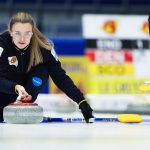
World Curling has introduced a new European Championships format in Ostrava, Czechia, expanding the field to twelve men’s and twelve women’s teams, shortening games from ten ends to eight and separating the continental title from World Championship qualification. The competition began on 27 October at the RT Torax Arena and runs until 1 November. This first edition changes both the route to the medals and how national associations qualify for the event.
The overhaul forms part of the international competition structure approved for the 2026–2030 cycle, following eighteen months of consultation with member associations and the Athletes’ Commission. Its objectives include simplifying qualification and broadening opportunities to compete, with the World Championships also expanding to eighteen teams in each category. The original plan allowed for ten teams at the Europeans, but World Curling increased that number to twelve in May following consultation with its members. The expansion brings greater representation to the championship replacing the previous continental divisional structure.
A more compact championship
Each team plays five round-robin games, with the top two in each group advancing to crossover semi-finals. The winners compete for gold and the losers for bronze, with all games played over eight ends. Fredrik Lindberg, head of sport and development at the Swedish Curling Association, believes the format fits the demands of the season: “Short games and two groups create an intense championship where every game carries great importance.” His assessment links shorter matches with a more concentrated competition for teams and spectators.
The schedule also changes how much room teams have to recover from a defeat. The Danish Curling Association noted in its preview that five group games leave little margin for error for teams targeting the semi-finals. Compared with the previous ten-team round robin, in which each team played nine games, the new system reduces the number of matches before the knockout stage. The group draw and the ability to adapt from the outset therefore carry greater weight in the pursuit of medals.
A new route into the competition
Qualification for Ostrava follows transitional rules combining results from the A and B divisions of the 2025 European Championships with world rankings, alongside the host place applied in the women’s competition. Belgium and Spain, winners and runners-up respectively in the men’s B Division, have progressed from that level. For the Spanish team, skipped by Sergio Vez, this is a third appearance in Europe’s top tier, following the 2008 and 2022 editions.
From 2027, the twelve places will go to the highest-placed European member associations on the previous season’s combined World Championship and World Championship Qualifier ladder. A host outside those positions may receive a place provided it competes at least at World Championship Qualifier level; in that case, the other eleven highest-placed associations will qualify. The route to the Europeans will depend on results within the global competition structure. For smaller federations, the ability to participate and progress through that pathway will also determine their access to the continental championship.
A continental title with its own identity
The new era includes two commercial partners: Raiffeisen Bank, as Official Banking Partner, and AJ Products, as Official Furniture Partner, both involved in Ostrava. Coverage combines national television broadcasts, including Sweden’s SVT, with the Curling Channel platform, subject to territorial broadcast arrangements. These outlets support efforts to attract new audiences to a championship played across six days.
The separation of continental and world titles will have an immediate effect on the calendar. Following the European medal games on 1 November, the men’s World Championship Qualifier takes place in Aberdeen, Scotland, from 8 to 13 November, followed by the women’s event in Östersund, Sweden, from 21 to 26 November. Teams still seeking a World Championship place will have to contest that second competition. The Europeans now have a distinct purpose: deciding the continental champions, while World Championship qualification is settled through a pathway shared with associations from other regions.
 Last related articles