The dates announced for Los Angeles 2028 place the start of the Olympic tennis tournament four days after the women’s final at Wimbledon and only three days after the men’s final. In cycling, the time trial will also be held three days after the end of the Tour de France, while the road races will follow six and seven days later. Competing in both major events remains possible on paper; performing at the highest level in each appears far more difficult, even for the world’s best athletes.
Every season, some cyclists — and, more exceptionally, some tennis players — prioritise one competition over another. The leading tennis players generally contest the Grand Slams unless an injury or specific circumstance prevents them from doing so. In cycling, the choice depends more on each rider’s characteristics and prospects, their team’s objectives and what they can realistically win. This time, however, it is more than just a decision. The proximity of the events will carry greater influence than ever, forcing athletes to choose, leave a competition early or accept that they will not reach the next one in their best condition. The lack of recovery time also creates the impression that the athletes have not been sufficiently considered and that each competition has primarily protected its own interests. A more moderate and reasonable separation would benefit the athletes, the public and all the events involved.
Three days to change surface and continent
Wimbledon will take place from 3 to 16 July. The women’s final is scheduled for 15 July, the men’s final for 16 July and the Olympic tournament will begin on 19 July. Players will have to travel from London to California, overcome an eight-hour time difference and switch from grass to hard courts. Those eliminated during the first week will have considerably more time to prepare for the Games than those reaching the closing rounds. Reaching the final of one of the world’s most important tournaments could therefore become a disadvantage ahead of the next competition. At Paris 2024, there were 13 days between the two events, yet the rapid switch from grass to clay already led Ons Jabeur and Aryna Sabalenka to withdraw from the Games, while Rafael Nadal skipped Wimbledon to continue preparing on clay.
The current criticism shows that the problem is not merely theoretical. Sabalenka described the prospect of the Games beginning three days after the men’s final as “ridiculous” and called for at least a week between the events because “it’s too much of a stress on the body”. Iga Swiatek has also renewed her criticism of a calendar that, in her view, does not sufficiently prioritise player welfare: “This situation is going to be really difficult for the person that plays the final and then needs to get on hard courts and play on the other side of the world.” Daniil Medvedev has called for the gap to be extended to six or seven days, while Elena Rybakina hopes that changes can still be made.
The Tour ends and the time trial awaits
The Tour will be brought forward, beginning on 24 June and finishing on 16 July. The adjustment prevents a direct overlap with the main Olympic road cycling events, but it does not resolve the recovery problem. The LA28 time trial will take place on 19 July, with the road races following on 22 and 23 July. Riders who complete the full three weeks will then have to recover, fly from France to California, adjust to a nine-hour time difference and familiarise themselves with a new course before competing again. Some may ride part of the Tour — perhaps a week or ten days — and then withdraw to rest and prepare specifically for the Games. Others will finish the French race and accept the physical consequences, while some will have to choose between the two objectives altogether.
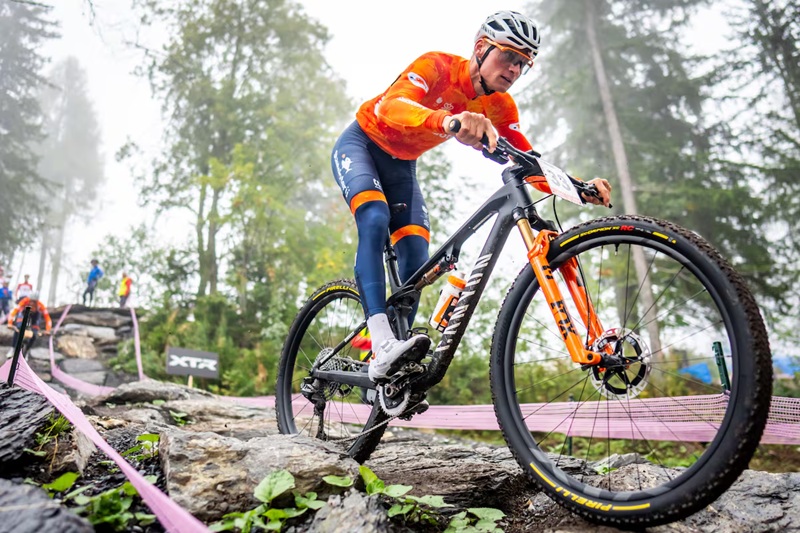
The mountain bike events will be held on 17 and 18 July, immediately after the Tour, although this clash affects fewer athletes. Most mountain bike specialists do not contest the French race or regularly combine the discipline with professional road cycling. Mathieu van der Poel is one of the most significant exceptions and has already acknowledged that “a summer without the Tour is clearly on the table”, with Olympic mountain bike gold his main objective for LA28. The situation could be different in women’s cycling. The Tour de France Femmes will take place from 30 July to 7 August in 2027, while its dates for 2028 have not yet been announced. If it retains a similar position, the riders would contest the LA28 time trial and road race first, followed by the French stage race. That order would probably create a smaller problem because the accumulated physical demands of the Olympic events are much lower than those of a nine-day tour. However, it would still require riders to move quickly from specific preparation for a time trial or one-day race to the demands of a stage race.
Pogačar and a choice that could also hurt the Tour
Tadej Pogačar also appears prepared to give priority to the Games. “The Olympics are of course another race I would like to win. They only come around once every four years, so I would have to tailor my programme to be in the right shape at that time,” he explained. The Slovenian also acknowledged that the objective is “not exactly in the interests” of UAE Team Emirates-XRG, although he expects the team to take his wishes into account. He has not yet confirmed that he will miss the Tour, but there is a significant precedent: after winning the Giro d’Italia and the French race in 2024, he withdrew from the Paris Games citing fatigue.
If Pogačar decides not to enter the 2028 Tour or leaves it early, the race will lose its biggest star of recent years. If he completes it, he may reach Los Angeles without enough time to recover for the time trial and road race in his best condition. The same applies to the Wimbledon finalists: if they play through to the end of the Grand Slam, they will have minimal time to adapt to LA28; if they prioritise the Games, the British tournament could lose major names. There is still time to reconsider the dates. The organisers of The Open have already moved its 2028 edition to avoid a clash with the Olympic golf tournament. Rescheduling a shorter championship is easier than moving Wimbledon or a three-week race, but the decision shows that greater coordination remains possible.
 Last related articles