The final press conference of the Taranto 2026 Mediterranean Games offered more than a review of sporting results. It presented a broader vision of what the Games could leave behind for their host city, with legacy emerging as the defining theme of the closing chapter.
Mehrez Boussayene, Acting President of the International Committee of the Mediterranean Games, said Taranto 2026 had delivered on its promises. For Boussayene, the city had earned its own medal, describing it as the “gold medal for legacy”. He pointed to the facilities developed or upgraded for the Games as part of a lasting sporting legacy for Taranto.
Among those facilities are the Torre d’Ayala Swimming Stadium, the Erasmo Iacovone Stadium, Pala Ricciardi, the Magna Grecia Tennis Centre, the Salinella Mediterranean Park, the Giuseppe Valente Athletics Stadium and the Torpediniere Nautical Centre. According to Boussayene, these venues will continue to serve sport, young people and the local community after the Games.
ICMG Secretary General Iakovos Filippousis offered another perspective on the transformation of Taranto. Recalling his first inspection visit to the city in 2020 alongside the late Davide Tizzano, he reflected on the challenges Taranto faced at the time. Six years later, he described a city increasingly focused on its future and its potential as a sporting and tourism destination.
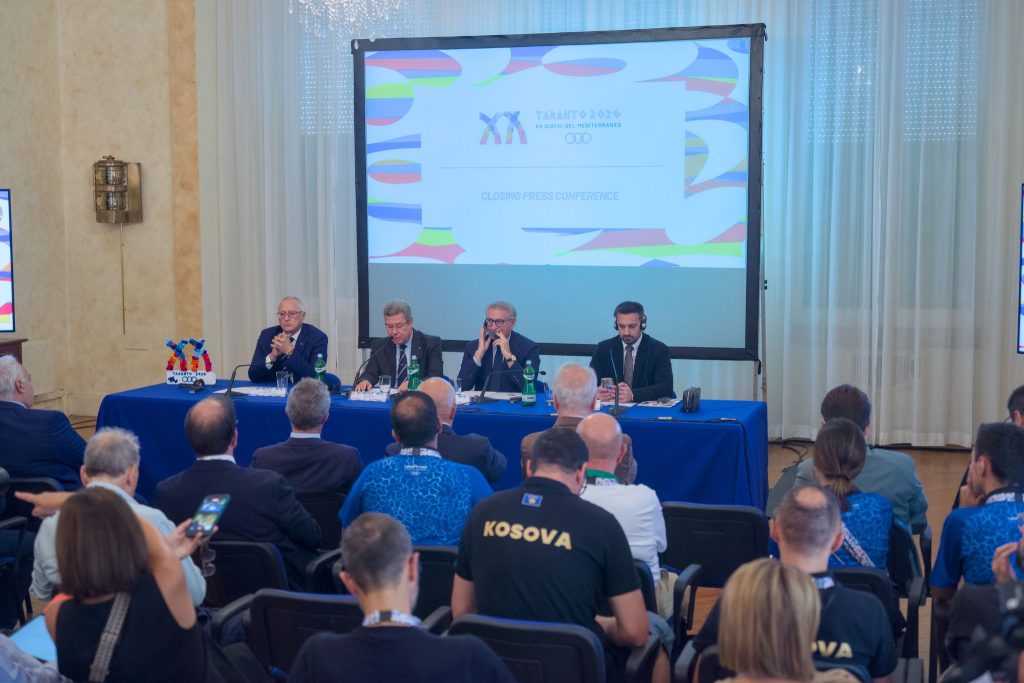
Taranto Media Press Centre
The message was clear, Taranto 2026 was intended to be about more than two weeks of competition. Sport was presented as a catalyst for investment, infrastructure, visibility and a renewed sense of confidence in the city.
The scale of the event was also reflected in the numbers presented at the closing press conference. Organising Committee President Massimo Ferrarese said 172,000 tickets had been sold, including 32,800 for the opening and closing ceremonies and 140,000 for sporting competitions. Football accounted for 47,000 tickets.
Transport was another major organisational operation. According to Ferrarese, the Games generated 6,750 bus transfers, an average of around 450 per day, using 145 buses, alongside a fleet of 300 cars and minibuses. The figures underline the logistical scale required to move athletes, delegations and officials across the Games’ venues.
Ferrarese also highlighted the investment made in Taranto’s sporting infrastructure. He said €275 million had been invested in facilities that he valued at around €400 million, while the floating Mediterranean Village cost €23 million, including catering. The figures reinforce the organisers’ argument that the Games represented a major investment in the city’s sporting infrastructure.
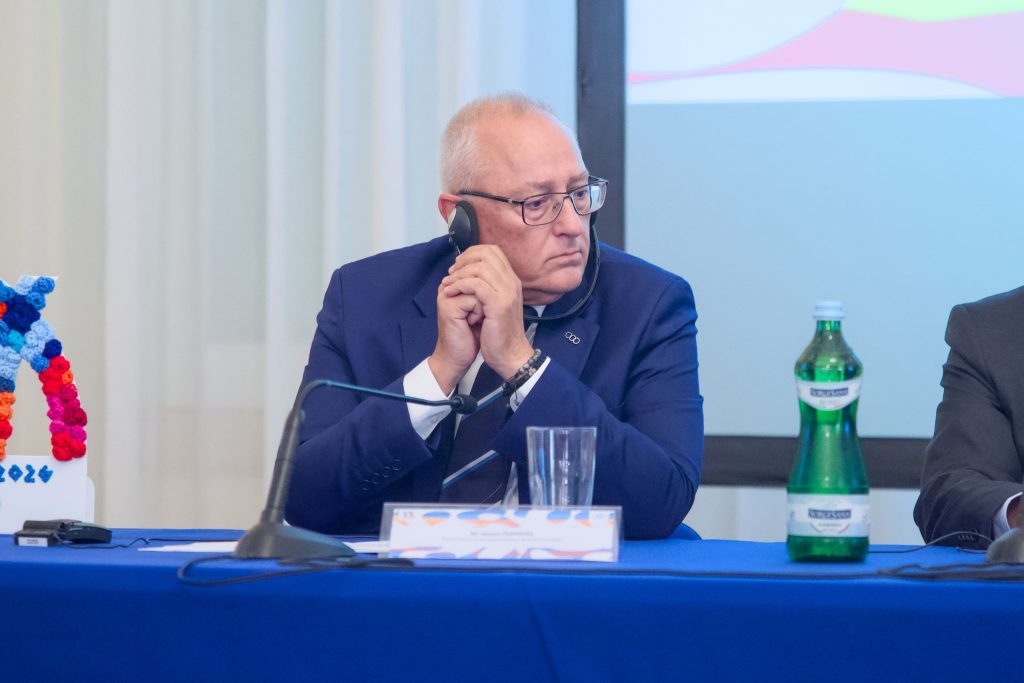
Iakovos Filippousis
The sporting story provided its own historic milestones. Italy finished with 224 medals, breaking the previous national record of 193 medals achieved at Bari 1997 by 31 medals. Turkey reached its 1,000th medal in Mediterranean Games history, while Andorra won its first-ever medal at the event.
These achievements demonstrated the breadth of the Mediterranean Games. Beyond the overall medal table were national records, historic firsts and individual moments that added another layer to Taranto 2026 and strengthened the sporting significance of the 20th edition.
The closing press conference also carried an emotional dimension through the tribute to Davide Tizzano, whose contribution to the Mediterranean Games movement was repeatedly acknowledged. Boussayene linked the success of Taranto 2026 to the legacy Tizzano had helped build, adding a personal dimension to the final assessment of the Games.
With Taranto now handing the Mediterranean Games to Pristina and Kosovo for 2030, the next chapter is already taking shape. Boussayene described Taranto as having written a “magnificent twentieth chapter” and said it was now Pristina’s turn to write the twenty-first. Pristina was confirmed as host of the 2030 Games after receiving 55 of the 66 votes cast by the ICMG General Assembly.
For Taranto, however, the ultimate assessment of these Games will not come only from the medal table, ticket sales or organisational statistics. Its most important measure may be what remains after the athletes have left: the sporting facilities, opportunities for young people, international visibility and the confidence generated by hosting a major international event.
Taranto 2026 therefore leaves behind a message that goes beyond competition. The Games have reached their conclusion, but their real legacy will be measured in the years ahead, through how the city uses the infrastructure, opportunities and international profile created around the 20th Mediterranean Games.
 Last related articles