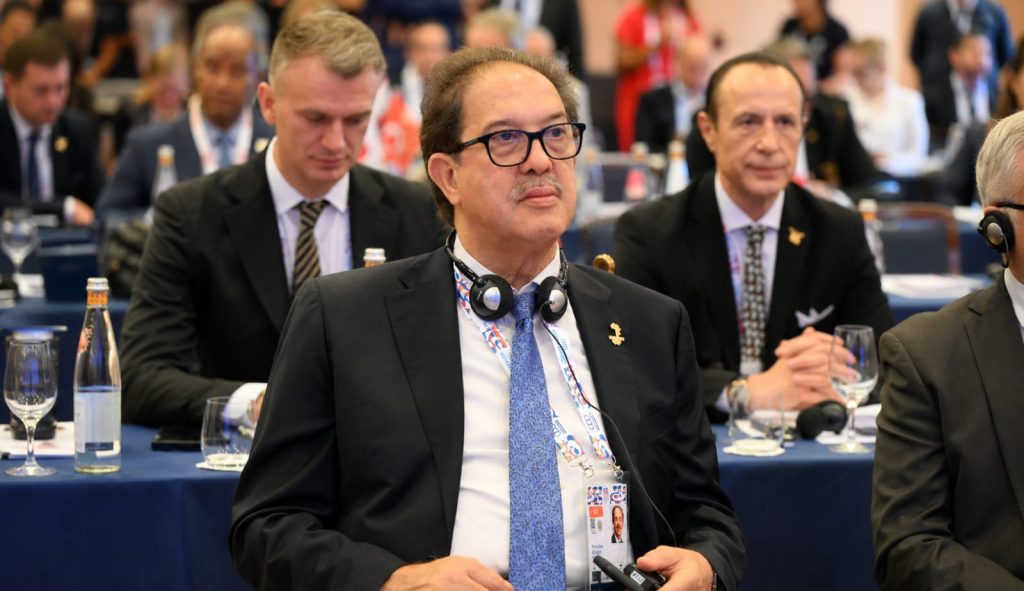
Mustapha Berraf has spent more than four decades in sports administration, working at national, continental and international level. As President of the Association of National Olympic Committees of Africa and an IOC Member, he is now seeking the presidency of the Association of National Olympic Committees.
Berraf’s candidacy comes after a long career in African sport, where he has worked across systems with very different resources, infrastructure and administrative structures. That experience provides an important context for understanding his views on the organisation of international sport.
One of the central themes of his approach is the role of National Olympic Committees. Berraf belives that the strength of the Olympic Movement depends, to a significant extent, on the capacity of its national members. He therefore places considerable emphasis on improving management and organisational capacity within NOCs.
His experience at ANOCA has exposed him to the different circumstances of 54 National Olympic Committees. The challenges facing an established sporting system are not necessarily the same as those facing an NOC working with limited resources or infrastructure. Berraf’s position is that development should take these differences into account rather than rely on a single model.
Capacity building and the sharing of management expertise consequently feature prominently in his thinking. The emphasis is on helping national organisations develop their own capabilities while recognising the circumstances in which they operate.
Athlete involvement is another element of his outlook. Berraf argues that athletes should have a meaningful role in discussions and decisions concerning the future of sport. His reasoning is that experience at elite level provides a perspective that administrative experience alone cannot fully reproduce.
The extent to which athletes should influence the direction of international sport remains an important issue across the Olympic Movement. Berraf’s position is that their participation should go beyond formal representation and allow their experience to contribute to substantive discussions.
He also argues for greater attention to the development of future sports administrators. In his view, people who may eventually take senior positions need opportunities to acquire practical experience, learn from those already working in the system and gradually assume greater responsibility.
That issue has gained relevance as international sport faces challenges that are evolving rapidly. Artificial intelligence and digital transformation, environmental concerns, economic pressures and geopolitical developments are all creating new questions for sports organisations and their leaders.
For Berraf, preparing the next generation of administrators is therefore part of the wider question of how sporting organisations respond to these changes. Whether that approach can be translated effectively across different sporting systems is ultimately a matter for the organisations themselves and their members.
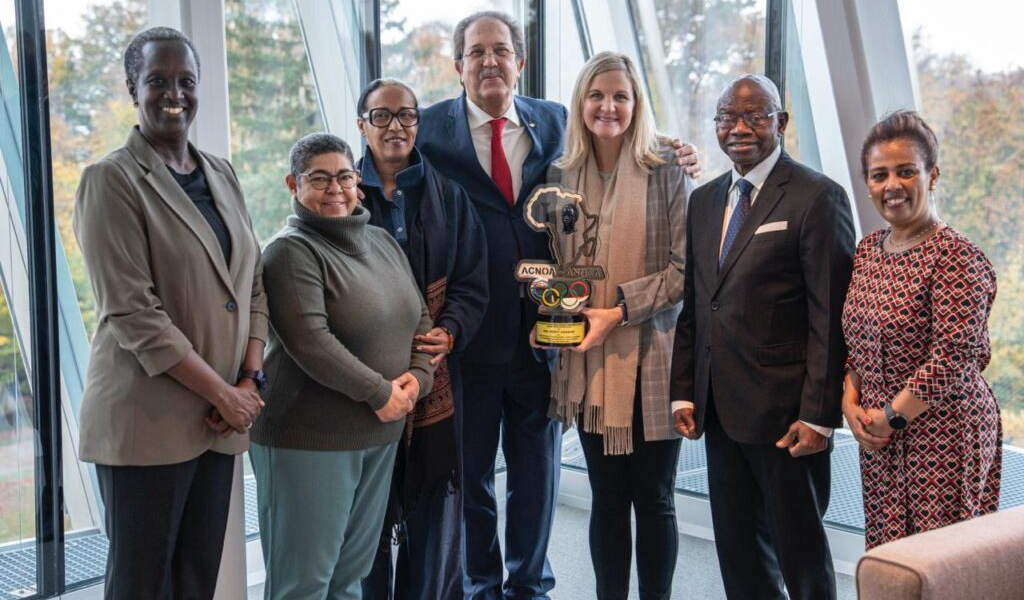
Africa occupies a significant place in his perspective. His involvement in the continent’s sporting structures has brought questions of African representation and influence in the international sporting debate into his wider view of the Olympic Movement.
The diversity of the African sporting landscape also illustrates some of the broader challenges facing the Olympic family. NOCs operate in very different economic and institutional circumstances, making questions of representation, resources and development difficult to address through a single approach.
Berraf’s view of sport also extends beyond its administrative structures. He points to the ability of sport to bring people and countries together, particularly at a time when political and social divisions can make such connections more difficult.
That role has become particularly relevant as international tensions continue to affect relations between countries. Sporting organisations, in Berraf’s view, have a responsibility to preserve the common ground that competition can provide.
This is the wider context in which Berraf’s ANOC candidacy can be considered. His record brings extensive experience in African and international sports administration, while his stated priorities include stronger NOCs, greater athlete participation and more opportunities for future sports leaders.
The ANOC presidency is ultimately an organisational position, but the election also offers an opportunity to consider broader questions about the Olympic Movement, the role of National Olympic Committees and how international sport should respond to a changing environment.
Berraf enters that discussion with more than 40 years of experience in the field. The extent to which his ideas resonate with ANOC members will be for them to determine.
 Last related articles