Algeria won the 2026 African Ju-Jitsu Championship after topping the combined standings in Algiers, where Sportdata recorded 272 medals across the different disciplines, age groups and team events. The competition took place from 17 to 20 September at La Coupole in the Mohamed Boudiaf Olympic Complex, located in Dély Ibrahim, Algiers, and brought together more than 250 athletes. The Algerian Ju-Jitsu Federation organised the event under the supervision of the Ju-Jitsu African Union -JJAFU- and the Ju-Jitsu International Federation -JJIF-.
The championship formed part of an eight-day programme combining four days of competition with referee education, technical meetings, an anti-doping session and the continental organisation’s General Assembly. Its forward-looking approach was reflected in five age groups, ranging from under-16 to Masters, and an agenda that placed education, governance and inclusion alongside the sporting titles. The event provided an opportunity to assess both the level of the African national teams and the capacity of their structures to organise and expand the practice of ju-jitsu.
Algeria completes its progression
The official Sportdata medal table awarded the host nation 67 gold, 58 silver and 47 bronze medals, for a total of 172. Tunisia finished second with 77 —37 gold, 25 silver and 15 bronze— while Mauritius placed third with three gold, five silver and six bronze medals. The Democratic Republic of the Congo collected one gold and one silver; Mali secured one gold and two bronze medals; and Cameroon and Senegal each finished with two silvers.
Algerian national coach Anis Laïdi linked the result to a process developed over several years. Algeria had finished third in 2019 and second in both 2023 and 2025 before claiming the title in 2026. “The result we achieved over the four days gives us great satisfaction. Our dominance was clear and expected from the outset,” he explained. Laïdi believes the federation has achieved its objective of progressively improving its results and expects the performances in Algiers to help several athletes advance in the international rankings.
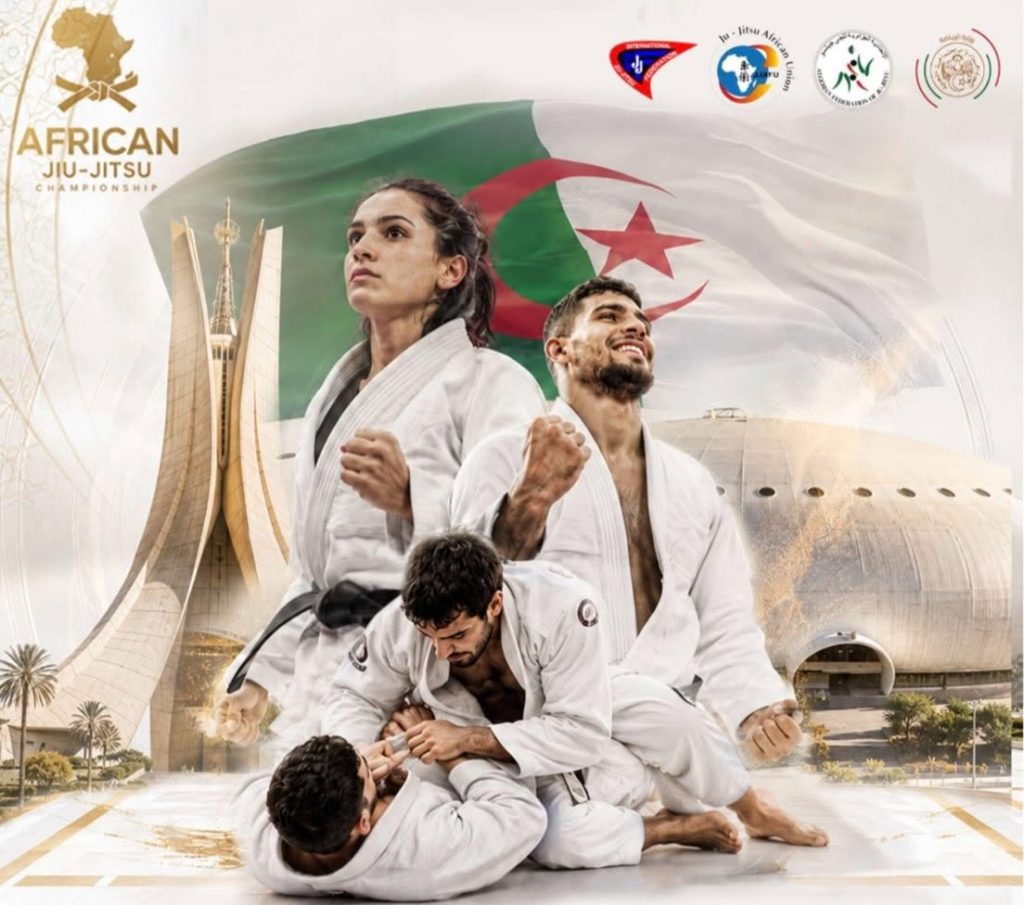 Five generations at La Coupole
The JJIF competition programme included Fighting, Ju-Jitsu, No-Gi, Contact HIF, Duo System, Show System and team events. The first three days were largely devoted to individual competition in the senior, under-21 and under-18 divisions. By combining combat disciplines, technical work in pairs, choreographed performances and team formats, the programme brought together different expressions of ju-jitsu within a single continental championship.
The final day featured the team events, the under-16 and Masters finals, and the inclusive self-defence programme. The latter comprised cognitive, physical and visual categories, while the Masters competition was divided into M1, M2 and M3 levels. This structure brought athletes of different ages and abilities together at the same venue, extending participation from the early development stages to divisions for experienced practitioners.
Education and organisational ambition
The institutional programme began before the bouts with a seminar for Fighting, Ju-Jitsu, Duo and Contact referees, followed by a theoretical examination. The agenda also included a technical meeting and an anti-doping session for coaches and athletes. Representatives of the national federations attended the JJAFU General Assembly on 16 September, although no document setting out its decisions has been released. Its inclusion brought the principal governance meeting for African ju-jitsu and a competition applying common technical and refereeing standards together in Algiers.
Representatives of the international, African and Algerian bodies also held an evaluation meeting during the championship. According to the national federation’s secretary general, Slimane Mesdoui, the positive assessment of the organisation could strengthen Algeria’s prospects of seeking to host a future World Championship. This does not yet amount to a confirmed bid or an awarded event, but it explains the championship’s wider institutional significance: the continental title demonstrated the country’s sporting progression, while its technical education, inclusive programme and organisation at La Coupole provided a reference point for its ability to stage events on a larger scale.
 Last related articles