The case of Aymane Takzima has raised questions over how anti-doping bans are enforced once a suspended athlete is no longer allowed to compete.
The International Testing Agency, acting on behalf of the World Karate Federation, said Takzima had accepted a further three-year period of ineligibility after breaching the prohibition on participation while serving a provisional suspension and period of ineligibility.
Takzima had accepted a three-year ban on 13 April 2023 for an anti-doping rule violation under Articles 2.1 and 2.2 of the WKF anti-doping rules. The original period was due to run from 23 December 2022 to 22 December 2025.
The ITA later found that, during his provisional suspension and period of ineligibility, Takzima had acted as a coach and participated in various sporting events. The WKF subsequently opened a new procedure against him.
Takzima did not challenge the new anti-doping rule violation and agreed to the consequences proposed by the ITA. The case was therefore resolved through an acceptance of consequences rather than a contested disciplinary hearing.
The decision has significant consequences. The credit previously given to Takzima for his provisional suspension between 23 December 2022 and 13 April 2023 has been revoked. His original three-year ban now runs from 13 April 2023 to 12 April 2026, followed by an additional three-year period of ineligibility from 13 April 2026 to 12 April 2029.
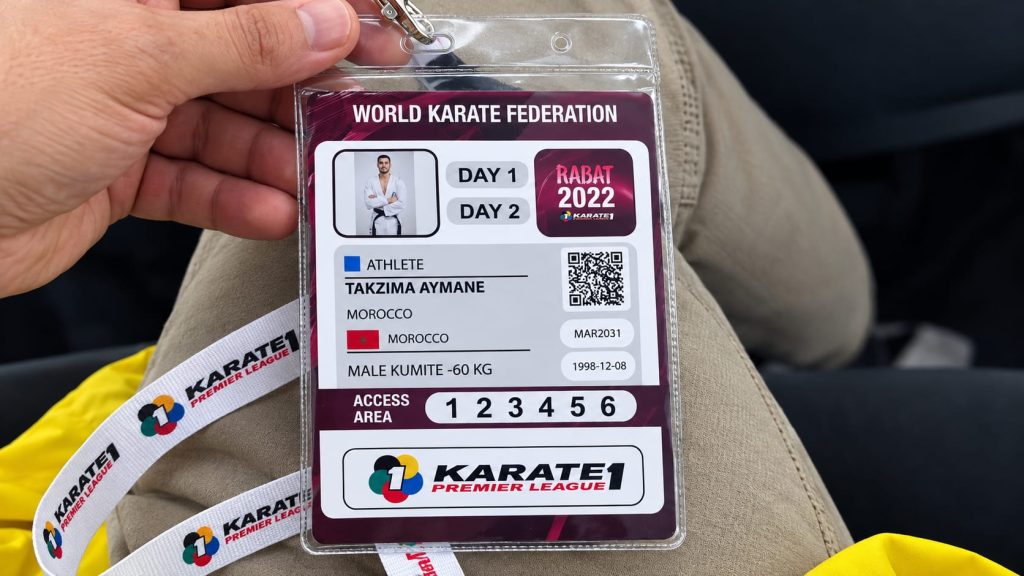
The ITA has also disqualified all of Takzima’s individual competitive results obtained from 23 December 2022 onwards, with the forfeiture of medals, points and prizes.
The published decision, however, provides no details of the sporting events in which Takzima participated, the nature of his role at those events or how the ITA identified his activities. It therefore leaves unanswered questions about how restrictions imposed on suspended athletes are monitored in practice.
That distinction matters. A disciplinary decision establishes what an athlete cannot do, but enforcing those restrictions requires sporting organisations to identify activity that may fall within the scope of a ban. In this case, the ITA has confirmed the breach and imposed a further period of ineligibility, but has not explained how the activities were detected.
For the WKF, that leaves a broader question about the practical enforcement of suspensions. If a banned athlete is able to act as a coach or participate in sporting events, the effectiveness of the sanction depends not only on the disciplinary rules but also on the systems in place to identify and prevent such activity.
The decision may be appealed to the appeals division of the Court of Arbitration for Sport by parties with a right of appeal under Article 13.2.3 of the WKF anti-doping rules. The ITA said it would not comment further on the case.
The disciplinary case may now be closed, but the questions surrounding enforcement remain. A ban is only as effective as the system used to monitor and enforce it, and the Takzima case puts that process under scrutiny.
 Last related articles